

“Everyone is a target”: Opposition journalists and activists reflect on the killing of artist Semyon Skrepetsky
Russian cartoonist and performance artist Semyon Skrepetsky was shot dead in the Polish city of Biała Podlaska on 15 June 2026. The gunman fired several shots at close range in a residential car park before shooting the artist again as he lay on the ground.
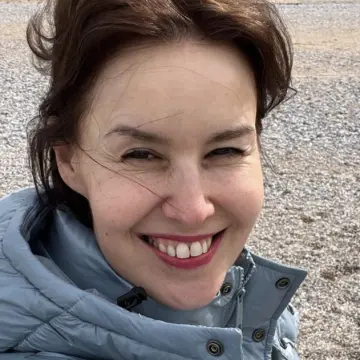
Polish media have described the murder of Semyon Skrepetsky as a “political execution”, and it is not difficult to understand why. For years, the artist produced biting caricatures of Putin, Kadyrov and other members of Russia’s ruling elite, while also staging provocative public performances.
His final action took place on 12 June outside the Russian Embassy in Berlin. Dressed in a fur ushanka hat, a black-and-orange striped vest and traditional bast shoes, Skrepetsky dragged a Russian flag along the ground before throwing it into a rubbish bin. In his hands he carried an icon-like painting depicting Stalin and Putin.

Skrepetsky, whose real name was Robert Kuzovkov, emigrated to Poland in 2021 out of fear of persecution by the Russian authorities. Later that year he met Belarusian activist and political émigré Vladislav Bokhan, who was organising a protest outside the Russian Embassy in Warsaw. The demonstration was dedicated to the case of the “Kansk teenagers”, three schoolboys who received prison sentences after allegedly “blowing up” an FSB building in the video game Minecraft. Skrepetsky joined the protest.
“I’d come across his work before because his style was instantly recognisable,” Bokhan recalls. “But I only started following him closely after we met. I know he began as a woodcarver, and the roughness of his brushwork reflected his background in sculpture. He was probably self-taught. But no one captured the reality of Russia’s depths as well as he did — the Russia that is now fighting this war.”
Bokhan describes Skrepetsky as “a complex and controversial figure”. They occasionally clashed over political differences, and Skrepetsky’s work often extended to harsh caricatures of figures within the Russian opposition.
“I’m not necessarily a fan of many of them myself,” Bokhan says. “I disagree with some of their methods and question their sincerity. But I think Semyon sometimes worked right on the edge of what was morally acceptable, and occasionally crossed that line. Then again, creative people are often difficult.”
Artist and activist Katya Margolis formed a similar impression. She describes the murdered artist as “a punk”. The two met in Venice in May, where Skrepetsky travelled to participate in a decolonial artists’ action during the opening of the 61st Venice Biennale. The event evolved into a protest against the reopening of Russia’s official pavilion, and according to Margolis, Skrepetsky proved himself to be “radical and uncompromising”.

Following his death, Margolis published excerpts from their correspondence, revealing details of Skrepetsky’s largely unknown past. According to his own account, before emigrating he had lived in Russia’s Altai region and was intimately familiar with what he called the “Russian world” — a life of outdoor pit latrines and wells in the yard.
“The problem with intellectuals is that they’ve never actually seen this bloody Russian world with their own eyes,” he wrote. “They invent too much. I lived at the bottom of society. I was surrounded by criminals, drug addicts and career prisoners. That’s why I understand how this world thinks and what it wants.
“I even spent nearly a year in prison. Later I grew up, met a woman I loved, we had a child, and I realised I had to take responsibility because I understood that, in this hostile world, no one needed that child except me.”
Margolis describes Skrepetsky’s artistic style as kitsch, but says that he himself took it very seriously and was deeply reflective.
“My paintings may look like primitive cartoons,” he wrote, “but they always contain deeper meanings, references and connections. I never create a painting without purpose. Before creating an image, I have to understand the issue and draw the parallels.”
He also openly declared himself “against the empire and in favour of Russia’s break-up”, while expressing contempt for supporters of Alexei Navalny and what he viewed as the imperial attitudes of Moscow’s opposition circles. Navalny himself appeared in at least three of Skrepetsky’s caricatures. The artist once described him as “the Kremlin’s most successful project — one that destroyed the Russian opposition”.
At an opposition march in Berlin in 2024, Skrepetsky carried a caricature of Navalny holding a sandwich — a reference to Navalny’s famous 2014 comparison of Crimea to a sandwich in a discussion about whether it should be returned to Ukraine.

“That former Moscow opposition scene was never his crowd,” says Margolis. “He valued his independence enormously. He simply didn’t care about convention, mainstream opinion or respectability.”
As a result, Skrepetsky remained an outsider to much of the Russian émigré community. Yet his work achieved considerable popularity online. His cartoons were frequently shared on social media, often without people knowing who had created them.
The same was true of fellow émigré artist Igor Ponochevny. After Russia’s annexation of Crimea in 2014, Ponochevny moved to the United States and also gained recognition for his political cartoons. He says he felt a strong artistic kinship with Skrepetsky.
“I understood him because I was doing the same thing — fighting dictators, murderers and totalitarianism,” Ponochevny says. “His attacks on the Russian opposition were also part of that struggle. He mocked political cults wherever he saw them. You can argue with that position, but artists don’t tear each other apart.”
Skrepetsky even managed to alienate many of Russia’s fiercest opponents. Beginning in 2023, he criticised the Ukrainian government on social media and posted offensive remarks about Ukrainians. As a result, he was added to the database of the Ukrainian website Myrotvorets, which accused him of actions including undermining Ukraine’s sovereignty, discrediting the Armed Forces of Ukraine and publicly supporting Russian aggression.

The investigative outlet Important Stories noted that Skrepetsky’s home address appeared on the site shortly before his murder. Following his death, the entry was updated with the statement: “Eliminated by Russian special services on 15 June 2026 in Poland.”
His associates have little doubt that the Kremlin, or people acting on its behalf, were behind the killing.
Skrepetsky produced numerous paintings and videos mocking Chechen leader Ramzan Kadyrov, his son Adam and Akhmat commander Apti Alaudinov. Just two days before his death, he published a painting portraying Ramzan and Adam Kadyrov as pigs. He also repeatedly posted satirical “apology videos” addressed to the Chechen authorities.
His most popular video show him inserted a pencil into a figurine of Ramzan Kadyrov and simulated sexual intercourse.
His final Telegram post consisted of screenshots containing threats from users online.
“He wasn’t the sort of person who complained,” says Bokhan. “But threats had become part of everyday life. Once he started aggressively trolling Kadyrov and his entourage, the threats arrived daily. He would regularly post collections of the worst messages he received.”
Even so, Bokhan says he was shocked by the news of his friend’s death.
“We had been in contact the day before. That makes it even more horrifying. One day someone is sending you a voice message, and the next they’ve been shot dead.”
Andrei Grigoriev, a journalist living in Poland and publisher of the émigré magazine Wschody (“Shoots”), believes Skrepetsky fell victim to the Kremlin’s campaign against political exiles.

“People are currently pushing the theory that Chechens killed him, but I think that explanation is wrong,” says Grigoriev. “It’s simply the most obvious assumption. What we’re seeing here bears the hallmarks of the collective Lubyanka. The Kremlin is deliberately preparing saboteurs and contract killers for a proxy war across Europe, and people like Skrepetsky are among the intended targets. He openly described himself as a Russophobe — partly ironically, but there was truth in it.”
Grigoriev, who is wanted in Russia on charges related to allegedly justifying terrorism and extremism, argues that the murder represents a serious challenge to European security. He regrets that neither Poland nor Europe more broadly has a witness-protection-style programme for political exiles comparable to those operating in the United States.
Biała Podlaska, located near the Belarusian border, is “simply flooded with Belarusian KGB operatives”, he claims.
Bokhan, however, believes such an assassination would be disadvantageous for Alexander Lukashenko’s regime because of the reputational risks involved. Moreover, he notes that Skrepetsky’s work never attracted significant attention inside Belarus.
“In reality, there are no safe places left for people who seriously irritate authoritarian regimes,” Bokhan says. “What reason do killers have to be afraid when Putin takes his own citizens hostage and later exchanges them with Europeans and Americans for spies and assassins?”

On the day of Skrepetsky’s death, Igor Ponochevny displayed one of his own satirical “icons” depicting Putin and Kadyrov. It was both a tribute to the murdered artist and a creative manifesto.
“It shows that every attempt to silence artists who oppose Putin’s regime is doomed to fail,” Ponochevny says. “Silence one artist and another will emerge. By murdering him, they transform their victim into something else — a martyr. People become even more interested in his work. Killing artists is pointless.”
Ponochevny says that long before the murder, friends had often asked whether he feared retaliation from the Russian authorities, including the possibility of being poisoned with Novichok. Since Skrepetsky’s death, those questions — along with threats — have intensified.
Yet he has no intention of censoring himself.
Katya Margolis agrees.
“Everyone is a target. Threats and intimidation are part of their strategy. But we cannot stop being who we are. We will continue on the path we believe in, and these people do not get to decide how we live our lives.”


