Naval landing on Arctic archipelago reveals major pollution
A military exercise on Russia’s remote Sedov archipelago has drawn attention to major damage inflicted on vulnerable Arctic nature.

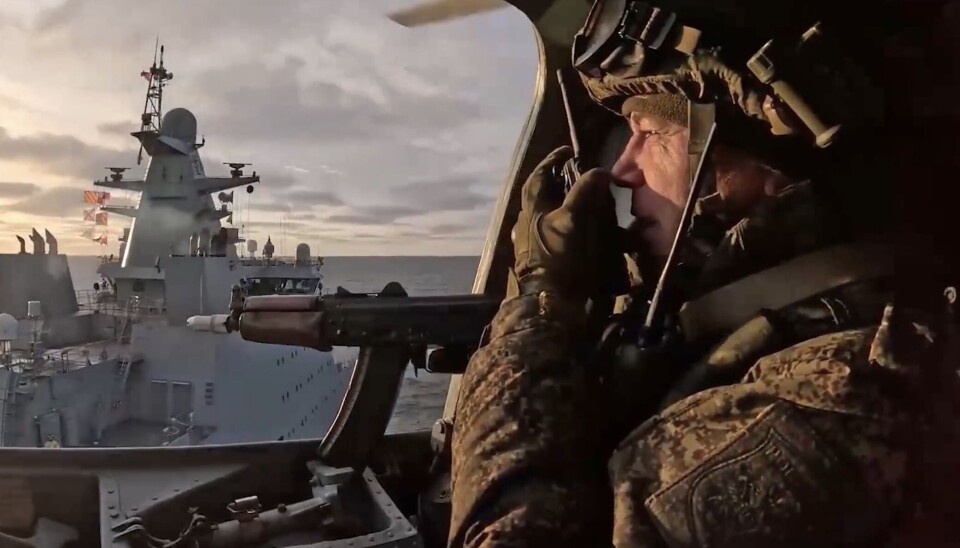
As part of the exercise, soldiers from Russia’s Northern Fleet were put ashore by helicopters and amphibious vessels. Once landed, the soldiers fought a fictitious adversary on the sandy banks of one of the islands.
According to the Northern Fleet, a Ka-29 helicopter took off from the patrol vessel Ivan Papanin and transported an assault group of marines, as well as a fire-control post for the ship’s artillery, to the coast. The large landing ship Kondopoga subsequently put ashore DT-10PN Vityaz all-terrain vehicles.
Naval landing on the Sedov islands. Video by the Russian armed forces.
The vessels involved in the drills are part the Northern Fleet’s expeditionary force that set out from Severomorsk on September 1.
This may have been the first time in several decades that the Russian Navy has held a drill on the Sedov archipelago, a group of islands situated near the Severnaya Zemlya archipelago.
The exercise was filmed with the usual propaganda tools applied by the Russian armed forces.
However, what attracts more attention than the guns, smoke, and heavy military hardware is the many piles of waste scattered across the remote Arctic islands.
In the video, abandoned oil barrels and metallic waste, as well as other rubble, can be seen.
A closer look at publicly available satellite images reveals major pollution across several of the islands. Along the coast of one of the islands, Sredny, hundreds of abandoned rusting barrels can be seen.


Abandoned oil barrels and metallic waste from the Soviet era are a common sight across the Russian Arctic.
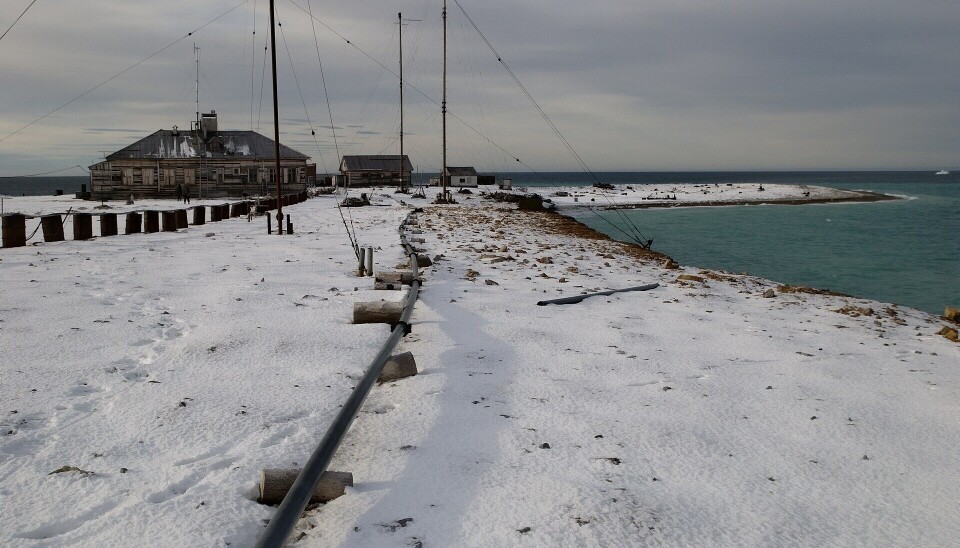
Most of the waste on the Sedov archipelago was generated by the 81st Independent Radio-Technical Air Defence Battalion, which was based on the island of Golomyanny until the early 1990s. In 1993, the unit abandoned the island for good, leaving behind the radar station, the diesel power stations, and massive volumes of waste.


A meteorological station was established on the archipelago in 1954 and continues to operate to this day. The official name of the station is the "Golomianny Coastal Marine Hydrometeorological Station (MG-2)", a Russian encyclopaedia reports.