
OPINION

Dzerzhinsky's watchful eye reportedly on the way back to Lubyanka
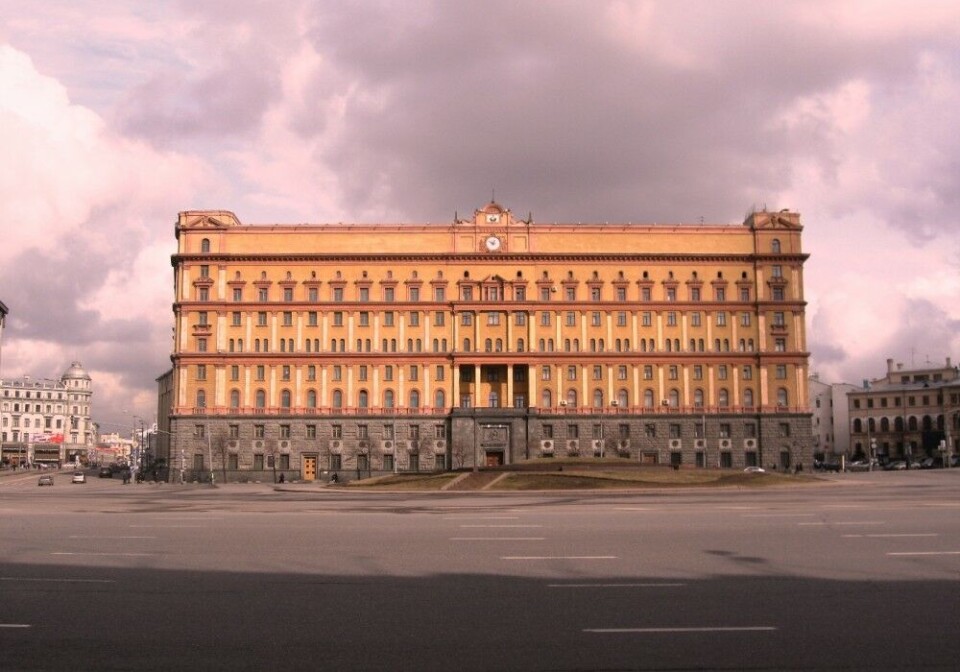
The statue of Felix Dzerzhinsky is set to return to its former location in front of the Lubyanka, the headquarters of the feared Soviet and later Russian political police. The decision to return the 1958 statue to central Moscow has reportedly already been made. Russian exile journalist Mikhail Zygar has written about this in the German news magazine Der Spiegel, referring to unnamed sources (see his article published May 30, 2026 here).
If that happens, it will simply be yet another confirmation of the constantly increasing role of terror and repression at the heart of contemporary Russian domestic politics. But it will also be the clearest message that Kremlin rulers have ever sent to their fellow citizens through the Dzerzhinsky monument.
Expected, yet different this time
July 20 marks exactly 100 years since the death of the founder of the first Soviet political police, the “Cheka,” which also served as the backbone of the first globally significant “totalitarian” dictatorship based on a single party and a single official ideology. This anniversary provides Putin and his inner circle with an official framework to legitimize commemorative activities associated with Felix Dzerzhinsky. Less than two months ago, for example, Putin incorporated Dzerzhinsky’s name into the official title of the Academy of the Federal Security Service (FSB). And in early June, a bust of Dzerzhinsky was installed at a former children’s camp near the city of Nizhny Tagil. Not to mention similar activities in Krasnodar and Simferopol. The list of “comebacks” will certainly not end there.
Moreover, on September 11, 2023, a smaller replica of the well-known Dzerzhinsky statue, which once stood in front of KGB headquarters, was placed in front of the building of the Foreign Intelligence Service (SVR) in Moscow. At that time, this marked the 146th anniversary of the birth of a man who, due to his revolutionary communist fanaticism, earned the nickname “Iron Felix.” Nevertheless, the current situation is different. And it is far more troubling for Russian society.
Lubyanka Square is, in fact, a very unique place. The removal of the Dzerzhinsky statue from the centre of what was then Dzerzhinsky Square, in front of the former KGB building, in the summer of 1991 was as symbolic for the events in Central and Eastern Europe as the tearing down of the monstrous concrete wall in Berlin in November 1989. It signalled hope for democratization, a hope that has since been buried by subsequent developments in Russia.
Even Putin’s regime—for which “Chekism” and the principles of a police state have become a leading doctrine—has so far hesitated to reinstall Dzerzhinsky’s statue there, because of the explosive potential for it to divide Russian society. The Kremlin even backed away from the idea during discussions on the topic as recently as five years ago. At that time, however, the regime was still under pressure from civic activism.
A sculpture of opposites
Since its creation and unveiling in December 1958, the Dzerzhinsky statue has been shrouded in strange and ambiguous symbolism. It is a 15-ton granite work by Soviet sculptor Yevgeny Vuchetich, based on a design by architect Grigory Zakharov. The statue itself is nearly six meters tall, and its total height, including the pedestal, is 11 meters. It was created as part of Khrushchev’s de-Stalinization campaign, an attempt to humanize the communist dictatorship. As part of this effort, Stalin and his chief “Chekist” Lavrentiy Beria were to be erased from the history of Soviet “good communism,” and the regime was to return to its “positive” founders, Vladimir Lenin and Felix Dzerzhinsky.
During this “thaw,” Vuchetich (who was also the creator of some other famous sculptures, most notably The Motherland Calls in Volgograd, the Warrior-Liberator Monument in Treptow Park in Berlin, and The Motherland Monument in Kyiv) first created another sculpture, titled “Let Us Beat Swords into Ploughshares”. He completed it in 1957, and the USSR subsequently donated it to the United Nations in New York in 1959, where it still stands today on the organization’s grounds.
The 1958 memorial of Dzerzhinsky is, however, also inspired by the shape of a sword – an upright sword is emblazoned on the pedestal, and the shape is repeated with the widest part at the base of the pedestal and tapering gradually all the way to the very top, Dzerzhinsky’s head. This time, however, not so that the world might beat its swords into ploughshares as part of a peaceful rapprochement, but because Dzerzhinsky’s Cheka presented itself as the “shield and sword” of the Communist Party—a shield for protection and a sword for killing enemies. Since Dzerzhinsky was a co-architect of the early terror in Soviet Russia, in this regard, he was certainly no counterpart to Beria. However, as noted above, the “spirit of the times” was marked by an effort to ease tensions, and so these contradictions were effectively obscured by the official propaganda of Soviet communism, which took on a more acceptable form at that time.
Even the symbolism of Dzerzhinsky’s removal in August 1991 was not entirely clear-cut. On the one hand, the statue’s removal and relocation to a secluded spot was met with enthusiasm; on the other hand, however, it preserved the official policy of the USSR, which never undertook any fundamental reform of the KGB. By “sacrificing” Dzerzhinsky, Gorbachev’s dying regime averted an even more radical attack on the KGB headquarters right next door. Had such an attack occurred, the regime would have risked a fate similar to that of the communist regime in former East Germany following the demonstrators’ attack on the “Stasi” headquarters. But none of the powerful figures in Moscow at the time wanted anything like that. Fortunately for the regime, however, the protesters settled for a half-hearted solution. And the statue of Dzerzhinsky still stands—intact and even restored—near the centre of Moscow, alongside other statues from the Soviet era in a park called Muzeon Park of Arts.
No more doubts
However, the return of the Dzerzhinsky monument to the very heart of the Russian capital would not be just a half-measure this time. It would send a crystal-clear message from Putin’s regime to all of Russian society: The country’s leaders could not care less about what anyone thinks. And what awaits you is not some pseudo-democratization, but only increasingly intense forms of psychological and physical terror.
Even for those who might still have some illusions, Putin will definitively confirm that he no longer has anything else to offer his fellow citizens.


