
EU sanctions shipyards and design bureaus key to Russia’s nuclear submarine fleet
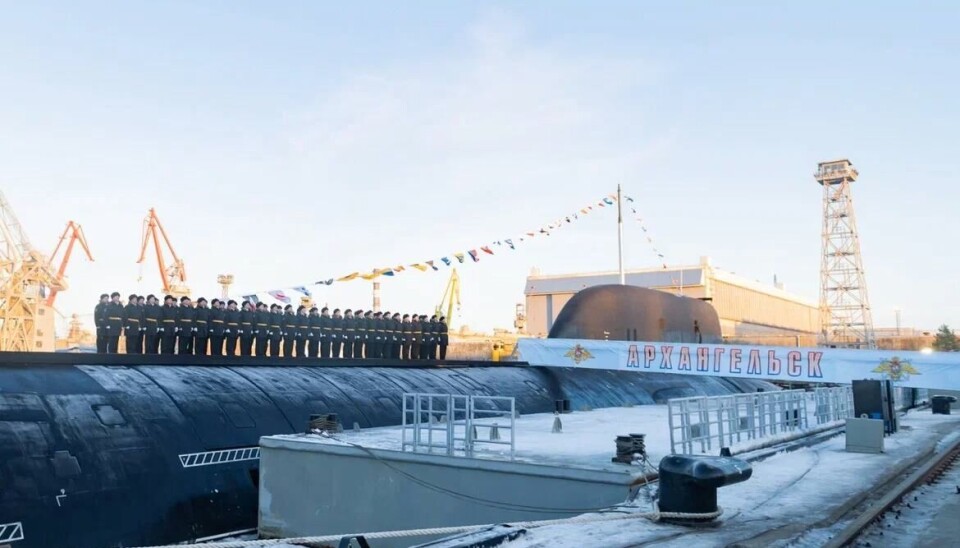
Russia’s nuclear submarine industry is a key target of the EU’s largest-ever sanctions package against Moscow. The measures target the Sevmash and Zvezdochka shipyards in Severodvinsk, as well as Shipyard No. 82 near Murmansk, alongside several design bureaus and companies in the submarine supply chain.


On 12 October, the European Union agreed its largest sanctions package against Russia since the country launched its full-scale invasion of Ukraine in 2022. Almost 1,600 individuals and entities linked to Russia’s military-industrial complex are included.
"We are making it significantly harder, slower and more expensive for Russia to produce the weapons it uses to kill Ukrainians" said Kaja Kallas, EU High Representative for Foreign Affairs and Security Policy.
Those listed are subject to an asset freeze, and the provision of funds or economic resources to them, directly or indirectly, or for their benefit, is prohibited. The individuals listed are also subject to a travel ban covering the EU.
Four of the sanctioned companies are based in Severodvinsk, Russia’s main hub for the construction and repair of nuclear-powered submarines.
Sevmash builds fourth-generation nuclear-powered submarines, including the Yasen-M and Borei-A classes, as well as special-purpose vessels such as the Khabarovsk and Belgorod. The shipyard also repairs and modernises major warships, including the nuclear-powered Admiral Nakhimov.
Located across the bay, Zvezdochka specialises in repairing and modernising older nuclear-powered submarines, primarily those serving with Russia’s Northern Fleet.
The Onega Research, Design and Technology Bureau provides marine engineering, design and technical support for naval shipbuilding and warship repairs.
Severny Reyd manufactures and repairs navigation and automation systems for naval vessels.
The EU sanctions list also includes two prominent design bureaus based in St Petersburg: Rubin and Malakhit. Rubin designs Borei-A-class ballistic missile submarines, while Malakhit is responsible for the Yasen-M-class multi-purpose submarines.
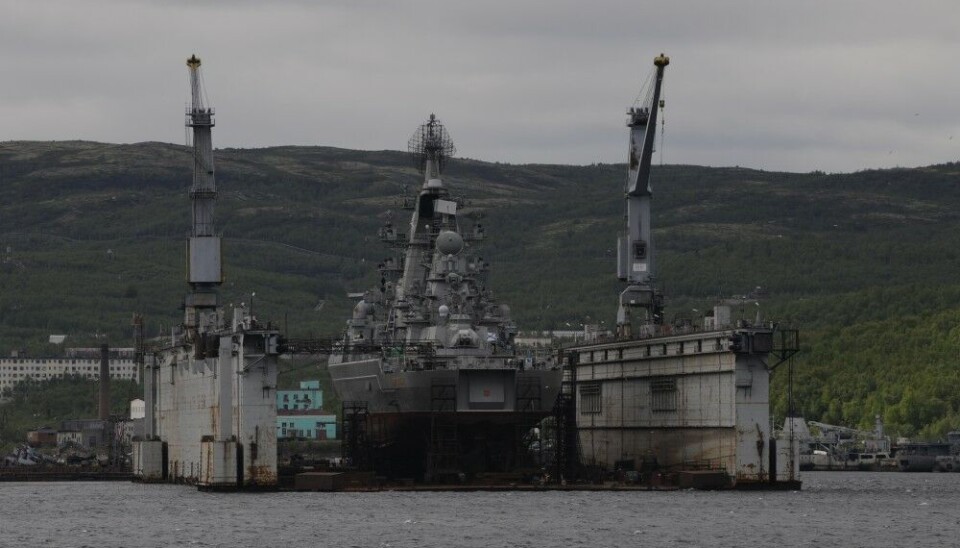
In the Murmansk region, the EU has sanctioned Shipyard No. 82 in Roslyakovo, north of Murmansk. The facility is best known for its former floating dock, PD-50, which sank in 2018 while Russia’s only aircraft carrier, the Admiral Kuznetsov, was undergoing repairs.
The same dock was previously used in the dismantling of the ill-fated Kursk submarine after it was raised from the Barents Sea in 2002. Today, Shipyard No. 82 belongs to Russian oil giant Rosneft, although little activity takes place at the facility.
Several other companies in north-western Russia have also been added to the EU sanctions list. Two Severstal plants in Cherepovets — Severstal Lifting Technologies and Severstal Cables — are among those targeted. The measures also cover shipbuilding and repair facilities in the Baltic region, including Admiralty Shipyards in St Petersburg and the 33rd Ship Repair Yard in the Kaliningrad region.
The EU has also sanctioned property developer Samolet and its chief executive, Anna Akinshina, over the company’s use of North Korean workers on construction projects. The EU considers this a violation of UN sanctions against North Korea.
Samolet is currently building the Kolskie Ogni residential complex in the town of Kola, near Murmansk. When Murmansk Region Governor Andrei Chibis announced the project, he described it as “the beginning of a housing renaissance” in the region.
The 12 October package represents the EU’s most extensive round of sanctions against Russia since the start of the full-scale invasion of Ukraine. The new restrictions target approximately 1,600 individuals and entities linked to Russia’s military-industrial complex.


