

Moscow adds human rights organisations to ‘terrorist list’
A few weeks after the Russian Supreme Court declared Memorial an "extremist organisation", a state monitoring agency has added human rights media project OVD-Info to its list of "terrorist and extremist organisations."
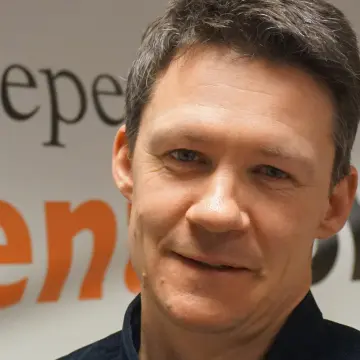
The Federal Financial Monitoring Service (Rosfinmonitoring) has added OVD-Info to Russia’s list of so-called "extremist and terrorist organisations," Radio Freedom reports.
Also added to the list are the Revolt Centre and the Museum Perm-36.
The Revolt Centre, an independent cultural venue in the northern Russian city of Syktyvkar, was designated a "foreign agent" in August 2025. It subsequently closed its doors. Its founder, Pavel Andreev, has been accused of treason.
The Museum Perm-36 is dedicated to a former Soviet forced labour camp near Perm, a city in the Ural region. The camp was part of Stalin’s Gulag system and held prisoners classified as "especially dangerous state criminals", most of whom were Soviet dissidents.
The latest crackdown comes only weeks after the Russian Supreme Court declared Memorial an "extremist organisation."
Memorial was originally founded in the late 1980s by Andrei Sakharov and other Soviet dissidents with the aim of preserving the memory of political repression. The organisation was dissolved by the Russian authorities in 2022. Following its closure, several new organisations operating under the name "Memorial" were established.

The Memorial human rights movement was awarded the Nobel Peace Prize in 2022.
According to Sergei Davidis, head of the independent project Support for Political Prisoners. Memorial, the Russian authorities are continuously introducing new repressive measures in an effort to keep the population in fear.
One reason for the current persecution of human rights defenders is the decline in Putin’s approval ratings and a broader erosion of public trust in state policy.
“Against the backdrop of a war that, thank God, is being conducted unsuccessfully, a deteriorating economic situation, and growing discontent among broad sections of the population — including those who have hitherto supported the war — it is becoming particularly important for the authorities to destroy everything that is alive and independent that still remains within the country’s borders,” Davidis said in a comment to the Barents Observer.
Davidis also points to the authorities’ desire to sever ties between Russians who have left the country because they oppose the policies of Putin’s regime and those who remain in Russia while holding similar views.
“Memorial represents historical memory, the Nobel Prize and, in essence, a certain moral authority. Ultimately, Memorial is associated with a genuine demand for an alternative perspective based on the values of human rights and freedom of expression. The regime therefore faces a challenge. It realises that the repressive measures already taken are insufficient to achieve its goals — the voices from abroad are still being heard. It has therefore taken further steps to overcome this.”


