
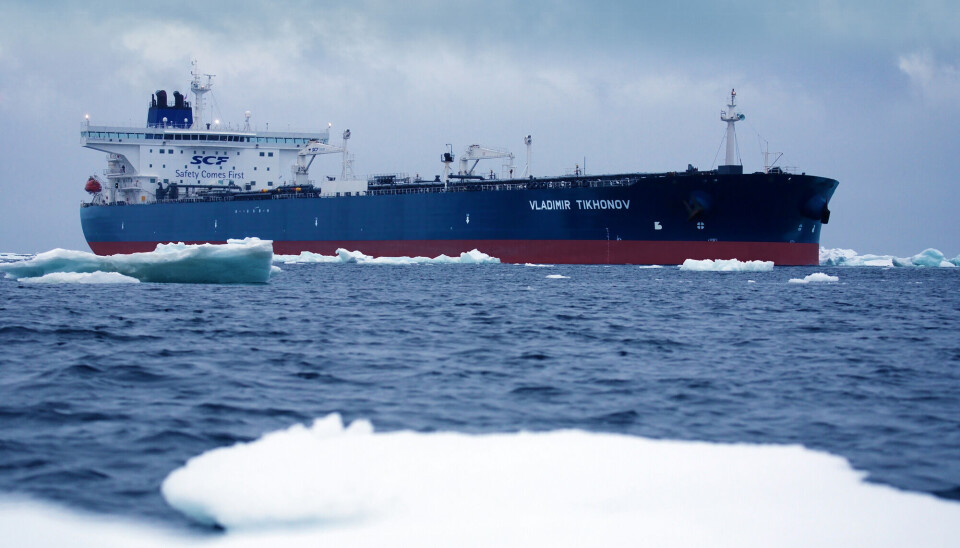
New European sanctions add pressure on Russian Arctic oil
The EU’s 20th sanctions package includes a full maritime services ban on crude oil and adds more vessels to the list of shadow tankers.

The new package of sanctions, adopted in Brussels on 22 April, marks another blow to Russia and its war economy.
The measures cover energy, financial services and trade.
A maritime services ban on crude oil means that European companies will be prohibited from providing insurance, financing, brokering and shipping services for the transport of Russian oil.
“It will further slash Russia’s energy revenues and make it more difficult to find buyers for its oil,” European Commission President Ursula von der Leyen said in a statement.
The ban will be coordinated with like-minded partners in the G7, she added.
As part of the 20th sanctions package, a further 43 vessels have been added to the EU’s list of shadow ships. The shadow fleet now comprises a total of 640 vessels, most of them oil tankers.
Murmansk is one of the Russian ports serving the shadow fleet. Since October 2025, more than 100 shadow tankers have made a port call to the Arctic city, figures compiled by the Barents Observer show. The lion's share of them are oil tankers, but there are also a significant number of LNG carriers involved in shipments from the Arctic LNG 2 project and the Saam FSU.

According to von der Leyen, the EU will also make it more difficult for Russia to acquire tankers for use in the shadow fleet, and will introduce sweeping bans on the provision of maintenance and other services for LNG tankers and icebreakers, further constraining gas export projects.
The 19th sanctions package, adopted in September 2025, included a ban on LNG imports. The full ban is due to come into effect on January 1, 2027.
Combined with Ukraine’s increasingly effective long-range strikes on Russian oil and gas infrastructure, the EU sanctions are placing significant strain on Russia’s oil-dependent economy.
According to the European Commission, Russia’s fiscal revenues from oil and gas fell by 24 percent in 2025 compared with the previous year — the lowest level since 2020 — widening the fiscal deficit.
“Oil and gas revenues in January will be the lowest since the war began,” von der Leyen said.
“This confirms what we already knew: our sanctions work, and we will continue to use them until Russia engages in serious negotiations with Ukraine for a just and lasting peace,” she emphasised.
The 20th sanctions package comes as the EU also adopts its €90 billion loan for Ukraine.
“Across all these efforts runs one clear thread, one shared objective, one firm conviction: that Ukraine’s security, prosperity and free future lie at the heart of our Union,” the Commission president said.


