
OPINION
The heat is on — and Norway is adding fuel to the fire
Norway risks placing itself on the wrong side of history by lobbying against the European Union's opposition to new Arctic oil and gas drilling.
An exceptional spring heatwave shattered temperature records across Western Europe this week.
The UN's World Meteorological Organization warns that the average global temperature between 2026 and 2030 is likely to exceed 1.5°C above the pre-industrial average. Arctic temperatures over the next five extended winters (November–March) are forecast to be 2.8°C above the 1991–2020 average — an anomaly more than three-and-a-half times greater than the projected global mean temperature increase over the same period.
The warnings could hardly be clearer. The evidence is overwhelming. There is no longer any credible room for doubt or alternative interpretation.
More than 99 per cent of actively publishing climate scientists agree that the current warming trend is driven by human-caused greenhouse gas emissions. Climate change poses a fundamental threat to human health, ecosystems and biodiversity — on land and at sea.
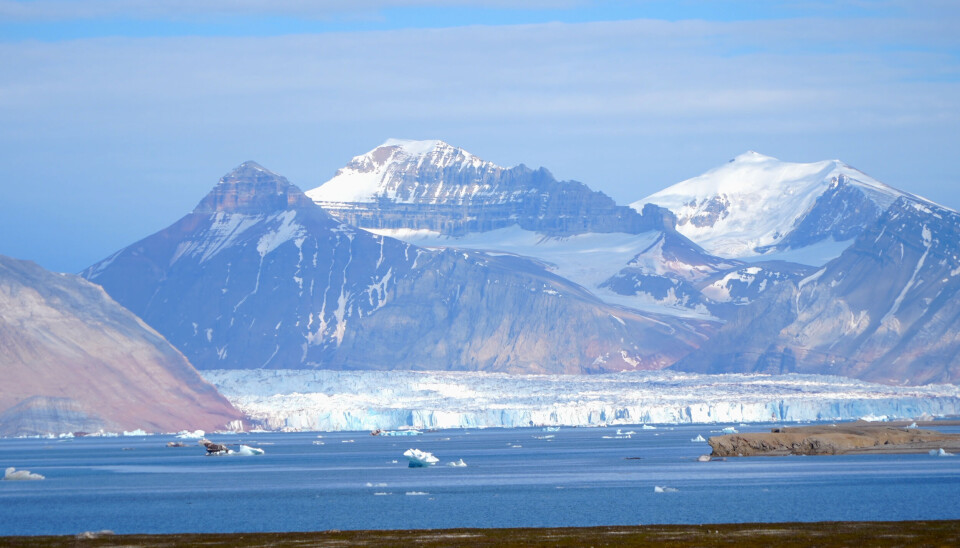
The Arctic is warming nearly four times faster than the global average, with some of the most dramatic changes occurring in the Barents Sea. For us at the Barents Observer, based on its shores, this unfolding crisis has been central to our reporting throughout the newspaper's nearly 25-year history.
We are witnessing the so-called Atlantification of the Arctic marine ecosystem. As sea ice retreats, the Arctic is rapidly transforming from a white ocean into a blue one. Warmer, saltier Atlantic waters are pushing northwards, displacing native polar species and bringing boreal species such as Atlantic cod, herring and mackerel into Arctic waters. Further north, on Svalbard and along Siberia's northern coastline, thawing permafrost is destabilising ecosystems, settlements and critical infrastructure.
No one in the Norwegian government disputes these facts. Yet Norway is actively lobbying the European Union to weaken or remove its opposition to new Arctic oil and gas drilling as Brussels prepares to review its Arctic policy in 2026.
This April was the warmest ever recorded in Northern Norway. On the very day the Norwegian Meteorological Institute reported this milestone, the government announced plans to open dozens of new offshore blocks for oil and gas exploration. Thirty-eight of those blocks are located in the Barents Sea — part of the Arctic Ocean.
Prime Minister Jonas Gahr Støre said the new licences "will enable us to continue generating substantial value for society, support jobs across the country, safeguard our shared welfare, and contribute to Europe's energy security".
I could add:
Norway's dilemma is that we are, as a nation, petroholics. We understand perfectly well that the climate crisis is driven by the combustion of fossil fuels. At the same time, we remain convinced that our prosperity depends on petroleum revenues. Like an addict who knows the damage but cannot quit. We just need to drill one more Arctic oil field before closing time.
Yet opposition to further Arctic drilling is growing across Norway, the Nordic countries and Europe. As temperatures approached 40°C in parts of Southern Europe this week, a coalition of major Nordic financial institutions, trade unions, climate scientists and political leaders issued a stark warning to the European Commission. Their message was simple: maintain the EU's opposition to new Arctic oil and gas development.
Among the signatories was former German Vice-Chancellor Robert Habeck. He told the Norwegian newspaper Dagens Næringsliv that lifting the EU's restrictions on new Arctic petroleum projects would lock Europe into fossil fuel dependence for decades.
Habeck recognises the security risks created by Europe's energy vulnerabilities. But he is right to argue that the solution lies not in expanding fossil fuel production, but in accelerating electrification and renewable energy deployment.
Few countries should understand this better than Norway. Electric vehicles account for almost 98 per cent of new passenger car sales, making Norway the global leader in EV adoption. This transformation did not happen by chance. It was driven by sustained political commitment, generous tax incentives and long-term policy choices.
For renewable electricity, the EU is making very strong progress and is approaching a system where renewables dominate generation. Solar has been growing especially quickly. In 2024, solar generated more electricity in the EU than coal for the first time.
I'm not arguing that existing petroleum production should be shut down tomorrow. But a necessary first step would be to stop opening new fossil fuel frontiers in the Barents Sea.
New Arctic oil and gas projects are not a solution to Europe's current energy challenges. As the investors' letter to the EU points out, Arctic developments on the Norwegian continental shelf typically require around 13 years from discovery to production. In the Barents Sea, where conditions are harsher and infrastructure more limited, development times are often even longer. New Arctic fields are therefore unlikely to reach full production before the 2040s.
Unfortunately, Norway is not a member of the EU. But it is Europe's largest supplier of natural gas and a major oil exporter.
In the short term, Norwegian gas can help Europe as the bloc phases out Russian energy imports, with a full ban on Russian LNG due to take effect in 2027, followed by pipeline gas later that year. But the lessons of Russia's war against Ukraine — and the geopolitical instability that continues to shape global energy markets as Donald Trump plays golf with our globe — are clear. Europe's future security depends on reducing oil and gas dependence, not on shifting it from one fossil fuel supplier to another.
The lesson from nature is clearer still: the future is renewable.


