

Political prisoners are dying in Russian prisons and detention centres
Three anti-war activists have died in custody over the past month, bringing the total to five since the start of 2026. Since the beginning of the full-scale invasion of Ukraine, the number of people imprisoned on political or anti-war charges who have died behind bars has reached dozens.
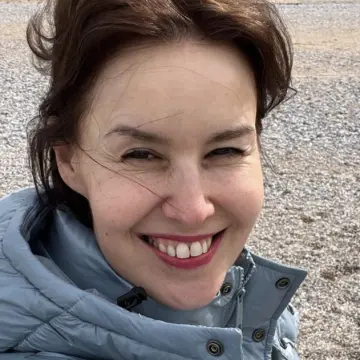
On 17 April, 43-year-old blogger Dmitry Kuznetsov, who had adopted the name Vegan Khristolyub Bozhiy, died in Penal Colony No. 2 in the Voronezh region. In February 2025, he had been sentenced to three years in a penal settlement on charges of “rehabilitating Nazism” and “offending religious feelings”.
According to the human rights project For Human Rights, he was found hanged. His father rejects the official version of suicide, noting that for believers taking one’s own life is considered a sin.
Khristolyub, who described himself as a Christian activist, pacifist, cosmopolitan and preacher, came under criminal investigation in November 2023 over videos posted on his YouTube channel. In one, he criticised Islam in the context of a court case in Chechnya involving Nikita Zhuravel, who burned a Quran and was later beaten by the son of Ramzan Kadyrov. In another, he condemned the actions of Stalin and the Red Army during the Second World War, as well as the recruitment of prisoners to fight in Ukraine.
In addition to his prison sentence, he was ordered to undergo compulsory outpatient psychiatric treatment. After sentencing in October 2025, he was initially released under travel restrictions and instructed to report voluntarily to the penal colony. Instead, he staged a one-man protest, holding a placard reading: “Jesus commanded us to love our enemies, not to kill, for God is love.” He was detained and transferred to custody, where he was placed in a punishment cell.

In January 2026, a court ordered his transfer to a general-regime colony. According to acquaintances, he had strained relations with both prison staff and some fellow inmates. After his transfer, he went on a nine-day dry hunger strike, losing around 10 kilograms. Although he was later moved to a shared cell, he was returned to solitary confinement shortly before his death.
Khristolyub is the third political prisoner to die in Russian custody in the past month.
On 3 April, 53-year-old artist Andrei Akuzin died in a pre-trial detention centre in Komsomolsk-on-Amur. His death was reported by theatre director Tatyana Frolova, a friend of his living in France.
In an interview with Mediazona, Frolova said Akuzin had been arrested the previous day over a social media comment. “He was no terrorist — it’s absurd. He simply didn’t want to stay silent,” she said. According to her, he hanged himself in his cell. She added that he had repeatedly written that “the only free form of protest today is suicide”.
Mediazona later reported that Akuzin was posthumously added to Russia’s list of terrorists and extremists on 10 April. He had no legal representation.

In March, 56-year-old Vladimir Osipov, a resident of the Moscow region, died in hospital in Ukhta, Komi Republic. He had been sentenced in November 2025 to six and a half years in prison under laws criminalising so-called “fake news” about the army, based on posts on the social network Odnoklassniki.
Before his arrest, Osipov suffered from hypertension and kidney stones. He was severely beaten at the time of his detention in November 2024. According to relatives cited by Sever.Realii, he later showed his daughter extensive bruising, including marks resembling the sole of a police boot.
His condition deteriorated after the beating, but medical attention was delayed. In pre-trial detention, he repeatedly complained of poor health and fell ill during court hearings, with ambulances called on several occasions. However, he was not admitted to hospital.
On 16 March 2026, Osipov was hospitalised in a coma without his family being informed. They learned of his death two days later, when his lawyer arrived for an appeal hearing. Doctors cited a haemorrhagic stroke as the cause of death, but his relatives insist he was effectively “killed” through denial of medical care.
Two further deaths of political prisoners have been reported in 2026.

In January, 52-year-old Roman Sidorkin died in a tuberculosis hospital in Saratov. In July 2023, he had been sentenced to 17 years in prison on charges of treason, preparing sabotage and illegal possession of weapons. The case was heard behind closed doors. In 2025, he received a further 23-year sentence for allegedly stealing military equipment for sale abroad.
The prisoners’ rights group Rus Sidyashchaya reported that Sidorkin fell ill with bronchitis in December 2025, which developed into pneumonia. He was hospitalised on 5 January and died four days later.
In February, 65-year-old St Petersburg artist Aleksander Dotsenko died in custody. He and his wife, Anastasia Dyudyaeva, had been convicted of distributing pro-Ukrainian leaflets in a supermarket. In 2024, he was sentenced to three years in a penal colony, while his wife received three and a half years. On 12 February, Dotsenko was taken from prison to hospital with a massive heart attack and died on 19 February. His wife was not allowed to attend the funeral.
According to Olga Romanova, head of Rus Sidyashchaya, at least 43 political prisoners are known to have died in custody between 2022 and 2026, though the true figure is likely higher.
Human rights advocates say political prisoners in Russia are often held in harsh and abusive conditions. They are frequently placed in punishment cells on fabricated grounds, subjected to beatings and threats of sexual violence, denied adequate medical care, restricted in access to lawyers, and deprived of fresh air, proper nutrition and basic hygiene. Such treatment, they say, is intended to break detainees and force them to renounce their political beliefs.


