

Renowned Arctic ornithologist jailed for three and a half years over 2,000-rouble donation
Sofya Rozenfeld, a Doctor of Biological Sciences, dedicated her life to studying birds in the remotest corners of the Russian Arctic. Then the authorities discovered that she had made two small donations to the Anti-Corruption Foundation (FBK) after it had been designated an ‘extremist’ organisation.
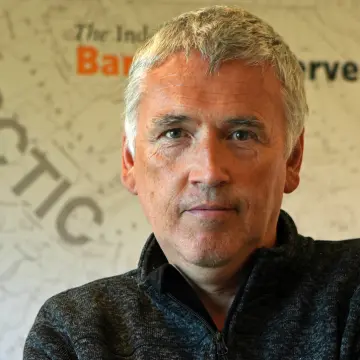
Rozenfeld was aboard a research vessel in the Far North when, in June 2021, the Moscow City Court ruled that the Anti-Corruption Foundation and its affiliated organisations should be banned and liquidated as ‘extremist’ groups. The 50-year-old scientist later said she had been unaware that her monthly bank transfers to support the fight against corruption had become illegal.
As soon as Rozenfeld returned from the Arctic expedition, she cancelled her recurring donation. By then, however, it was too late.
On 7 October 2026, Moscow’s Gagarinsky District Court sentenced Rozenfeld to three and a half years in prison over two donations of 1,000 roubles each (approximately €22 in total), made in August and September 2021.
The investigation was launched by the FSB.
Instead of counting migratory birds above the Arctic Circle, the renowned ornithologist must now count the days until her expected release from a penal colony in early spring 2030.
Rozenfeld is currently being held at Pre-Trial Detention Centre No. 6 in the Russian capital, according to the campaign calling for her release. The human rights project Political Prisoners. Memorial has recognised her as a political prisoner.
About 800 people have now signed a petition in support of Rozenfeld.
"Anyone who has ever met Sofya understands perfectly well that she in no way deserved what has happened to her. Anyone who has seen her, even for a few minutes, knows full well that she is someone who truly and wholeheartedly loves her country. Someone who consciously chose to live and work in Russia," her friends, colleagues and supporters wrote.
According to Mediazona, in spring 2026, Moscow courts began bringing cases of ‘financing extremism’ against employees of the Russian Academy of Sciences, one after another. The news outlet has documented six similar cases involving Academy researchers.
Rozenfeld holds dual Russian and Israeli citizenship.
Her friends told Mediazona that she was deeply devoted to her work.
"She would say, 'There’s work here, there are birds here, there’s everything,’" one of Rozenfeld’s colleagues told the outlet on condition of anonymity.
"Of course, she had many international projects: she conducted bird censuses in Alaska and at wintering grounds in Greece, Bulgaria, France, Kazakhstan, South-East Asia and China. But her main area of work was our Russian Arctic. If she had left, that would have closed the door on her career there for good. She wanted to do science in Russia, and she achieved a great deal," Mediazona quoted the colleague as saying.

She also actively opposed legislation loosening the ban on the killing of endangered species.
Didier Vangeluwe, an ornithologist at Belgium’s Institute of Natural Sciences and a longtime collaborator of Rozenfeld, told Science that he was deeply concerned about how she would cope with imprisonment.
"She criss-crossed the Russian High Arctic in love with freedom, in love with nature, following migratory birds across thousands of kilometres”, he said. "And now, she’s in a box."


