

The man from the North: “The Arctic is also home, not just a geopolitical playground”
Finland's new Ambassador for Arctic Affairs opens up Finland's position on Russia and the need for closer cooperation with Norway to the Barents Observer.
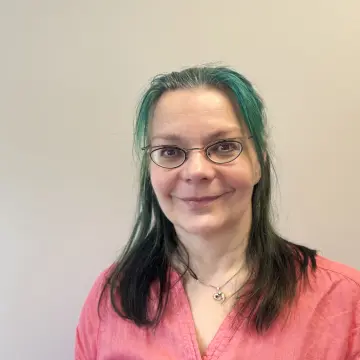
The newly appointed Finnish Ambassador for Arctic Affairs, Kalle Kankaanpää, took up his post last autumn. In an exclusive interview with the Barents Observer, he shares his perspective on the current situation in the Arctic.
“It is important to stress that the Arctic is, first and foremost, home to those who live here. It is home. The Arctic is far more than a geopolitical playground.”
Kankaanpää recalls a time when the Arctic was largely shielded from wider political tensions. People spoke of the “Arctic exceptionalism”, meaning that military security issues were not part of the discussion.
“That may have been optimistic, but it reflected a deliberate choice,” he says. “Since 2022, however, the same international tensions affect the Arctic as elsewhere.”
“It is deeply regrettable that the situation is what it is. There was productive cooperation with Russia for many years. There are good scientists in Russia and we could use information that we previously got, but that is no longer possible while Russia wages a war in Ukraine. Scientific research and people-to-people contacts across the Arctic have suffered a lot. But it was not our choice, it was Russia’s.”
Satellites and Indigenous knowledge in the fight against climate change
Despite the current situation, a considerable amount of data on climate change can still be obtained from satellites. Finland also has the Saami Climate Council, which Kankaanpää notes is unique on a global scale. This scientific body combines Sámi traditional knowledge with academic research to provide insights into climate change. Finland has also maintained meteorological records for a long time; the Finnish Meteorological Institute was established in 1838.
There are working groups within the framework of the Arctic Council where Russian and other Arctic experts continue to cooperate online at a technical level. However, Kankaanpää cannot say what would be required to resume cooperation at a higher political level. Russia would first need to end its war in Ukraine and re-engage constructively in international relations. Only then could further steps be considered. As he puts it, the consequences of the war are Russia’s responsibility.
At the same time, another serious issue is evident: northern Finland is being significantly affected by climate change.
“We already know a great deal about climate change, but we must take more concrete action,” Kankaanpää says.
One possible step would be to dust off earlier discussions on black carbon. Reducing black carbon (soot) emissions could have a rapid impact on slowing Arctic warming.
According to Markku Ollikainen, Professor Emeritus of Environmental and Resource Economics, eliminating black carbon could reduce Arctic warming significantly.
"If black carbon was reduced efficiently everywhere, the warming of the Arctic region would reduce 0.25 per cent. If black carbon was reduced only in the Arctic countries, warming would reduce 0.1 degrees. Both are significant" says Ollikainen to the Barents Observer.

Even before Russia’s full-scale invasion of Ukraine in 2022, Finland’s former president Sauli Niinistö frequently raised the issue of black carbon.
"Another thing to keep in mind are the emissions of methane gas from livestock, rice cultivation, use of LNG in ships and other sources. If we reduced methane emissions with 30%, the global warming would go down 0.2 per cent by the year 2050", Ollikainen continues.
Arctic policy should be cross-cutting
“Everything that happens in northern Europe has implications for the Arctic,” says Kankaanpää. “Arctic considerations should therefore be integrated into all policy areas, including environmental policy, transport and agriculture. The challenge is that some partners still treat the Arctic as a separate issue.”
Recently, former Finnish Prime Minister Jyrki Katainen was appointed Special Adviser on EU Arctic relations. The European Union is set to publish its new Arctic strategy in September. Finland, Sweden and Denmark have contributed their views, while Norway and Iceland have also been consulted.

“One important factor is, of course, that Norway is not sitting at the European Union tables where decisions are made,” Kankaanpää notes.
-So, should Norway join the EU?
“That is a decision for the Norwegian people,” he replies with a smile. “Norway is already very closely aligned with the EU—it almost feels like a member state. It is comparable to Finland’s and Sweden’s partnership with NATO before they became full members.”
Nevertheless, Finland’s and Sweden’s accession to NATO has brought tangible changes. In Finland, for example, legislation concerning nuclear weapons is currently under review, sparking significant political debate.
Like Sápmi, the Arctic region can almost be seen as a shared space for the Nordic countries. There are few major differences between northern Norway, Finland and Sweden. The Nordic countries established a passport union in the 1950s, some four decades before the Schengen Agreement.
However, certain cross-border administrative barriers remain. Kankaanpää emphasises that these are important issues for individuals and should be addressed.
The enduring question of land and water rights for the Sámi people
The revised Act on the Sámi Parliament came into force in Finland in August last year. Article 9 establishes an obligation for Finnish authorities to consult the Sámi Parliament on all far-reaching and significant matters affecting the Sámi homeland—such as land and water use, mining and the extraction of rare minerals.
“This is highly significant,” says Kankaanpää. “We are only at the beginning of the process, so both the Finnish government and the Sámi Parliament are still determining how it should work in practice. Developments are being closely monitored by Norway, Sweden and the Sámi community.”

The right to land and water has long been a contentious issue. One example is from the 1920s, when Finland sold salmon fishing rights in the fjords of Sør-Varanger in the Barents Sea to Norway for 12,000 gold crowns, after acquiring Petsamo and access to the Arctic Ocean through the Treaty of Tartu in 1920. These were traditional fishing grounds of the Skolt Sámi.
In today’s more militarised context, the Sámi Parliament has criticised Finland for excluding it from negotiations related to Finland’s NATO membership in 2023, as well as from discussions on the Defence Cooperation Agreement (DCA) signed between Finland and the United States in 2024.
There are, however, signs of change. The Finnish Defence Forces have recently approached the Sámi Parliament to propose a meeting in the near future.
Looking ahead
Finland’s overarching goal in the Arctic remains peaceful cooperation. Also the US has been a matter of concern after president Trump's claims on Greenland. But the United States is a key strategic partner for Finland even in Arctic issues.
"At my level, relations with my American counterparts are very good. For Finland, it is important that the United States remains committed to sustainable Arctic cooperation within the Arctic Council. Arctic security is an increasingly important aspect of NATO cooperation", says Kankaanpää.
Finland promotes the security cooperation of so called Arctic Allies or A7 (the Nordic countries, Canada and the United States) in NATO. The Nordics and Canada are closely like-minded countries in Arctic issues.

In a recently updated government report on changes in the security environment in Finland and Europe, Finland states that it will assess its future engagement with Russia both independently and in coordination with its partners. At some point, reopening political dialogue may need to be considered—but there will be no return to the previous bilateral relationship.
“It is up to Russia to demonstrate that it can once again act as a responsible international partner,” Kankaanpää says. “That is a question for them, not for us.”
*******************
This article is published as part of an exchange program financed by Svenska Kulturfonden in Finland.


