

Kirkenes
Barents Pride cancelled
Organisers say they do not want to put Russian LGBT people at risk. Meanwhile, participants in previous years’ Pride events argue that they are capable of taking care of their own safety.
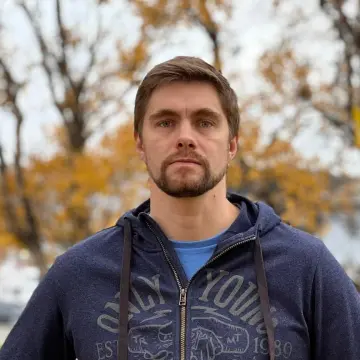
Ivan, from Moscow, is just over 30. He works in IT and has everything that might be considered a sign of a successful life. But Ivan is missing the most important thing – freedom. Ivan is gay, and he has to hide his relationships for fear of harassment.
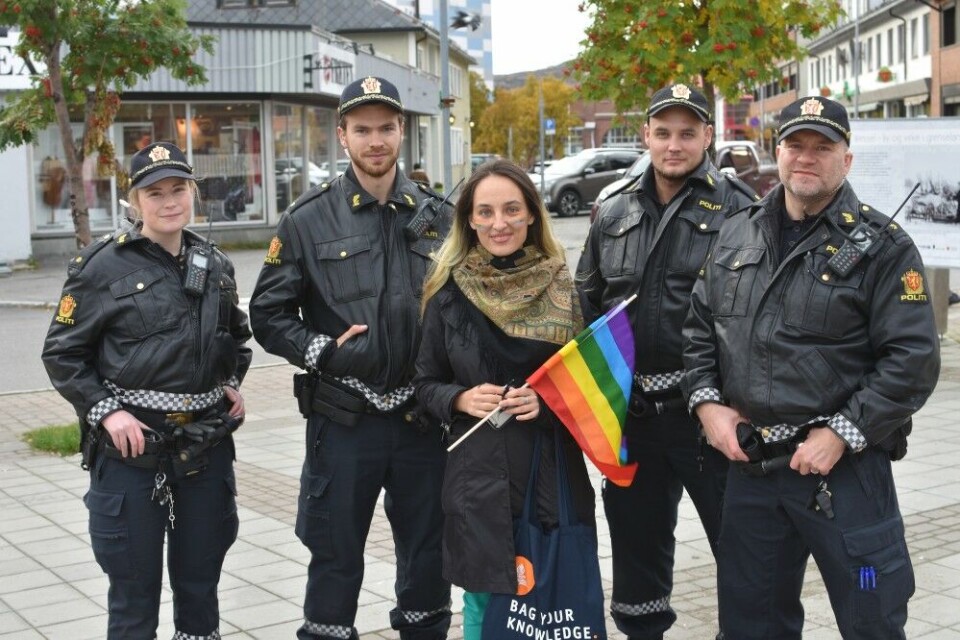
Trips to Pride in Kirkenes – which he attended three times, secretly, flying via third countries – were, in his words, a breath of fresh air. Ivan walked the streets of the Norwegian town and openly met LGBT people. Concerts, exhibitions, free conversation and even police officers there to ensure your safety – all of this was so different from the lives of queer people in Russia. Throughout the past year, Ivan dreamed of returning to Kirkenes. But in 2026, Barents Pride was cancelled.
“In recent years, so much has already been taken away from me: friends, free access to information, a basic sense of security, the ability to travel and even simply to work – many services have become unreliable due periodic blocking [of online services]. And, most importantly, they have taken away any hope of a decent future. After Pride was cancelled, I got the feeling that we are all drowning at sea, and that even the lifebuoy we could hold on to for a little while has been taken away from us.”
The organisers of Barents Pride, Arctic Pride Tromsø, announced on 15 September that the traditional event – the tenth to be held – would not take place. The authors of the press release said they stood in solidarity with the LGBT community in Russia, but were deeply concerned about the safety of Russian participants. The organisation added that a Pride event in the Sør-Varanger municipality might still take place, but “not in the same format as before”.
“We will continue to stand up for those who are increasingly less able to stand up for themselves, but we must do so in a way that does not put at risk the people we want to support,” said Arctic Pride CEO Kjetil Cornelius Kviteberg.
In practice, this means that if the event can be organised at all, it will take place without Russian participants – even though their presence was the defining feature of Barents Pride. Queer people were delighted to be able to gather just 15 minutes’ drive from the Russian border without fear of being [detained by Russia’s National Guard], even if getting there required them to take a huge detour.
“You don’t need to pretend to be my mum or dad helping me live”
Barents Pride has been held since 2017. Every year, dozens of queer people from Russia travelled to Kirkenes, 400 kilometres north of the Arctic Circle. For several days, the town hosted concerts, exhibitions, discussions and seminars, as well as the parade itself. The local Lutheran church held a “Rainbow Mass” – a liturgical service celebrating the coming together of people and expressing support for LGBT communities.

One of the most prominent events was a performance near the Norwegian-Russian border. People who were forced to remain silent and hide their identities in Russia spoke openly about what they thought of their country. Many did so with their faces covered, however: they still had to return home. The security measures they were forced to take became part of the statement itself – if the state has declared you an outlaw, why not take the absurdity of it to its logical conclusion?


For a month, Barents Observer tried to find out from the organisers why holding the Pride event had been possible last year but was not this year. The fictional “International LGBT Movement” was designated extremist by Russian authorities in 2023, and a ban on “gender reassignment” also came into force that year. Since then, legislation concerning queer people has not become more restrictive. Participants in the Pride event were first questioned by the FSB when returning to Russia in the very first year the event was held. In other words, the risks have not increased. Barents Observer received no answer to the question – only general statements about growing pressure on queer people in Russia.
This position is completely unacceptable to former Pride participants.
“What is Russia like? You can do something and everything will be fine; you can do nothing and still end up with a prison sentence. It’s Russian roulette,” explains Prokhor Gusev, a trans man from Tromsø. “And when someone says: we won’t hold the event because we’re worried about you and your fate… Guys, you won’t save me this way. That’s not how it works. You don’t need to pretend to be my mum or dad who helps me live.”
Prokhor Gusev moved to Norway several years ago. He was lucky: he managed to transition and change his documents in Russia while this was still possible. Today, life for Russian trans people has not merely become more difficult – they are effectively banned. People in Europe know about this, but knowing is not the same as understanding, Prokhor says.

“How do the repressions affect my life? I can choose not to walk around Russia carrying a rainbow flag – so what’s the problem? Yes, but my marriage can be dissolved, my documents can be annulled, I cannot receive medical care and so on. And these things only become understandable through personal contact,” Prokhor stresses.
In his view, Barents Pride was a special event.
“It was a clear signal to the Russian system: look, right next door to you, people are living freely, loving freely and even showing it. Russia and other patriarchal states are trying to make the LGBT community invisible, to erase its identity. And we went out with the rainbow flag on behalf of those who could not.”
“Barents Pride cannot simply be replaced”
“Barents Pride cannot simply be replaced by another event,” says Connie, a Norwegian queer person from Kirkenes who is also deeply saddened by the loss of the Pride event.
The activist believes that the deeper the divide between Norway and Russia becomes, and the worse the situation for queer people on the other side of the border, the more important it is to support them and give them an opportunity to speak out.
“I have enormous respect for the Russian LGBT people who took part in Pride,” Connie says. “Their presence symbolised courage, but also hope. At a time when Russian LGBT people have fewer and fewer opportunities to be visible and meet LGBT people abroad, one of the platforms that symbolised this connection is disappearing.”
Arctic Pride says that local activists are currently busy organising a Pride event in Kirkenes “for their own community”. When it will take place, and whether it will take place at all, remains unknown.


