
"Culture cannot stay silent in wartime"
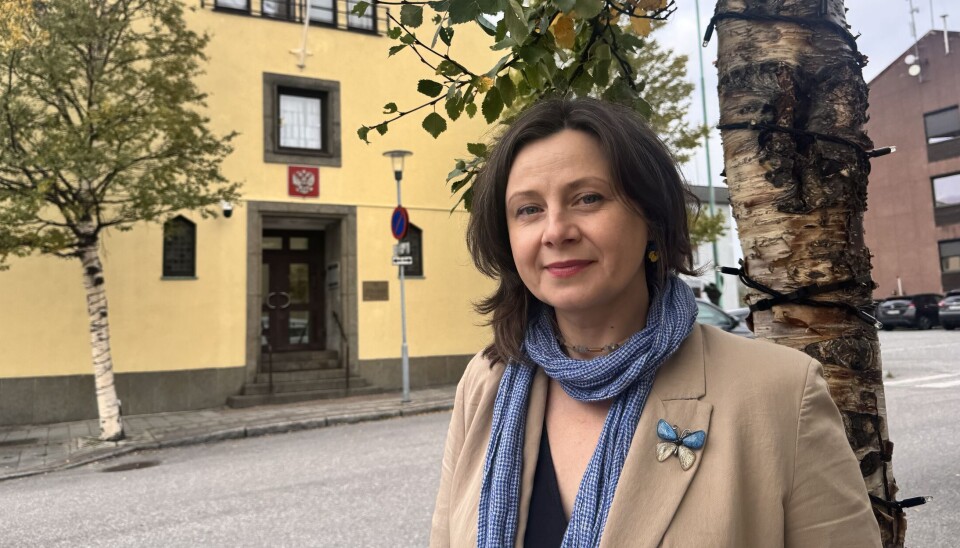
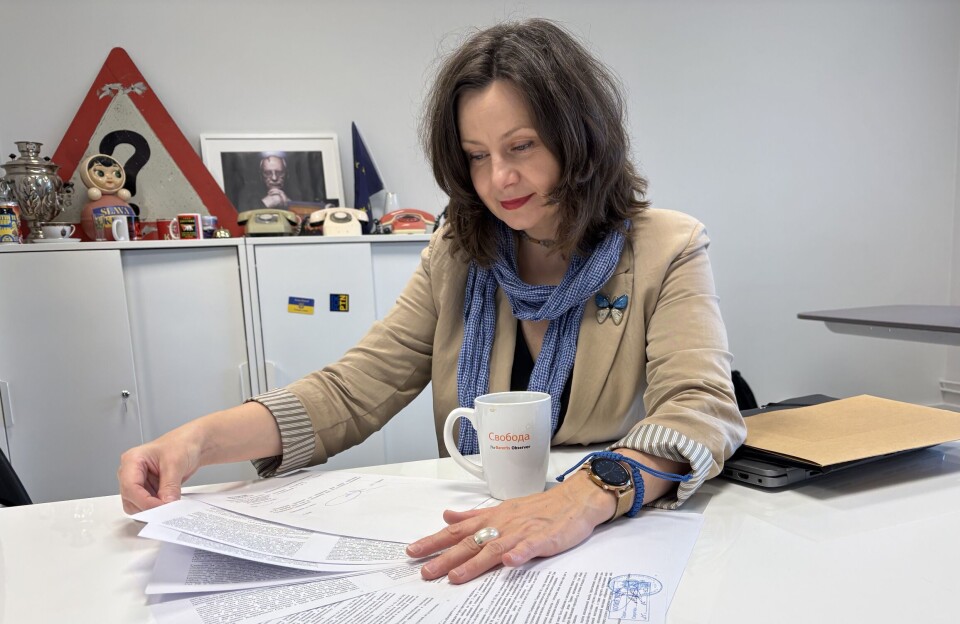
Museum Director Maria Smorževskihh-Smirnova from Narva, Estonia, has been sentenced in absentia to 10 years in a Russian prison for displaying banners calling Putin a war criminal.
"The lessons of Narva are clear: hybrid warfare affects local communities, culture is under threat, and defending truth is essential," she said during a visit to Kirkenes, Norway.
The Narva Museum is located in a 13th-century castle situated on the western shore of the Narva River. Only about 100 metres separate the museum walls from the Russian town of Ivangorod.
This is the borderland between West and East. "Europe starts here" is the slogan of the Baltic city.
The border between Narva and Ivangorod is a dividing line between liberal democracy and an aggressive dictatorship, which is waging war not only in Ukraine but also, with hybrid and composite tools, in the EU and beyond.
Over several years, Narva has been the target of a massive Russian disinformation and propaganda campaign. Museum Director Maria Smorževskihh-Smirnova is at the front line.
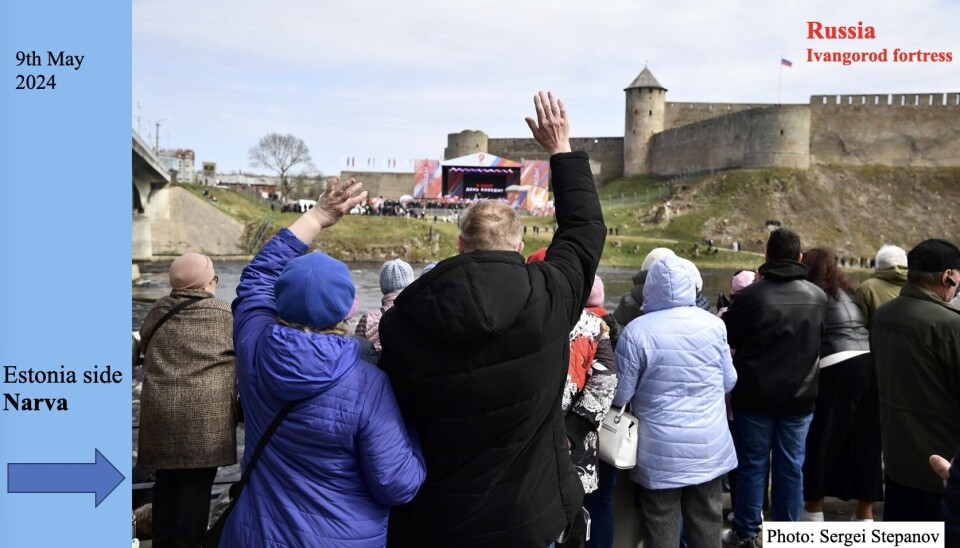
On every 9 May, the day celebrated in Russia as "Victory Day," Narva turns into a propaganda war zone.
Across the river in Ivangorod, the Russians set up huge screens showing Putin’s speeches, Moscow parades, Soviet war films, and concerts, all directed towards the Estonian side. Over the years, the scale of the event has grown. Lately, tall cranes have been moved to the riverbank in Ivangorod, and powerful loudspeakers have been lifted into the air, making it impossible to escape the noise on the Estonian side. In these events, the Russians glorify military power and compare "the Great Patriotic War" with today’s war against Ukraine.
Smorževskihh-Smirnova and her museum colleagues have not stood passively by.
"For us, silence is not an option," she stresses.
For us, silence is not an option"
The museum director spoke at the Border Seminar in Kirkenes, an annual event organised by the UiT Arctic University of Tromsø.
Over the past four years, on 9 May, the Narva Museum has displayed a banner on the castle wall facing Russia reading "Putin is a war criminal." Last year, it read: "Putler—war criminal."
The museum director emphasises that the banners are about truth and solidarity with Ukraine.
"These banners are not political statements—they are about truth, support, and solidarity with Ukraine, including its cultural institutions. We call war a war. And a war criminal—a war criminal," she says.
The Narva Museum has also engaged in several other initiatives aimed at exposing the level of repression under the Russian regime and the aggression against Ukraine.
In 2024, it organised an exhibition titled "Narva 44," dedicated to the bombing of Narva by Soviet aircraft in 1944. With archival materials and photos, the museum highlighted the destruction caused by war. As part of the initiative, partner organisation Propastop prepared a flyer comparing two bombed schools in Narva (1944) and Zhytomyr, Ukraine (2022), stating: "Russia has always committed war crimes."
The exhibition provoked outrage on social media, she admits.
"We receive a huge number of responses, and they are always very black and white: on one side, there are threats and negativity; on the other, support and gratitude. There seems to be nothing in between."
According to Maria Smorževskihh-Smirnova, museums and culture are key targets in Russia’s war.
"War crimes are often understood as crimes against civilians—and they are. But we must also speak about crimes against culture and not forget the scale of destruction aimed at Ukraine’s cultural heritage. Because cultural heritage is always about preserving national identity and history," she says.
We must also speak about crimes against culture and not forget the scale of destruction aimed at Ukraine’s cultural heritage. Because cultural heritage is always about preserving national identity and history"
Smorževskihh-Smirnova and her colleagues have been aggressively targeted by Russian authorities and their accomplices. One of her colleagues, a lecturer, was attacked and severely injured on the streets of Narva for "telling the wrong version" of history.
In 2025, a Moscow court issued an arrest warrant against her, accusing her of "spreading false information about the Russian army."
"What does this tell us? It tells us that, despite Russia’s calls to ignore our banner—‘Putin is a war criminal’—they see it. And it infuriates them that we call the war by its real name," she says.
"We know how afraid Russia is of the truth. We must answer propaganda with truth about war crimes in Ukraine. We must never forget Russia’s imperial ambitions."
We know how afraid Russia is of the truth"
According to Smorževskihh-Smirnova, the response to Russian propaganda is speaking the truth.
"Speaking the truth is not optional—it is a responsibility. For values. For security. For the future. The lessons of Narva are clear: hybrid warfare affects local communities, culture is under threat, and defending truth is essential."
"Museums are not neutral—they are guardians of memory and identity. And in times like these, speaking truth is a form of resistance."


