

Norway makes it harder for Ukraine to seize Russian ships at Svalbard
The Ministry of Justice and Public Security on Friday adopted a special regulation aimed at safeguarding the supply lines to Svalbard, including the Russian settlement of Barentsburg. Moscow is likely to portray the move as a victory, according to two Svalbard experts who spoke to the Barents Observer.
It is a familiar tactic: when a government wants to keep attention to a matter to a minimum, it releases the information late on a Friday afternoon. That was the case with this regulation, which landed in the inboxes of Norwegian media, including the Barents Observer, at 17:10.
The special regulation adopted by the Ministry of Justice and Public Security limits the possibility of seizing assets located in, or on their way to, local communities on Svalbard when those assets are necessary for maintaining and operating the communities.
The ministry says the rules under the Enforcement Act and the Satisfaction of Claims Act did not sufficiently take the need to safeguard supplies to Svalbard into account.
In practice, the regulation makes it more difficult for Ukraine to enforce an arbitral award against Russian assets used to transport essential supplies to Barentsburg, the Russian mining settlement on Svalbard.
The move comes less than three weeks after a Norwegian court ruled that Ukraine's state-owned Naftogaz Group could seek the seizure of the Russian state-owned vessel Professor Molchanov as part of efforts to enforce an arbitral award over assets expropriated by Russia in Crimea in 2014.
On 31 August, the Nord-Troms and Senja District Court granted Naftogaz the right to seize the vessel. The Governor of Svalbard, acting as the enforcement authority, carried out the arrest in Barentsburg on 2 September.
The case attracted considerable attention and triggered a wave of criticism of Norway from Russian officials and state-controlled media. Among the claims was that Norway's action could disrupt food supplies to Russians living on Svalbard.

The Professor Molchanov is a passenger vessel owned by the Russian Federation and used for expedition cruises, including voyages to Svalbard. It has also carried visitors from mainland Russia, including artists, journalists and bloggers, a youth military group, Orthodox priests, tourists, workers in Barentsburg and their families.
‘Will probably resolve the case’
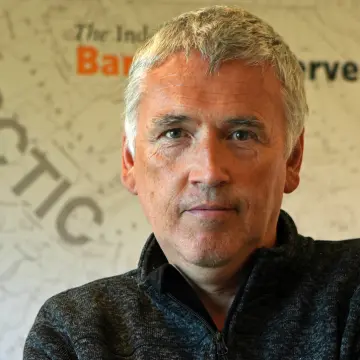
"The regulation rushed through on Friday afternoon will probably resolve the contentious Professor Molchanov case," said Per Arne Totland, a Norwegian Svalbard expert and author who this week published the book Russians on Svalbard.

Totland expects the next step to be for the Norwegian court either to lift the arrest of the Professor Molchanov on its own initiative or to fast-track Russia's appeal against the 31 August ruling.
"This will happen quickly. The court will say that the arrest was correct, lawful and valid when it was ordered, but that it cannot be maintained after the new regulation was introduced on Friday afternoon, and therefore must be lifted," Totland told the Barents Observer.
Totland believes the development will give rise to two competing narratives:
Norway: We are introducing the regulation to protect vulnerable local communities on Svalbard, including Russian ones, out of respect for the Svalbard Treaty. The treaty has not been violated; the regulation is simply an appropriate clarification of the rules for Svalbard.
Russia: Norway backed down. Our strong reaction was justified. With this regulation, Norway has indirectly acknowledged a violation of the treaty. A victory for Russia.
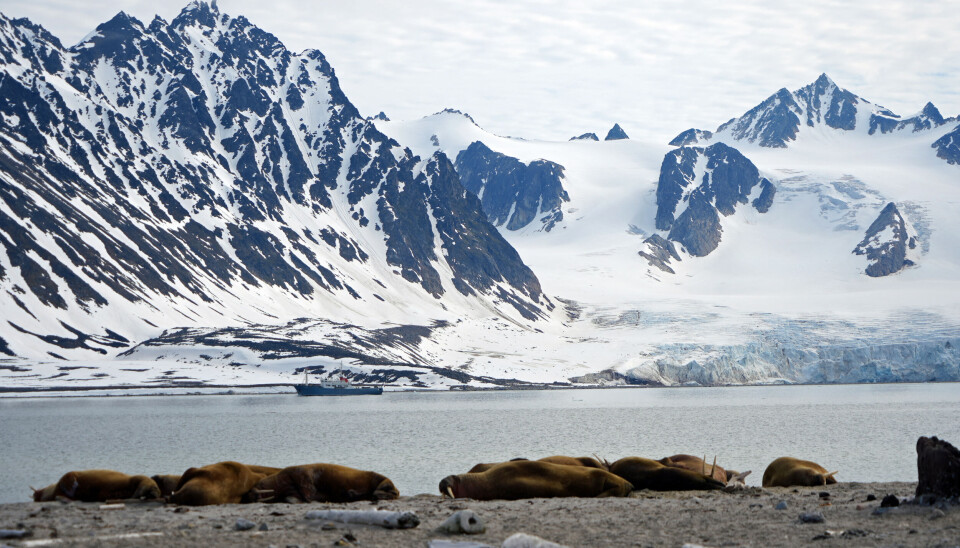
Kari Aga Myklebost, professor of Russian history at UiT The Arctic University of Norway, also views Friday's decision as a gain for Moscow.
"Russia will almost certainly portray this as a victory," she told the Barents Observer.
Myklebost has studied for years how Russia has applied pressure on Norway over Svalbard, including through a range of hybrid methods. She says the Professor Molchanov has played a key role in these efforts over the past two years.
"Norway should address Russian manipulation and grey-zone activities firmly and take steps to effectively stop them, rather than giving in to pressure and making concessions," Myklebost said.

"This will only encourage Russia," she added, referring to Friday's adoption of the regulation, which makes it more difficult to seize Russian state-owned vessels as long as Moscow claims they are carrying supplies, like food, to Svalbard.
Myklebost also argues that Norway risks underestimating the broader security implications of Russia's activities in the High North. She points to what she describes as Russia's militarisation and preparations for a more confrontational relationship with Europe.
"Russian domestic developments, with rapid militarisation across all domains and a state-driven cult of war, point in the same direction. Putin is appointing war criminals from the frontline in Ukraine to high positions and encouraging them to run for elections," Myklebost said.
"There are no indications that Russia is set on peace with European neighbours."
BRICS and Svalbard
Totland believes Russia is also likely to use the case in its messaging to other BRICS countries.
Moscow could present the episode as an example of how pressure can force Norway to change course, he said.
Norway exercises sovereignty over Svalbard under the 1920 Svalbard Treaty, which grants citizens and companies from treaty signatory states equal rights to engage in certain commercial activities on the archipelago. Norway and Russia maintain permanent settlements on Svalbard.
"Moscow has weaponised the Svalbard Treaty by repeatedly claiming that Norway is violating the treaty and that Russia is the defender of international law on Svalbard. This narrative is actively promoted to the other BRICS countries, which Russia wants to bring into a coalition on Norwegian territory," Totland said.
The Barents Observer has previously reported on Moscow's plans to establish an international science centre in Pyramiden, the former Soviet mining settlement on Svalbard, potentially involving other BRICS countries. Mining there was shut down in the late 1990s.


