
Supreme Court removes only opposition party from election
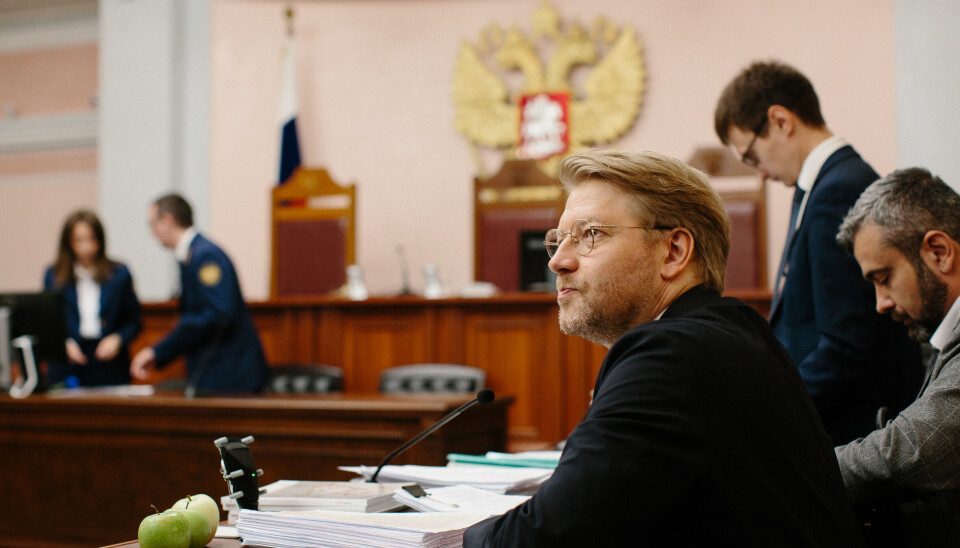
Russia’s Supreme Court on 10 August upheld a lawsuit and cancelled the registration of Yabloko’s federal candidate list for the State Duma elections.

Yabloko says it intends to appeal the ruling, which has not yet entered into force.
The lawsuit filed by pro-Kremlin political party Rodina was registered by the Supreme Court on 7 August – almost immediately after the Central Election Commission (CEC) had registered Yabloko. Rodina demanded that Yabloko’s list be removed from the election, citing several groups of alleged violations: copyright infringement, illegal campaigning, statements by candidates that the plaintiff considered to be linked to extremism, as well as other complaints concerning the election campaign materials.
Another group of complaints concerned Yabloko’s political programme. A representative of Rodina argued that the party’s call for an agreement on a ceasefire in Ukraine contained signs of extremism and effectively implied that Russia should relinquish territories that the Russian authorities consider to be part of the country. The plaintiff also described Yabloko’s opposition to repression against the LGBT community as "support for extremism."
Yabloko chairman Nikolai Rybakov rejected the accusations. He said the call for a ceasefire was aimed at saving human lives and had nothing to do with territorial disputes. Rybakov also insisted that political competition between parties and criticism of their opponents could not be equated with inciting social hatred, as doing so would call the very principle of political competition into question.
“The administrative plaintiff is trying to blame us for the mere fact that our programme differs from those of other parties, that we criticise their political course and openly state the need for peaceful change. The plaintiff has gone so far as to make the absurd claim that the slogan ‘for peace and change’ humiliates the dignity of those who vote for other parties,” Rybakov said in his statement to the court.
The Central Election Commission and the prosecutor’s office supported the demand to remove Yabloko’s list from the election.
Several hundred Yabloko supporters gathered outside the Supreme Court during the hearing, most of them young people. They chanted the party’s name and expressed their support for it. Reportedly, security forces checked the phones of some of those present. Two young women carrying Yabloko leaflets were taken away by security officers “for a conversation”, while the driver of a car passing near the court with a Yabloko song playing was fined.
After the ruling was announced, those gathered began chanting “Shame!” Police then ordered them to disperse within three minutes and threatened young men with being sent to military recruitment offices. Towards the end of the hearing, a large number of police vehicles and prisoner transport vans were brought to the court.
Elections to the State Duma are due to take place from 18 to 20 September. Yabloko was the only registered party standing in the election that had publicly called for an end to the fighting.
Even before Rodina filed its lawsuit, representatives of other parties participating in Russia’s political system, including the Communist Party, the Liberal Democratic Party, New People and A Just Russia – For Truth, had criticised Yabloko.
Yabloko founder Grigory Yavlinsky, who is not himself standing as a candidate in the election, linked the attempt to remove the party from the ballot specifically to its political programme. According to him, Yabloko had offered voters the opportunity to vote “for peace, freedom and a life without fear”, while none of the other parties allowed to participate in the election was advocating a similar programme.
As the election campaign approaches, Yabloko has been noticeably gaining popularity, particularly among younger voters. The party remained the only political force allowed to stand in the election that had publicly called for an end to the war in Ukraine. Numerous videos supporting Yabloko appeared on TikTok and other social networks, while popular bloggers, including Danya Milokhin, publicly expressed their support for the party.


