

The lives of anti-war Russians in the border town of Kirkenes
Standing up against Putin in Norway: three women share their stories of protest in a town full of Russians.
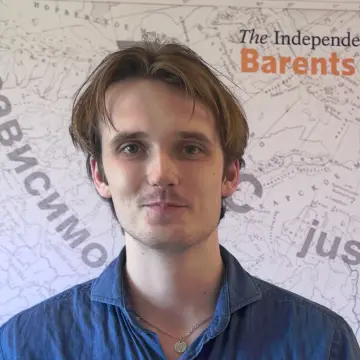
On 4 June, around a dozen people stood outside the Russian General Consulate in Kirkenes. They were marking what would have been Russian opposition icon Aleksei Navalny’s 50th birthday. At the memorial event, opposition songs were played, including one with a chorus where the artist shouted, "Putin dickhead." The Barents Observer interviewed three Russian women who attended this event.
The situation has changed in Kirkenes and the Sør-Varanger municipality, where there are around 400 people of Russian descent. After almost three decades of cross-border cooperation as the de facto capital of the Barents Cooperation, border traffic and contact with Russia are now severely limited due to sanctions and restrictions imposed after Russia invaded Ukraine.
The Barents Observer interviewed three of the women attending the Navalny event: Olga Sadkova, Natalia Solianik, and a third woman who wishes to remain anonymous. We will call her "Petra."
Natalia Solianik moved from Russia to Kirkenes in 1999.
"I moved here before Putin became president, so I didn’t really understand the drastic developments in Russia. I didn’t realise it until Boris Nemtsov was assassinated. But before that, there was Georgia in 2008. And it made me wonder, can you just attack your neighbour? It was completely incomprehensible. But then Crimea happened, and Nemtsov was killed."

Solianik has been part of demonstrations in Kirkenes since 2021. She organised her first demonstration in 2021 when opposition leader Aleksei Navalny was arrested upon his return to Russia. It was just her and one other person.
"We had made posters that said, ‘Free political prisoners’ and ‘Free press.’ But then I received a lot of comments on Facebook. I invited everyone who cares to join me for a demonstration calling for freedom for political prisoners in Russia." She posted this in a now-deleted group called Russians in Kirkenes. "I asked legitimate questions, but it got pretty ugly." She screenshotted several of the comments, one of which accused her of being "paid to protest."
I asked legitimate questions, but it got pretty ugly."
Since Russia launched its full-scale invasion of Ukraine in February 2022, a consistent group of protesters has formed in Kirkenes. Natalia Solianik, Olga Sadkova (who moved to Kirkenes from Russia in 2008), and the anonymous "Petra" are all active participants in these protests.
Olga was "taken by surprise" when very few people turned up at the protests.
"Maybe at the first demonstration, there were a lot of people, even Russians. But now, there are very few."
When asked why fewer people turned up, she said: "They started thinking that maybe they still want to travel there. What happened? They have to stay silent. It is their choice. They have reasons to travel there. But when I hear that people go there to get a haircut or to buy food, I cannot accept that. It is not a real reason to travel there."
This sentiment is echoed by Solianik. "We were more people in the beginning, but then the full-scale war began. Some Russians came and told me that they cannot continue because they have family inside Russia and want to still be able to travel there."
"Petra" considered the potential consequences of demonstrating outside the General Consulate. "It gets to a point where you cannot stay silent. If you do, it means you kind of accept it and think what is happening is okay. It is not."

There is hostility within the local community. Protesters have placed a memorial for Navalny outside the Russian General Consulate ever since his death in 2024. As reported by the Barents Observer, this memorial has been repeatedly vandalised.
The protesters have also received online hate and threats.
"When the war began, it became hateful. There were some anonymous threats on Facebook. I have locked the door to my house ever since. I have to do it because it is very easy to find out where people live in Norway," Natalia Solianik said.
"Petra" made a post on Facebook about Ukrainian President Volodymyr Zelensky. "I wrote, ‘Happy birthday, Mister President.’ Then I received a comment saying, ‘I hope I see him in the gallows. And you too.’ Not that I care that much, but I am not used to it, so it is very uncomfortable."
There are risks and consequences for the protesters, for whom it is unsafe to go to Russia. All three women told the Barents Observer that they have heard about an alleged "special person" list at Russian border customs.
Olga Sadkova: "I have heard that they have a list at the Russian border customs. I have heard that people were travelling and were ‘invited’ to a hidden room where they were asked about certain people who are protesting."
This was echoed by the others.

It is unclear how the Russian demographic within Kirkenes is divided in terms of support for Putin’s regime. The Barents Observer previously reported that 76 people voted for Putin at the Russian General Consulate in Kirkenes in the 2024 presidential election. However, some people travelled from other places in Northern Norway to cast their votes, so it is unclear how many of the voters actually live in Kirkenes.
The Barents Observer tried to gather different viewpoints for this article. Some of the people contacted still travel to Russia and have continued to be vocal in their support for Putin. None of them wanted to be interviewed, even under the condition of anonymity.
For "Petra," there is no doubt about how Russians in Norway are divided. "I believe the majority support Putin. And that many don’t say anything at all because they don’t want to be honest with themselves. Maybe to live without worries, to be able to cross the border without any issue. But how is it possible? I cannot ‘put the blindfolds’ on because what is happening is a disaster."
"When you ask them, most of them say that they are against war in general, but they still defend what Russia is doing. It sounds weird and paradoxical," Natalia said.
"I can’t know for sure what this or that person is thinking. But it is enough for me to see that they like posts from the Russian General Consulate. I understand that person is on the ‘other side.’ I feel I have a responsibility to say I am against the war," said Olga.
I can’t know for sure what this or that person is thinking. But it is enough for me to see that they like posts from the Russian General Consulate. I understand that person is on the ‘other side.’ I feel it is a responsibility to say I am against the war."
According to Bjarge Schwenke Fors, a researcher of Border Studies at the University of Tromsø, there is division within the Russian population in Norway. "The war has probably led to a deep and noticeable division among Russians in Norway, with two rather irreconcilable wings: opponents of the war on one side and regime supporters on the other. And, of course, there are many who do not support either position. For many, the war is a taboo, something they prefer not to talk about."
When asked how Russians who have lived in Norway for decades can support the current regime and invasion of Ukraine, he answered: "Many who have grown up in another country retain strong ties to their homeland, and the information they gain from there influences how they see the world. This probably also applies to some Russians in Norway. Moreover, even though many have lived in Norway for a long time, they have often spent their formative years on the other side of the border."
The three women had similar perspectives on why some local Russians support Putin’s regime.
Olga: "They continue to live here. Many of them have lived here for 10–15 years. But still, they have not integrated into this culture. They don’t follow politics here because they did not take an interest in politics when they lived in Russia. They don’t read the papers. As if they physically live and work here, but in their soul, they are still in Russia. Many of them."
"Petra": "I think the reason is that they are informed by the news from their homeland. Maybe they are not fluent enough in the Norwegian language. Maybe they don’t care about improving. And then you ‘live in’ the news and all sorts of TV shows from there, and you only get one side of the story. But still, I wouldn’t say I understand it. Because I haven’t seen that the perception of Russians has changed. I don’t feel that anyone looks at me as an enemy."
There has been an increased focus on so-called "Russophobia" inside Norway, often used as an easy escape by Russia-friendly organisations and public figures when facing criticism.
"Petra" is unsure about the intentions behind the use of that word: "Russophobia gets mentioned a lot. But I am not sure that there is Russophobia. I get the feeling that it is a point to talk about it. When you say it enough times, more people will hear it and eventually believe that it is real. I have never hidden that I am Russian, so I cannot say that I have felt Russophobia."
The future of cross-border cooperation is uncertain. It does not seem likely it will return to what it was anytime soon, if ever. People such as the local mayor, Magnus Mæland, have called for a "Nuremberg process" before a return to cooperation can even be considered.

There is no question, however, that the three women will continue to protest. They all feel a responsibility to stand up for what is right.
Olga Sadkova: "I feel I have a responsibility to say I am against the war. We cannot just think, ‘That is wrong.’ I won’t get erased, so I will use my freedom of expression."
It is difficult for her to see a way back. "My feelings are like phantom pain. I still have feelings. But it is towards the Russia that was before. If I ever go to Russia again, it will no longer be the same."
Natalia Solianik: "I feel guilty about being Russian. I cannot let my responsibility slip away, as I feel part of it in some way. I support Ukraine with my whole heart, and I hope Ukraine will win the war."
"Petra": "I don’t think I can step back. Some have the ability to block the world out. To not care. To live inside their ‘glass bubble.’ That is very nice. But I cannot do that."


