
OPINION
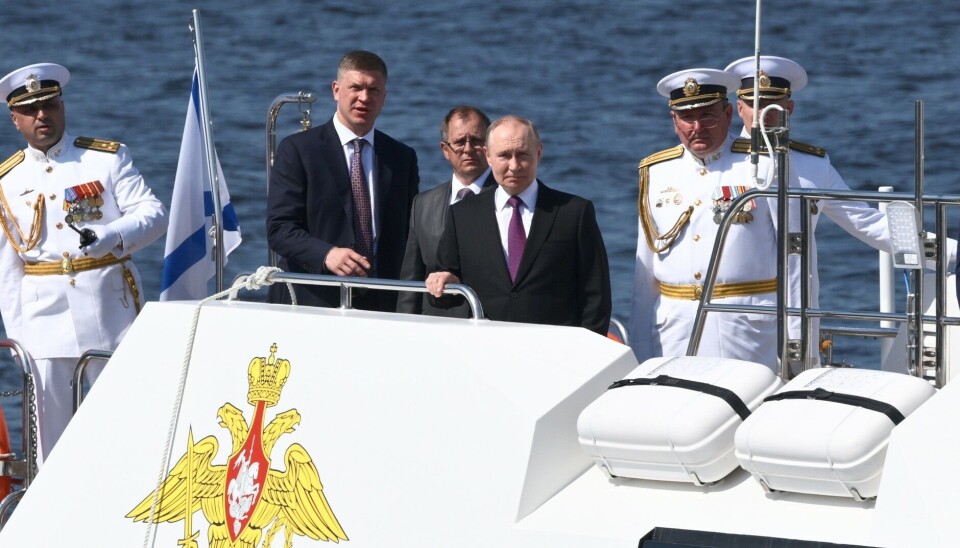
Putin wants to renew Russia’s ‘Great Northern War’
Divisions within NATO are emboldening Russia to reassert its power in Europe’s northern frontiers.

The recent history of the Cold War suggests that Vladimir Putin’s invasion of Ukraine is a move to resurrect the Soviet Union. But Russia’s real expansionist intentions lie far beyond the former Eastern Bloc.
The balance of power in north-central Europe - the area that stretches from the Scandinavian peninsula to the Carpathian Mountains of southern Poland - has historically preoccupied Russia’s interests. The Baltic Sea was where Russia asserted itself as a European power after Peter I successfully contested the hegemony of the Swedish Empire in the Great Northern War of 1700-21.
Today, Putin often compares himself to his eighteenth-century predecessor and speaks openly about the need to reverse Russia’s loss of its so-called ancient lands of the Baltic Sea region. Peter the Great ‘returned’ territory to Russia and ‘it is also our lot to return what is Russia’s and strengthen the country,’ according to the Russian president. His words are increasingly matching his actions, notwithstanding the severe losses of his forces in the ‘special military operation’ in Ukraine since 2022.
Europe’s northern frontiers have become more and more important to Russia over the past decade - particularly as the Arctic ice sheet continues to melt. The Northern Sea Route - a six-thousand-kilometre-long shipping lane that links the Barents Sea to the Bering Strait - enables Russia to export its sizable oil and gas reserves to Asian markets. Cargo along this trade route sky-rocketed from 4 million tons in 2014 to 36 million tons in 2023. Rosatom - the Russian state-owned nuclear company - is building a number of small modular reactors that will be ready for use by 2028.
In order to maintain its freedom to navigate the previously inaccessible Arctic waters, Russia has not been afraid to issue threats to NATO and its northwards enlargement into Finland and Sweden. Vessels from Russia’s Northern Fleet, which include nuclear-armed submarines, are frequently seen along the coasts of NATO member states. But the risk of a direct East-West confrontation has been heightened by the breakdown in the agreements struck between Russia and the United States limiting their strategic arms.
In 2002, then US president George W. Bush withdrew from the anti-ballistic missile treaty (ABM), which allowed the Americans to develop sophisticated precision-guided munitions. Putin responded by prioritising the strengthening of Russia’s defence and military industrial complex. The scale of the transformation of the Russian nuclear arsenal since the Soviet Union’s collapse can be seen in the testing of the Burevestnik strategic cruise missile at the end of last year. Norway’s intelligence services confirmed that the test took place, which demonstrated Russia’s improved nuclear stealth and propulsion capabilities.
The importance of the northern frontiers of Europe in Russia’s geostrategic calculations has reawakened a Baltic regional alliance - not dissimilar to the coalition of powers that fought against Peter the Great’s armies three centuries ago. When Donald Tusk came to office in 2023, Poland re-oriented the focus of its security cooperation away from Germany - its traditional partner in the European Union - towards its northern neighbours. In an effort to modernise and strengthen its naval presence, Poland is investing €2.3 billion in Sweden’s submarines.
The shifting security landscape on the European continent means that defence and security cooperation among the Baltic Sea’s littoral states looks set to deepen. Under Donald Trump, the US has signalled its intention to reduce its forces along NATO’s eastern flank. A scaled-down US presence - combined with the prospect of a peace agreement between Russia and Ukraine - poses a serious risk to the stability of northern Europe.
If Russia and Ukraine were to reach a settlement, Moscow would be in a favourable position to challenge NATO’s predominance - particularly in the Baltic Sea. The Estonian, Latvian, and Lithuanian defence ministries have said that Russia is prepared to mobilise a 1.5 million strong army and double the number of troops on Europe’s northeastern borders.
France and the United Kingdom - the only nuclear-armed European powers - are pressing ahead with plans to form a ‘reassurance force’ in postwar Ukraine. It is vital that the Ukrainians receive credible security guarantees that deter another Russian assault. But a redeployment of NATO forces comes with a risk to the security of the Baltic States. Such a focus of capabilities would leave NATO’s northern borders dangerously vulnerable to Russia.
Russia is becoming increasingly confident that it can break Western resolve and achieve its goal of reestablishing a sphere of influence. It is managing to offset the pressure of international sanctions by doubling down on its cooperation with China. In a speech to senior defence ministry officials in Moscow in December, Putin predicted that the European powers will have no choice but to make compromises with Moscow to end the war in Ukraine.
Putin’s inflated confidence may not reflect the reality of his strategic failure on the battlefield. But differences within the north-Atlantic alliance are setting the stage for the Russian president to challenge Europe’s security order - particularly in the northern frontiers of the continent - as his Tsarist predecessors have done before.


