

Russian Union of Journalists expelled from the International Federation of Journalists
The Russian Union of Journalists (RUJ) has been formally expelled from the International Federation of Journalists (IFJ). The decision became known on 8 May, when the Russian organisation’s press service announced it. At the same time, the RUJ published a statement saying that “this story is no cause for regret”.
The decision to expel the RUJ from the federation was taken at the IFJ congress in Paris, according to RUJ chairman Vladimir Solovyov. He noted that the Russian organisation had been invited to take part in the congress, but declined to attend.
According to Ricardo Gutiérrez, General Secretary of the European Federation of Journalists, the decision is final. “This is the decision of the sovereign IFJ congress… The decision was adopted with overwhelming support,” Gutiérrez said.
The reason for the expulsion was the opening of RUJ branches in the occupied Zaporizhzhia and Kherson regions in 2022.
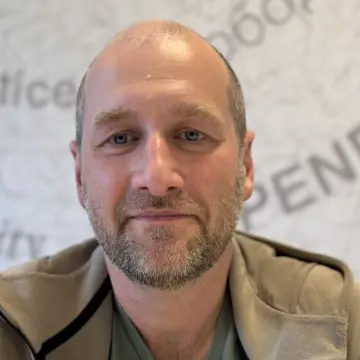
On 8 May, the RUJ published a statement in response to the expulsion decision. Barents Observer discussed the statement with Georgii Chentemirov, former chairman of the Union of Journalists of Karelia.
He admitted that he was surprised to learn that the RUJ had remained a member of the international journalistic community until recently. “Frankly speaking, this is nonsense,” he said.
According to Chentemirov, the opening of branches in the Zaporizhzhia and Kherson regions is one manifestation of Russia’s occupation policy. “Yes, of course, one could say this is not a state structure, but it is a Russian structure that did not hesitate to open its branches in occupied territories. In itself, that is already the height of immorality,” the journalist believes.
In his view, the explanation that these branches were created to ensure the safety and provide physical and social protection for journalists, editors and camera operators working in those territories is the height of hypocrisy.
“Dozens of Ukrainian journalists have been detained in the occupied territories, and the Russian Union of Journalists could not care less about their fate,” Chentemirov says. Novaya Gazeta Europe has previously reported that more than 20 Ukrainian journalists are being held in Russian prisons.

“In its statement, the RUJ mockingly says that ‘the former Ukrainian journalistic structures in these regions effectively abandoned their colleagues without support almost immediately’,” Chentemirov continues. “That is simply an extraordinary piece of heretic reasoning — to suggest that the Union of Journalists of Ukraine should have continued supporting colleagues in occupied territories.”
The journalist explains that today, any cooperation with a foreign organisation is automatically interpreted by the Russian state as treason. “And the Russian Union of Journalists was suggesting that journalists should receive support from the Union of Journalists of Ukraine? The level of cynicism, sophistry and mockery there is really beyond all bounds,” says Georgii Chentemirov.
The journalist also drew attention to the RUJ’s statement that “We do not divide colleagues into convenient and inconvenient, right and wrong.” “Both I and my colleague Natalya Yermolina, who sat on the board of the Union of Journalists of Karelia, were expelled from the Russian Union of Journalists after we were labelled foreign agents,” Chentemirov explains. “The Russian Union of Journalists did not lift a finger to defend us in any way. We were simply thrown out of the organisation, so against that background it is rather amusing to hear them claim that they do not divide colleagues into convenient and inconvenient.”
The RUJ also came under criticism for saying that “If a journalist needs protection, a professional union is obliged to stand by them.” “Of course it is obliged to,” Georgy Chentemirov agrees. “I would very much like to see the position of the Russian Union of Journalists regarding the dozens of Russian journalists currently in prison on charges connected with their professional activities. People such as Anastasia Favorskaya or Sergey Karelin. I would also like to see the RUJ’s position regarding the raids on Novaya Gazeta.”
On 10 April, the offices of Novaya Gazeta in Moscow were subjected to lengthy searches, after which columnist Oleg Roldugin was arrested. At the time, Vladimir Solovyov commented: “Well, in general, if they broke the law and are guilty, they must answer for it.” He also said he was unable to help Roldugin, adding: “To be honest, I had never even heard of this journalist before.”
One might also recall the searches carried out at the Murmansk publication Arctic Observer in June 2024. No comments followed from either the RUJ or the Murmansk Region Union of Journalists.
Georgii Chentemirov also mentioned the blocking of the website Takie Dela. “The finest social affairs media outlet in Russia, winner of numerous awards and professional distinctions — its website is blocked, and the Russian Union of Journalists sits there dumb and silent,” the journalist said angrily.

Chentemirov also referred to Viktoria Roshchyna — the Ukrainian journalist detained by Russian forces in May 2023 while travelling in the Russian-occupied part of eastern Ukraine, and who was later tortured to death in Detention Centre No. 2 in Taganrog. “It would be very interesting to hear the RUJ’s position on that,” Chentemirov says.
In the journalist’s opinion, there is in fact a very simple formal reason for expelling the Russian Union of Journalists from the international journalistic community: it is not a union of journalists. “The Russian Union of Journalists is not an organisation that fulfils its statutory aims,” Georgy Chentemirov explains. “The RUJ does not protect journalists — not in any way whatsoever. Zero comments, zero support — whether for journalists branded as foreign agents or for journalists persecuted for their work, detained, searched, stripped of their journalistic status, and so on. This is not an organisation that has the right to call itself a union of journalists.”
“They have absolutely no right to complain that they have somehow been wronged and to express outrage that they have been cast out into the cold from the professional journalistic community,” Georgii Chentemirov concludes.
It was previously reported that Russia had fallen from 172nd to 180th place in the press freedom rankings. Owing to the large number of imprisoned media representatives, Russia was described in the report as “the world’s second-largest prison for journalists”. According to calculations by Reporters Without Borders, 48 journalists were in custody in Russia as of April 2026.


