

156 years on, Admiral Konstantin Posyet’s name returns to the Arctic borderland
In 1870, Russian Admiral Konstantin Posyet led a powerful flotilla into the Varanger Fjord, anchoring near Borisoglebsk—a remote Russian area on the banks of the Pasvik River. Over a century and a half later, his legacy is set to return to the Arctic, this time aboard a new LNG vessel bearing his name.

Posyet, a trusted admiral under Tsar Alexander II, commanded the Varyag—a 68-metre-long corvette—alongside the clipper Zhemchug and the schooner Sekstan. His expedition included Grand Duke Aleksei Aleksandrovich, the Tsar’s fourth son and a future admiral, who would later head the Russian fleet and naval department and the Admiralty Council. Posyet served as the young duke’s mentor during the voyage.
In late summer 1870, the flotilla entered Bøkfjorden, a branch of the Varanger Fjord, and anchored near Elvenes on the Norwegian side of the border. From there, they crossed by small boats to Boris Gleb, a 3.6-square-kilometre piece of Russian territory on the Pasvik River’s western shore. The visit came less than 45 years after the 1826 border agreement, which prominent members of the Russian elite viewed as unfavorable. Russian attempts to renegotiate the deal failed.
The 1870 expedition marked the beginning of a major development of Boris Gleb. By 1874, the area boasted a new church, a parish house, and a guesthouse.
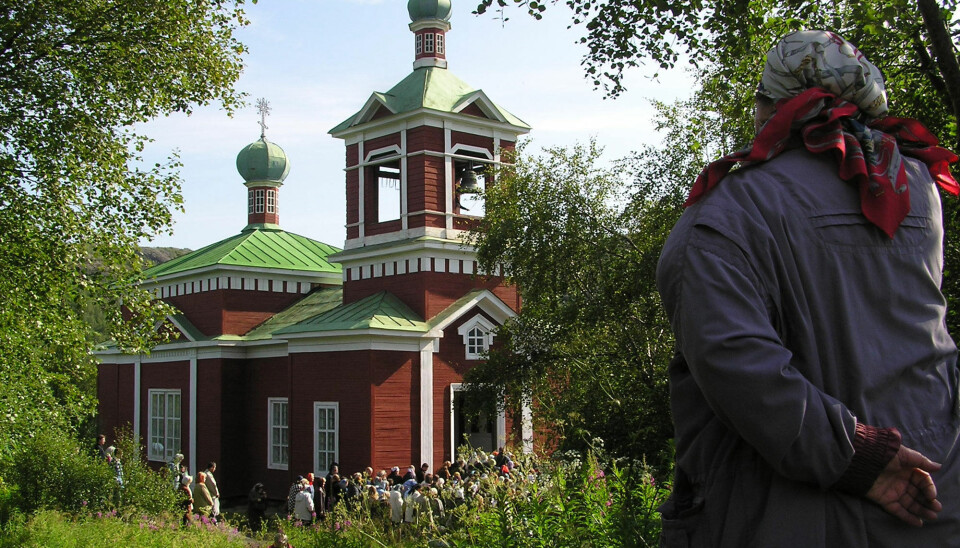
Posyet’s journey also took him to several sites along the Kola Peninsula and to Arkhangelsk. In Novaya Zemlya, Grand Duke Aleksei reportedly became the first to raise the Russian imperial flag. He also erected an Orthodox cross on the archipelago.
Now, 156 years later, Admiral Posyet’s name is poised to re-enter Arctic waters—this time aboard a 300-metre-long LNG carrier. Built by the Russian gas company Novatek, the Konstantin Posyet is currently undergoing sea trials at the Zvezda shipyard in Bolshoy Kamen, in Russia’s Far East. It is the second vessel of its kind constructed at the yard, following the Aleksei Kosygin, which was commissioned in late 2025 and has since operated between the Arctic LNG 2 plant on the Gydan Peninsula and the Saam floating storage unit (FSU) in Ura Bay.

Like its sister ship, the Konstantin Posyet is expected to face international sanctions, operating as part of Russia’s “shadow fleet.” The Arctic LNG 2 project and its associated infrastructure are already under sanctions from the US, UK, and other countries.
Once operational, the Konstantin Posyet will join the fleet transporting LNG between the Ob Bay and Ura Bay on the Kola Peninsula—an area not far from where Admiral Posyet sailed in 1870. Designed to navigate ice up to two meters thick, the vessel will primarily support transshipment operations in Ura Bay, with potential stops at Rybachii Peninsula, located just 70 kilometres from Boris Gleb.


