
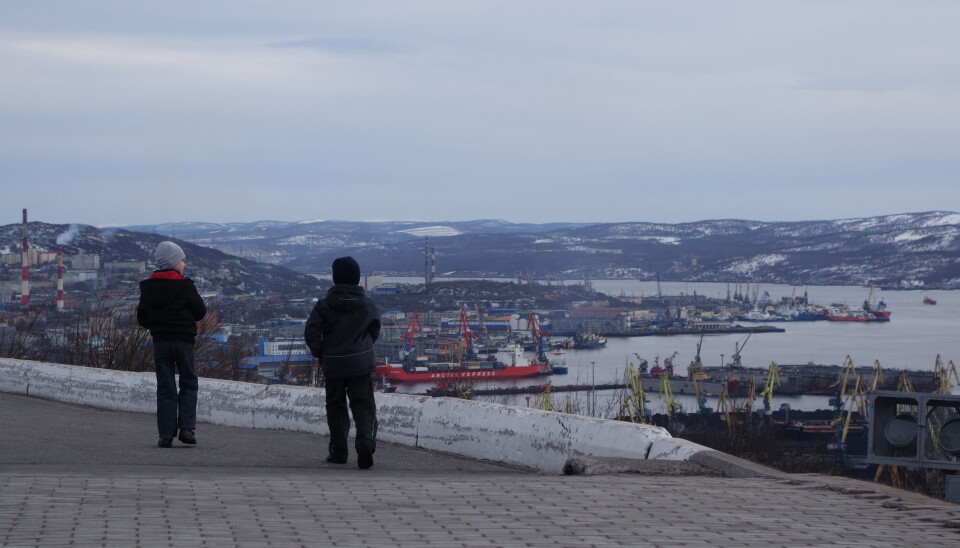
Brussels adds Port of Murmansk to sanctions list
The north Russian seaport and several Arctic tankers have been made subject to sanctions as part of the EU’s 20th sanctions package.
The new measures against the Arctic port are primarily related to oil shipments. According to a decision by the EU Council on 23 April 2026, the Port of Murmansk is used by “vessels practising irregular and high-risk shipping practices”.
Murmansk is one of the largest export hubs for Russian oil. Following Ukraine’s recent drone attacks on Ust-Luga and Primorsk in the Gulf of Finland, and Novorossiisk in the Black Sea, Murmansk for a period became Russia’s leading port for oil exports.
The ports of Ust-Luga, Primorsk and Novorossiisk were added to the EU sanctions list in February 2025.
A large share of oil shipments from Murmansk passes through two floating storage units in Kola Bay. Shuttle tankers transport oil from fields in the Pechora Sea and the Gulf of Ob, after which conventional tankers load the cargo at the FSUs and export it to international buyers.

Almost all conventional tankers exporting oil from Murmansk are part of Russia’s so-called shadow fleet. Since October 2025, more than 100 such vessels have called at the Arctic port, according to figures compiled by the Barents Observer.
Virtually the entire chain of tankers and terminal infrastructure in Murmansk and across the Russian Arctic is now subject to EU sanctions.
The 20th sanctions package adds two more Arctic shuttle tankers to the list: Mikhail Lazarev (IMO 9837547) and Mikhail Ulyanov (IMO 9333670), both involved in Gazprom Neft’s Arctic operations.
The sanctions package also includes the tanker Valentin Pikul (IMO 9885879). The vessel was built in 2024 at the Zvezda shipyard in the Russian Far East. It is owned and operated by Rosnefteflot and designed for navigation in heavy Arctic ice. It is expected to operate as part of the Vostok Oil project, a major Russian oil development on the Taymyr Peninsula.
The vessel is named after the Soviet historical novelist Valentin Pikul, known for works featuring fictional characters and nationalistic themes. He spent part of his childhood in Molotovsk — now Severodvinsk — and wrote extensively about the Second World War.
Also shipowner Rosnefteflot has been included in the new 20th sanctions package.


