
Worries grow in Norway as Murmansk becomes Russia's main oil export hub
Massive drone attacks this week on the major Baltic terminals of Primorsk and Ust-Luga have left Russia with few remaining routes for exporting oil, increasing reliance on the Kola Peninsula. In Norway, concerns are growing over the ecological risks posed by ageing “shadow fleet” tankers operating along the coast.

On Wednesday, the Security Service of Ukraine, together with the Armed Forces, carried out a large-scale drone attack on the oil-loading terminal at Ust-Luga.
Videos and photographs shared on social media show port infrastructure ablaze, along with at least two oil tankers moored at the terminal. The attack came less than 48 hours after Russia’s other key Baltic Sea export terminal in Primorsk was also targeted by drones, triggering a major fire and halting operations. Further drone strikes were reportedly carried out on the same terminal on Thursday morning.
Ust-Ługa. Stabilnie 😁
— Technicznybdg #F16AreFree (@technicznybdg.bsky.social) March 26, 2026 at 9:06 AM
[image or embed]
Footage posted by local residents on Telegram shows the facility engulfed in flames. Regional governor Aleksandr Drozdenko confirmed that fire crews were battling the blaze.
Additional reports on Thursday said drones had struck the Kirishi oil refinery, also located in the Leningrad region. The refinery is one of the largest in Russia.
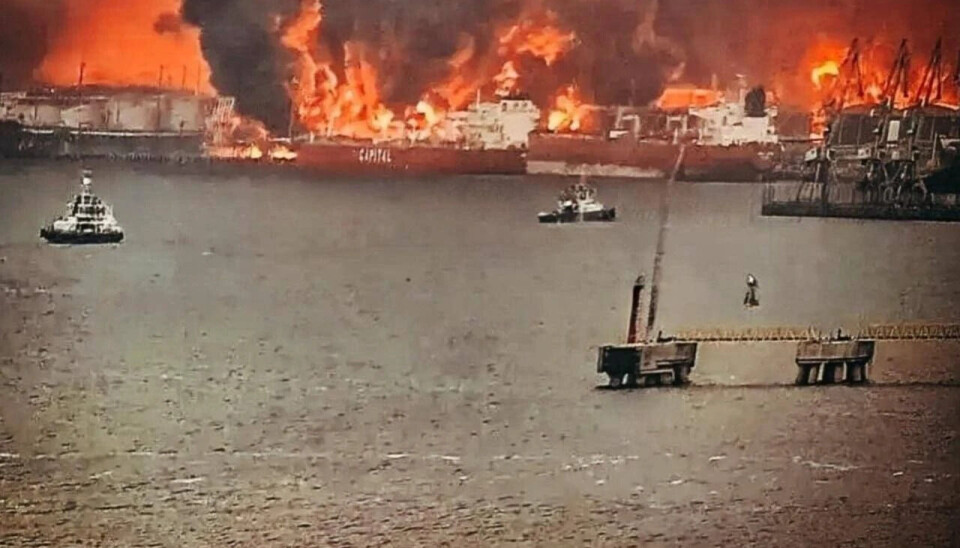
Before the attacks, Ust-Luga had the capacity to handle around 700,000 barrels of oil per day. A similar capacity exists at Novorossiysk on Russia’s Black Sea coast, although exports there have also been partially suspended following Ukrainian drone strikes earlier in March.
With severe damage to port infrastructure and storage facilities at several export terminals, Russia is facing significant challenges in getting its oil to market. The Druzhba pipeline to Central Europe had already been disrupted prior to these events.
According to Reuters, at least 40% of Russia’s oil export capacity is currently offline following the drone attacks.
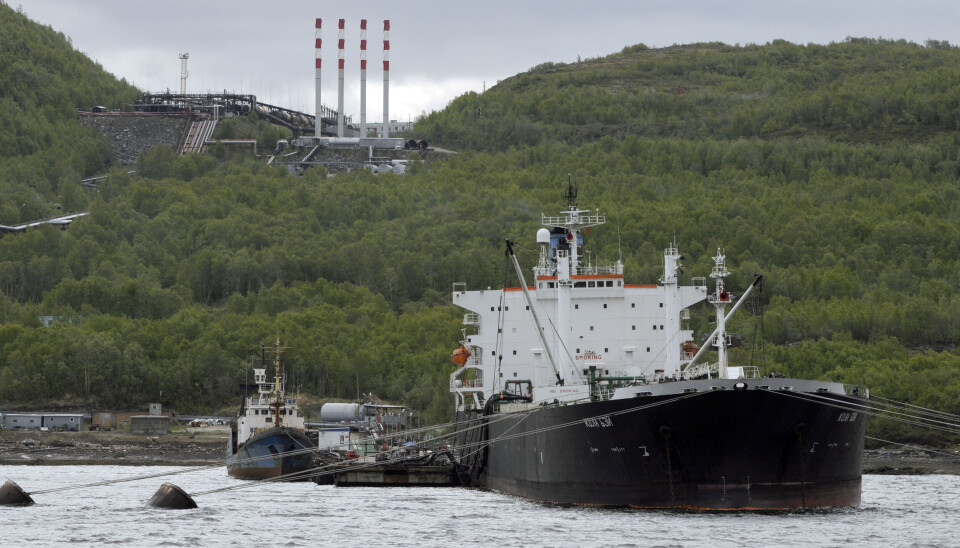
As a result, the port of Murmansk has rapidly emerged as Russia’s primary hub for crude oil exports.
Arctic oil and the shadow fleet
Kola Bay plays a crucial role as a high-capacity hub for transferring Russian Arctic oil from tankers to storage and onward to international markets. This includes oil linked to Rosneft’s Vostok Oil project, Gazprom Neft’s Novy Port in the Ob bay and the Prirazlomnoye field in the Barents Sea, and Lukoil’s Varandey project. Oil from Western Siberia and the Komi Republic is also transported to Murmansk by rail.


As with exports from the Baltic, shipments from Murmansk rely heavily on so-called shadow fleet tankers. In the north, operations are spread across multiple terminals along Kola Bay, involving both ship-to-ship transfers and shore-based loading.
In Norway, the increased movement of Arctic oil by shadow fleet vessels has raised alarm.
Former Foreign Minister and current Member of Parliament Ine Eriksen Søreide has highlighted concerns about the ageing fleet, pointing to a lack of insurance and generally poor technical standards.

“I have long sought answers from the Government regarding emergency preparedness for acute pollution along the Norwegian coast,” she said in a formal parliamentary request, urging the Minister of Fisheries and Ocean Policy to take action to reduce the risk of accidents in Norwegian waters.
Old and poorly maintained tankers from Murmansk frequently sail south along Norway’s coastline. Earlier in March, for example, the 23-year-old tanker Paz, carrying nearly 150,000 tonnes of oil, appeared without clear ownership. The Norwegian Coastal Administration confirmed that the vessel did not provide a valid Civil Liability Convention (CLC) certificate, which would demonstrate insurance coverage for oil pollution damage.
Responding to questions from the Barents Observer, Minister Marianne Sivertsen Næss stated that a traffic separation system is in place to ensure that oil tankers do not sail closer than 40 kilometres from the Norwegian coast.

She added that the designated shipping corridor lies even further offshore between the North Cape and Varanger. “Such routing provides a clear overview of vessel movements, makes it easier to detect deviations from normal patterns, and allows more time to respond in the event of an incident,” she said.
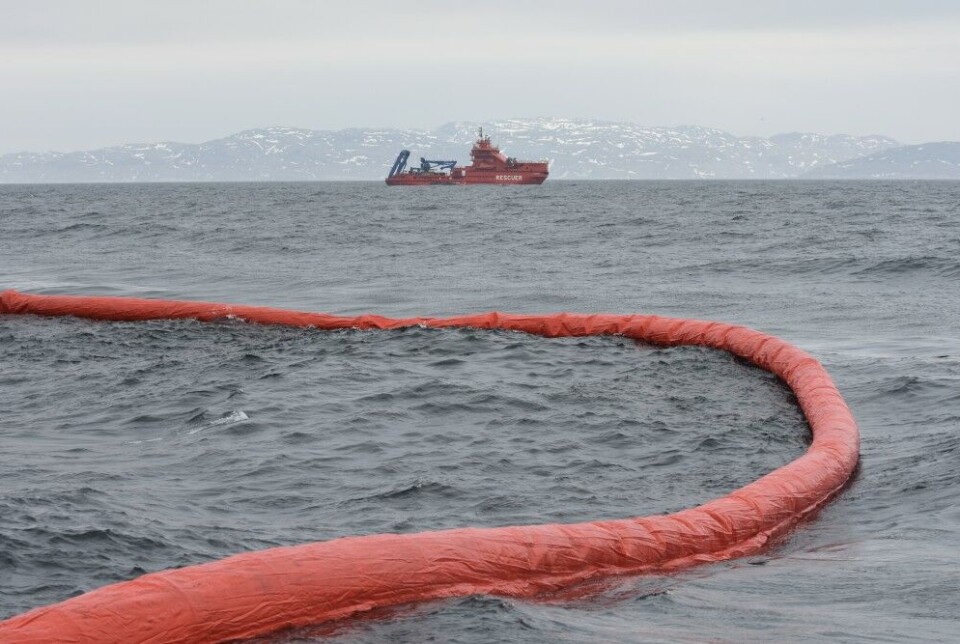
According to the minister, Norway maintains “strong preparedness” for various scenarios, with oil spill response equipment readily available. However, she acknowledged that mobilising additional resources from European partners would take time.
“In such a situation, it would be natural to request assistance from the offshore industry, which has emergency resources on oil fields in northern Norway,” she said.
Norway and Russia maintain a bilateral agreement on search and rescue, including oil spill preparedness, in the Barents Sea border areas. Before the pandemic and Russia’s full-scale invasion of Ukraine, the two countries conducted annual joint exercises under this agreement.
“This agreement remains in force,” Sivertsen Næss said, adding that both countries are also bound by international conventions on maritime search and rescue cooperation.
Growing international response
While Norway has no plans to block shadow fleet vessels from transiting its waters, the British government has announced that its military will be authorised to board such vessels in UK waters.
Prime Minister Keir Starmer said in a statement:
“As Prime Minister, my first duty is to keep this country safe and protect British interests at home and abroad. Putin is exploiting instability in the Middle East, believing higher oil prices will benefit him. That is why we are intensifying action against his shadow fleet -not only to protect Britain, but to cut off the revenues funding his war in Ukraine.”
Britain is not alone. Last week, French naval forces boarded the shadow tanker Deyna, which had loaded oil in Murmansk. According to ship-tracking data, the operation took place north of the Algerian coast.
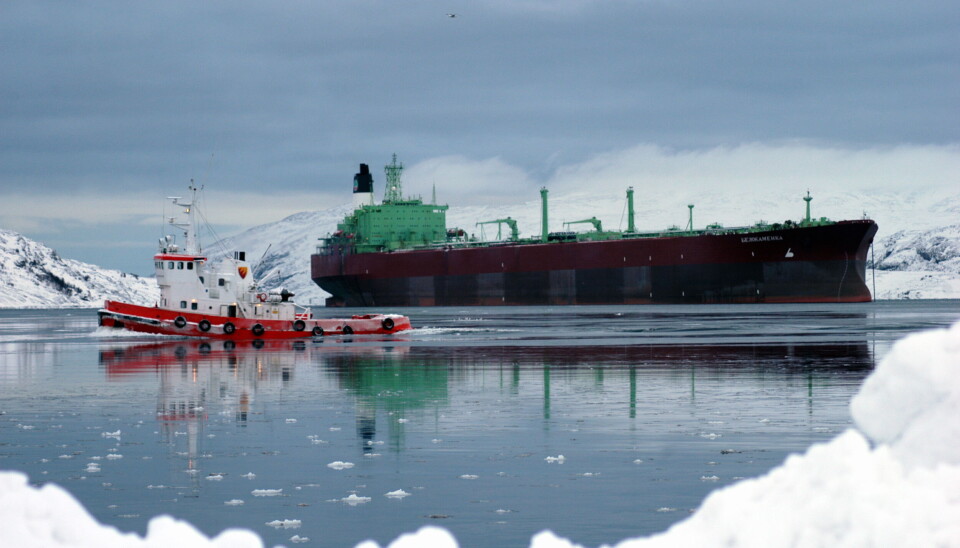
The Barents Observer has recorded at least 85 sanctioned shadow tankers sailing along the Norwegian coast to Russia’s Kola Peninsula since October 2025.
Limited short-term alternatives
Although Murmansk is becoming increasingly important for Russia’s oil exports, volumes are unlikely to rise significantly in the short term.
“It is not easy to replace exports from Ust-Luga and Primorsk with Murmansk, because the sources of oil differ,” said Ksenia Vakhrusheva, Arctic policy adviser at the environmental organisation Bellona.

She explained that Ust-Luga and Primorsk receive oil via pipelines from inland fields, whereas Murmansk primarily handles oil transported by sea from Arctic projects.
Vakhrusheva also warned of the risk of major oil spills, suggesting that increased inspections of tankers in European waters could prompt Russia to reroute shipments.
“It is both possible and concerning that Russia may send more ageing tankers along the Northern Sea Route during the summer–autumn navigation season to avoid European waters, where vessels are more likely to be inspected,” she said.
Last autumn, Russian authorities approved the use of vessels without ice-class certification along the Northern Sea Route north of Siberia.
One of the first vessels was the 20-year-old shadow tanker Mires, which sailed under the flag of Sierra Leone.


