
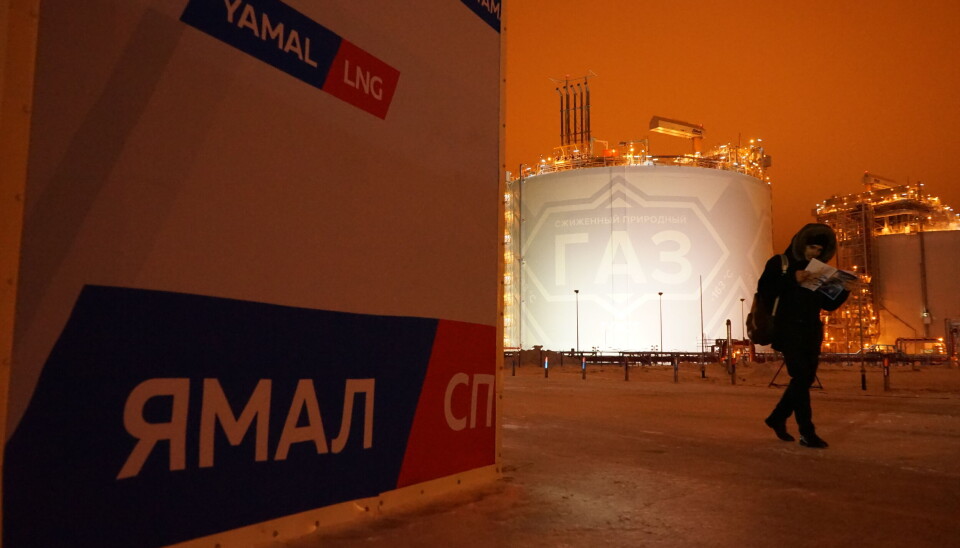
Analysis by Arctida
How will the EU’s 21st sanctions package affect the Russian Arctic?
Significantly parts of Russia's Arctic economy are targeted.

This article was originally published in Russian.
Among the sectors which will be hardest affected are:
Maritime transport of oil and LNG;
The construction and resale of LNG carriers;
Payments through Russian and intermediary banks;
Exports of metals and ores;
Access to industrial and maritime equipment;
The operation of ports, airports and service companies.
The effects of the sanctions are likely to be felt most quickly in logistics: by LNG tanker owners and operators, ship managers, crewing agencies, bunker suppliers, insurance companies, port agents, and companies organising transhipment in Murmansk and other locations.
The second group at risk comprises new and expanding projects: Arctic LNG 2 and new phases of Arctic LNG projects; northern oil projects requiring new vessels; and port and mining projects dependent on imported machinery and electronics.
The third group consists of regional contractors: construction companies, transport operators, repair businesses, equipment suppliers, rotational-work companies and small businesses in single-industry towns.
Not because they have been directly placed on sanctions lists, but because major customers will cut investment and non-core spending.
Finally, Arctic regional budgets will suffer. The potentially most exposed regions include the Yamal-Nenets Autonomous Okrug, Murmansk Region, Krasnoyarsk Krai, Yakutia and the Nenets Autonomous Okrug.
The impact is expected to come through lower profitability for exporters, delays to new facilities and fewer orders for local contractors.
The most serious consequence of the sanctions will not be an immediate physical halt to production, but a further increase in export costs, a reduction in available shipping capacity, more complicated payments and greater dependence on China and Russian state funding.
Shrinking fleet
The 21st sanctions package introduces:
Mandatory notification of sales of LNG carriers to Russia;
The possibility of imposing individual bans on the sale of such vessels to Russian citizens and companies;
Contractual obligations intended to prevent the subsequent resale of vessels to Russia;
Expanded sanctions on vessels and companies servicing the “shadow fleet”, including bunkering, crew provision and other services.
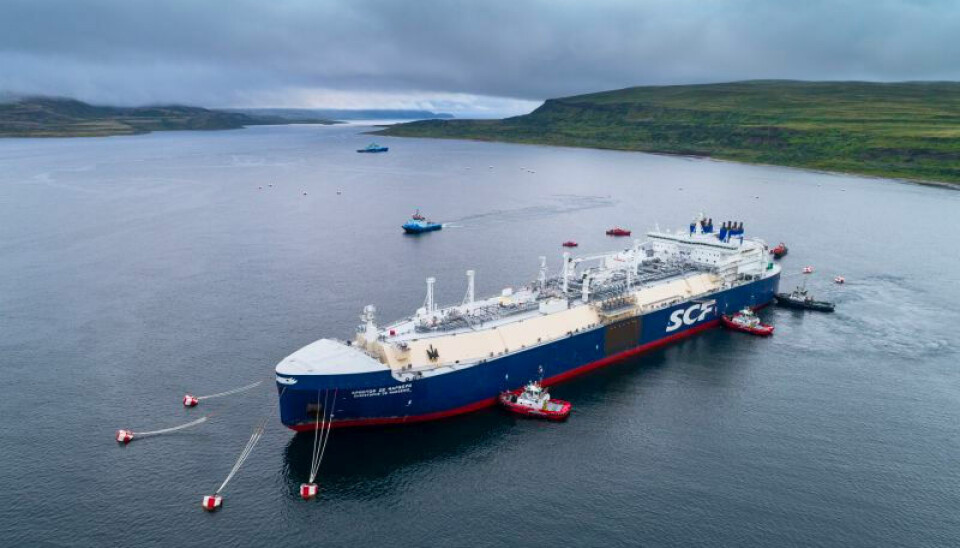
This is particularly critical for Arctic projects, because only specialised ice-class vessels can transport LNG from Sabetta, the Arctic port on the Yamal Peninsula, in winter. Russia buys such vessels from abroad. The sanctions restrictions do not apply only to purchases directly from European owners: sellers will also have to verify the end user, the onward resale route and the contractual guarantees.
According to Kommersant, the measure will primarily create difficulties in expanding the fleet serving Novatek’s Yamal LNG and Arctic LNG 2 projects, as well as Gazprom’s LNG plant under construction in the Baltic region.
Six Arc7 ice-class gas carriers built at the South Korean Hanwha Ocean shipyard for Arctic LNG 2 are particularly affected. They have not yet left the shipyard and their future remains unclear. At the same time, according to TradeWinds, Novatek continues negotiations with Hanwha Ocean and Japan’s Mitsui OSK Lines over the transfer of ten ice-class tankers, with deliveries expected to begin this year.
Consequences for Yamal LNG
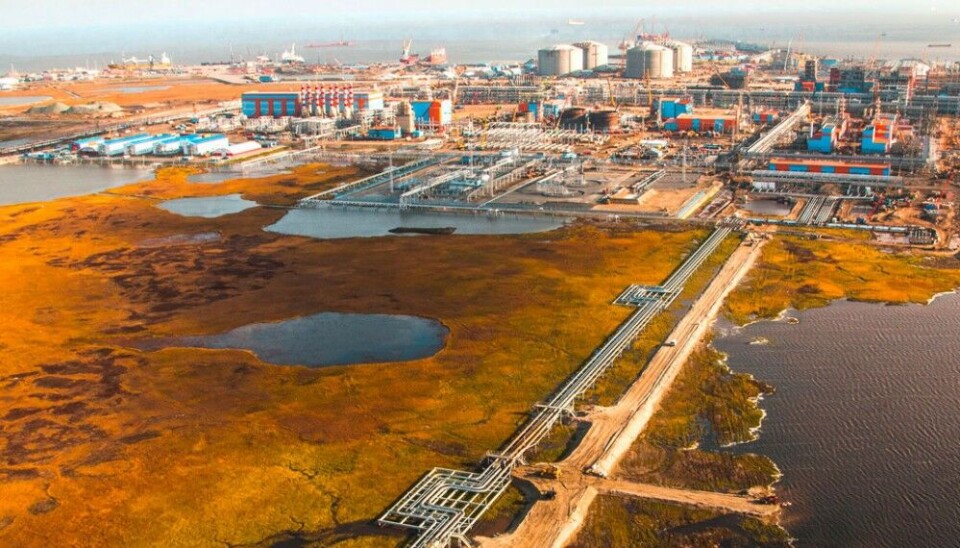
Yamal LNG remains the largest operating supplier of Russian Arctic LNG. In 2025, the EU imported around 14.94 million tonnes from Yamal LNG, with roughly 70% of deliveries linked to long-term contracts. According to estimates, the total value of EU imports from the project in 2025 was around €7.2 billion.
The main risks to Yamal LNG stem from the following EU measures:
The ban on short-term contracts, already in force since April 2026;
The termination of remaining long-term deliveries to the EU from 1 January 2027;
Restrictions on terminal and shipping services;
New obstacles to the purchase and resale of LNG carriers.
Until the end of 2026, exports from Sabetta are likely to continue at almost their current level, thanks to existing contracts and the agreed exemption for Greek shipowner Dynagas. The compromise allows the company to transport Russian LNG to third countries for another year, with volumes capped at 2025 levels. The exemption may be extended.
The 21st package will therefore not halt Yamal LNG’s operations immediately, but it will make them increasingly problematic as 2027 approaches:
The European market will effectively close, meaning more cargoes will have to be sent to Asia;
The winter route around Europe is considerably longer;
The need for transshipment and additional conventional LNG carriers will increase;
Freight, fuel and insurance costs, as well as voyage times, will rise.
The opportunities for rapid redirection are limited. Reuters noted that shipping surplus Yamal volumes to Asia before the Arctic route opens for the summer is economically unattractive. Redirecting existing volumes to Asia could reduce realised prices by 10–20% because of longer logistics chains, transhipment and freight costs — roughly €0.7–1.4 billion a year if volumes remain unchanged.
Arctic LNG 2: sanctions isolation becomes structural
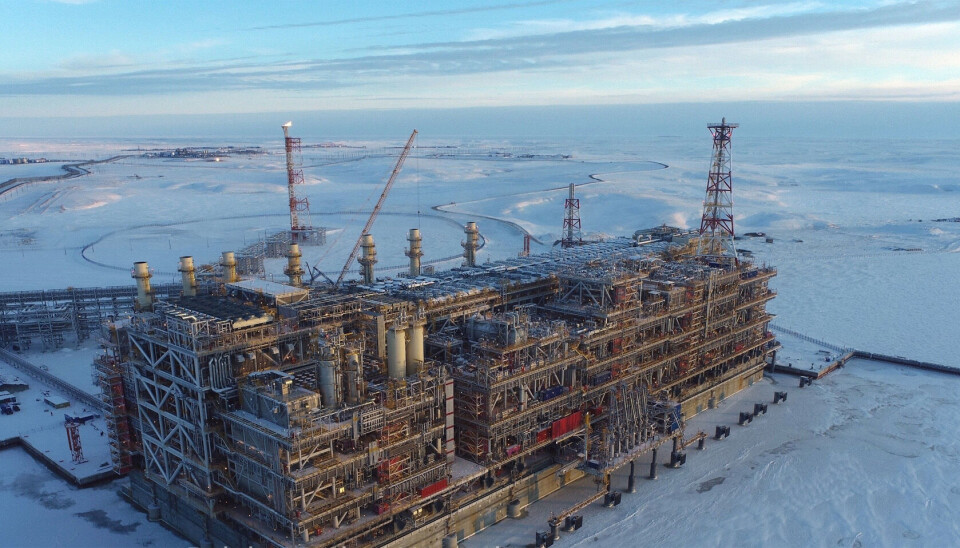
The European market is not the main problem for Arctic LNG 2, as its cargoes are already largely directed to China at a substantial discount of 30–40%. Additional losses resulting from the 21st sanctions package are estimated at between $0–50 million if the package is implemented only by the EU, and $150–450 million if the measures are coordinated with the UK, US and Asian ports.
The 21st package significantly worsens Arctic LNG 2’s position in two or three areas:
Foreign partners are leaving
On 23 July 2026, French company TotalEnergies announced its intention to transfer its 10% stake in Arctic LNG 2 to a Novatek entity. The company had previously written off the value of its investment and declared force majeure.
This will not halt the project’s Russian technological operations, but it means:
The final loss of a Western shareholder;
A lower likelihood of Western technical assistance;
Less external oversight;
A transfer of financial and operational risks to Novatek, state-owned banks and Russian contractors.
The project will probably be able to ship individual LNG cargoes. However, reaching its originally planned production capacity is becoming even less realistic, since the bottleneck is not only LNG production but also the regular export of the product.
It is becoming harder to acquire LNG carriers
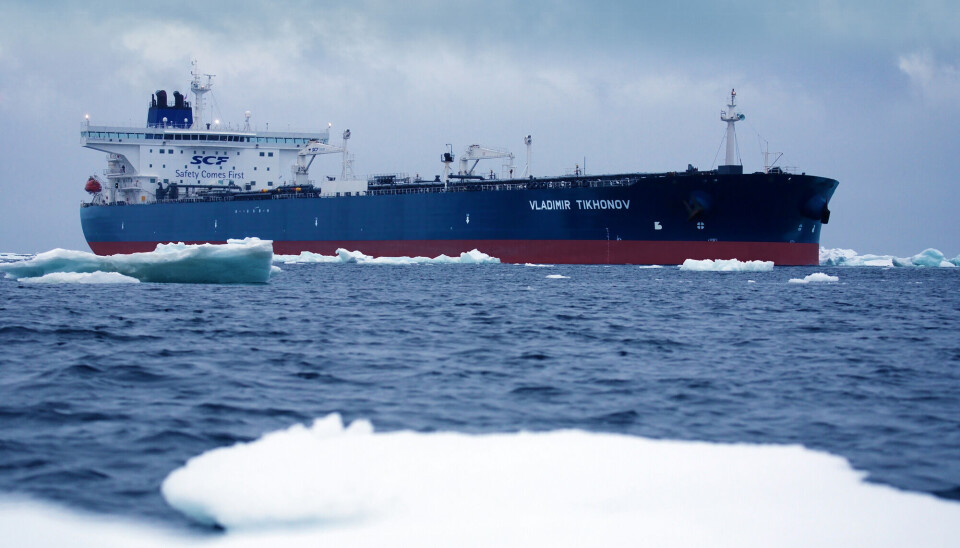
The project’s operations have always depended on specialised ice-class vessels. Russia has already been forced to place older foreign vessels under its own flag. In June 2026, the LNG carrier Arctic Express, formerly Queen Cassiopeia, began operating with a cargo linked to Arctic LNG 2. Russia has simultaneously re-registered several other LNG carriers.
This illustrates the weakness in the system: Russia can find individual older vessels, but it cannot quickly create a modern Arctic fleet of the required scale. The EU’s new rules will make matters more difficult by requiring LNG tanker sales to be monitored and transactions through third countries to be prevented.
Fleet servicing is becoming more complicated
The 20th package already prohibited European companies from servicing Russian LNG carriers and icebreakers and from providing terminal services to Russian LNG companies. The 21st package adds sanctions against companies supplying vessels with fuel, crews and other services.
The sanctions regime is therefore expanding from the vessel itself to ship managers, crewing agencies, bunker suppliers, insurers, classification societies, spare-parts suppliers and transhipment terminals.
The “shadow fleet” and the oil price cap
The new sanctions package expanded the list of “shadow fleet” vessels by another 41 ships, bringing the total to 673.
Restrictions have also been extended to vessels providing bunkering and other support to the “shadow fleet”. This makes the logistics of exporting Arctic oil via the Northern Sea Route more expensive, as some of these “shadow” vessels are used specifically on Arctic routes.
The sanctions list also includes the LNG carriers Alexey Kosygin and Luch, which have transported LNG from the Arctic LNG 2 project.
The automatic adjustment of the oil price cap has been suspended until 15 July 2027 in order to limit Russia’s oil revenues amid the closure of the Strait of Hormuz. This directly affects the pricing of oil exported by sea from Yamal and Taymyr.
Sanctions are particularly sensitive for Arctic oil because its logistics are inherently more expensive:
High ice-class vessels or icebreaker escorts are required;
The number of terminals is limited;
Replacing a vessel in the event of a breakdown is more difficult;
Emergency and rescue services are more expensive.
Maintaining a low price cap therefore means that exporters have to offer buyers a discount while simultaneously paying higher logistics costs. The result is lower net export revenue per barrel, particularly for remote and capital-intensive fields.
As direct EU imports of Russian seaborne oil are already prohibited, the financial impact of the new sanctions is primarily assessed through their effect on shipping, insurance and payment costs. With flows of around 300,000 barrels per day for specialised Arctic oil grades such as Novy Port, ARCO and Varandey, the existing sanctions gap of $5–10 per barrel already translates into an annual loss of $0.5–1.1 billion in export revenue. For every additional $1 per barrel added to that gap, the additional loss would amount to around $0.11 billion a year.
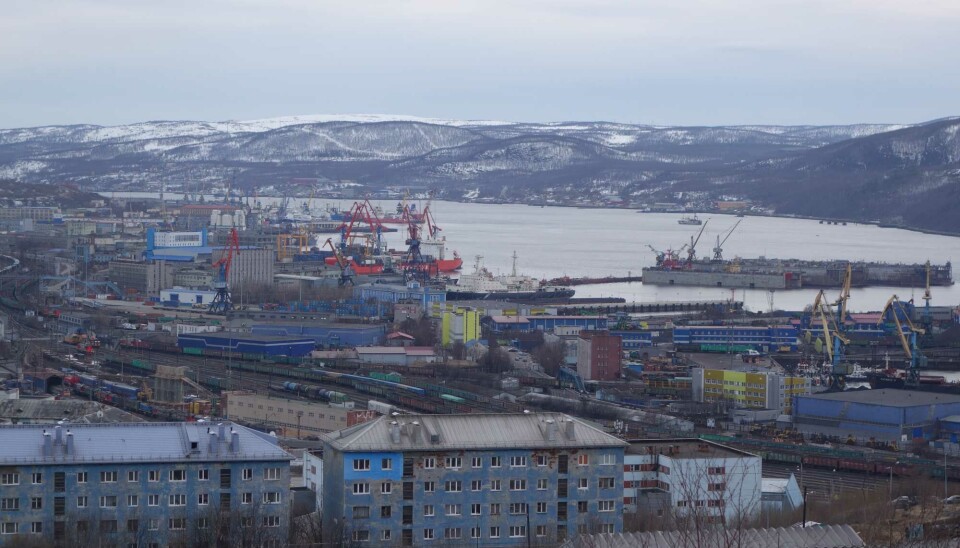
Murmansk Region: transshipment, terminals and service businesses
Murmansk was already subject to direct restrictions under the previous, 20th package: the Port of Murmansk was included among facilities with which certain transactions are prohibited.
The 21st package increases the pressure not so much through new sanctions against the port itself as through the expansion of sanctions targeting the service network supporting the shadow fleet and financial transactions: floating LNG storage, offshore and ship-to-ship transhipment, port agency services, vessel repairs and supplies, (re)insurance, payments for freight and port services, and so on.
As a result, Murmansk may retain its physical cargo flows, but the international component of operations will shift towards less transparent intermediaries, Russian insurers and companies from third countries. This will increase costs and accident and environmental risks because of the use of older vessels and less transparent service arrangements.
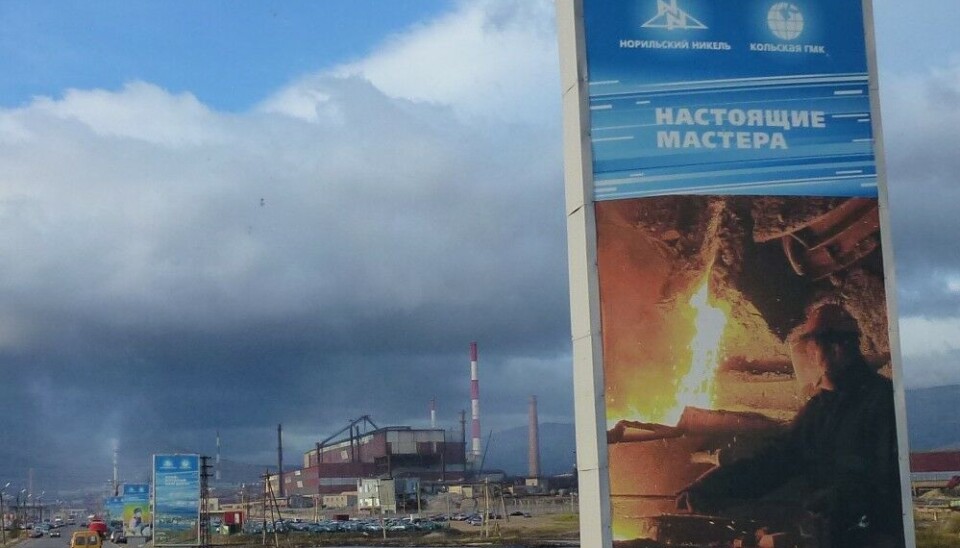
Norilsk Nickel and non-ferrous metals
The new sanctions introduce additional restrictions on imports of goods generating more than €60 million in revenue for Russia, including copper, nickel and lead ores, ores of precious metals, unwrought zinc, alkaline-earth metals, zinc and chromium oxides, glass products, imitation pearls and automotive parts.
Copper, nickel and platinum-group metals are the basis of Norilsk Nickel’s exports, including those of the Kola Mining and Metallurgical Company and the Polar Division. The expansion of import restrictions therefore theoretically affects its product range, although Norilsk Nickel itself is not directly sanctioned under the 21st package.
Sanctions have been imposed on seven major gold-mining companies, one key diamond-mining company, and a number of mining and metallurgical enterprises, including Seligdar, BTS-Zoloto (formerly UGC), Areal (formerly Highland Gold), Vysochaishy, Susumanzoloto, Nordgold and others, as well as Pervaya Diamantnaya Kompaniya, which Arctida investigated last year.
Nordgold is actively conducting geological exploration and pursuing mergers and acquisitions in Arctic and near-Arctic regions. The company acquired 100% of Novaya Syryevaya Kompaniya, which holds licences for geological exploration of precious-metal deposits in Chukotka and Yakutia, and is also considering investment in a Chukotka project with estimated resources of 69 tonnes of gold. At present, however, the bulk of gold production in Chukotka is provided by companies belonging to Vladislav Sviblov’s Areal group.
Areal is also on the new sanctions list. With annual production of around 15.6 tonnes in 2025, its gross value could amount to approximately $1.7 billion.
Seligdar has the Kyuchus project in Yakutia at the planning stage, with reserves of around 175 tonnes of gold, as well as the Pyrkakai stockwork project in Chukotka, controlled through Rusolovo, with reserves of around 243,000 tonnes of tin.
The impact of the sanctions is likely to be regulatory and logistical rather than operational. A source in the commodities market told Kommersant that the companies had been able to prepare and that the EU’s new restrictions essentially formalised an existing situation: exporters were already oriented towards China, India, Turkey and the UAE.
However, according to Global Witness, Russia accounted for around 15% of EU nickel imports as recently as the second quarter of 2025, meaning that the European market remained significant for Russian producers.
What does this mean for Norilsk Nickel?
The direct impact of the ban specifically on ores is likely to be limited for Norilsk Nickel: the company mainly exports processed nickel, copper, palladium and other metals rather than unprocessed nickel or copper ore.
However, the indirect consequences of the sanctions are more significant:
More banks are subject to transaction bans;
European customers are increasing checks on the origin of metals;
Financing commodity shipments is becoming more difficult;
Risks for carriers and intermediaries are increasing;
Some flows will be redirected towards Asia.
The official text does not currently confirm a blanket ban on Russian refined nickel, copper or palladium. It would therefore be incorrect to conclude that the 21st package “closes the European market to Norilsk Nickel as a whole”.
Diamonds and Yakutia
Russian diamonds were already subject to European restrictions. The 21st package is therefore likely to mean for the diamond industry and Yakutia:
An expanded list of blocked legal entities;
Additional difficulties for intermediaries;
Tighter checks on the origin of diamonds;
New restrictions on payments;
Further redirection of sales towards India, China and the UAE.
The main consequences will be felt not only by mining companies but also by sorting and sales structures, banks, transport companies and contractors in Mirny and other single-industry towns.
At the same time, physical production can continue with state financing and sales outside the EU. The consequences will therefore primarily emerge through lower realised prices and growing inventories rather than the immediate closure of mines.
A specific target of the sanctions is Pervaya Brilliантовая Almaznaya Kompaniya LLC, linked to former ALROSA employees. The grounds for its inclusion were the continuation of external sales through intermediaries after restrictions were introduced. If the blocking of circumvention channels increases discounts and other delays to 10% of turnover, the financial impact could amount to as much as $29 million annually.
Arctic coal projects
Coal imports into the EU were already banned under the fifth sanctions package in 2022. For the Elga, Kolmar, Yakutugol and Severnaya Zvezda projects and coal terminals, the main new impact of the sanctions is therefore financial and logistical:
Even fewer banks are available for transactions;
Risks for foreign carriers are increasing;
It is becoming harder to purchase industrial, port and maritime equipment;
Chinese and Indian counterparties gain greater leverage to demand discounts.
Fifty-one new companies, including entities from China, India, Kazakhstan, Kyrgyzstan, Turkey and the UAE, have been added to the enhanced export-control list for assisting Russia’s military-industrial complex and circumventing restrictions.
This is an important signal for Arctic coal projects: sanctions risk is gradually shifting from Russian equipment buyers to the foreign intermediaries through which machinery, electronics and components are procured.


