
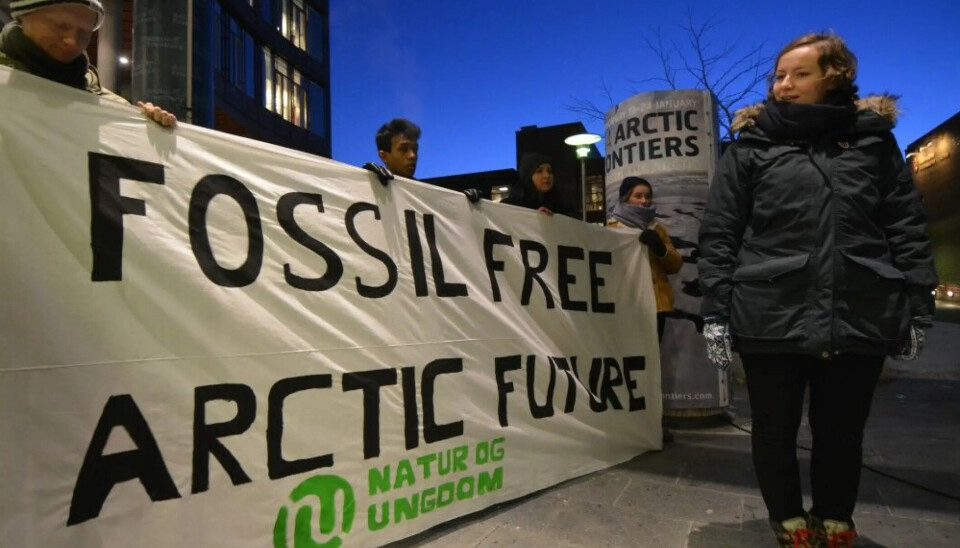
Moscow declares Nature and Youth an "undesirable organisation"
The Norwegian environmental youth organisation has worked with Russian partners for more than 30 years.
The Russian Ministry of Justice on December 16 announced that Nature and Youth (Natur og Ungdom) has been included in a list of so-called "undesirable organisations."
The environmental NGO is the fifth entity in Norway that is "undesirable." From before, Bellona, Human Rights Watch, the Norwegian Helsinki Committee and the Barents Observer are on the list.
Leader of the organisation Sigrid Hoddevik Losnegård was not aware of the decision when the Barents Observer took contact.
"We are surprised and sad," she says in a comment.
The Russian Justice Ministry has so far not given any explanation of why the young Norwegian environmentalists have become 'undesirable.'
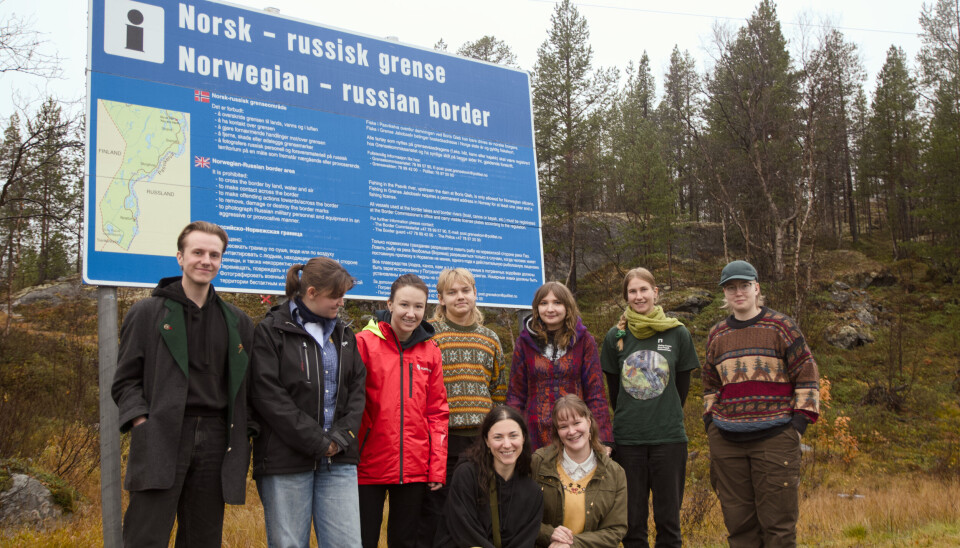
Nature and Youth has a more than 30-year-long history of cooperation with Russian partners.
Contacts between young activists from Norway and Russia started in the late 1980s and developed into a fruitful cooperation with dozens of cross-border projects.
In 1989, more than 70 Norwegian youngsters participated in a peace and environmental festival in Murmansk. They were the first Western environmentalists that visited the Kola Peninsula and the festival resulted in a boost in contacts.
At the time, there was a grim environmental situation on the Kola Peninsula. In only short distance from the border to Norway large volumes of nuclear waste materials, including spent nuclear fuel, was stored under extremely bad conditions. There were also major emissions of sulphur dioxide from nickel melters located in the border areas.
In the 1990s several local groups of Nature and Youth, including from Tromsø and Bodø, started cooperation project with Russian groups from the Kola Peninsula
"A key objective for the Nature and Youth has been to support local Russian groups that wanted to do something with the environmental problems," the authors of a book about the organisation's cooperation with Russia explain.
Over the years, Nature and Youth's Russian partners have included regional environmental organisations in the regions of Murmansk and Arkhangelsk. Projects have been funded through Norwegian grant programmes.
With increasing frequency, Russian authorities label organisations as ‘undesirable’ as part of a repression policy towards non-governmental entities. This status implies a complete ban on the organisation's activities in Russia. For Russian citizens, participation in such an organisation, distribution of its materials, or any form of cooperation may result in administrative liability, and in the case of repeated incidents, criminal prosecution.
By late December 2025, the Russian Ministry of Justice had included 290 organisations in the ‘undesirable-’ list. Among them are political and social associations, religious structures, independent media, human rights and environmental initiatives, as well as foundations and think tanks.


