
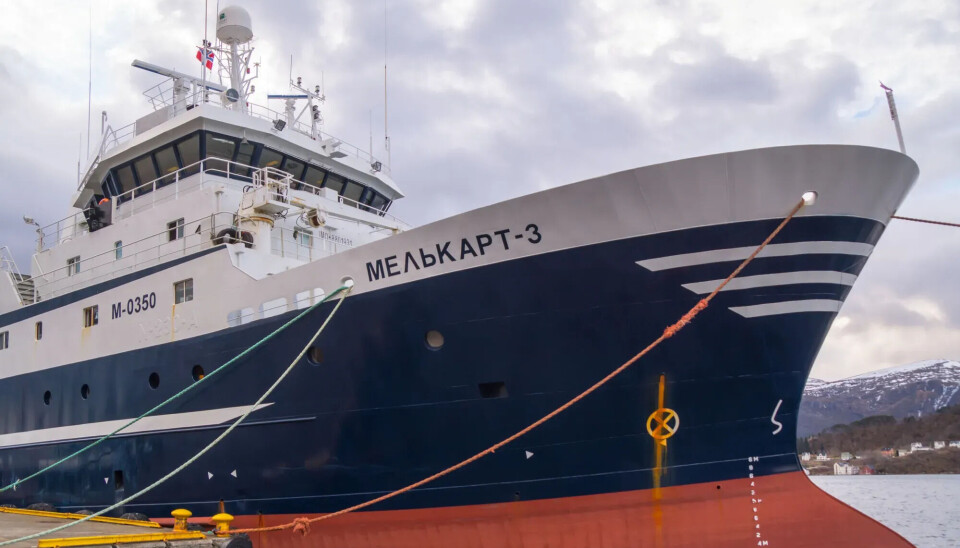
The Melkart-3 is trawling near Svalbard
After being kicked out of the Norwegian economic zone, Murman Seafood continues fishing in Svalbard's Fisheries Protection Zone.

After being sanctioned by Norway, Murman Seafood does not have a licence to enter the 200-nautical-mile zone outside the Norwegian coastline for fishing purposes. Originally, the Russian fishing company was included in the EUs 17th sanction package for unusual navigation practices close to critical infrastructure and military exercises.
One of the company's trawlers, the Melkart-5, got special attention in the EU Council document published on May 20, 2025:
"In particular Melkart-5 showed highly unusual navigation practices in the immediate vicinity of a subsea cable in the Norwegian North Sea, crossing the cable multiple times, immediately before the cable was severely damaged," the document states.
Now her sister ship continues trawling outside the west coast of Spitsbergen, the largest island of the Svalbard archipelago.
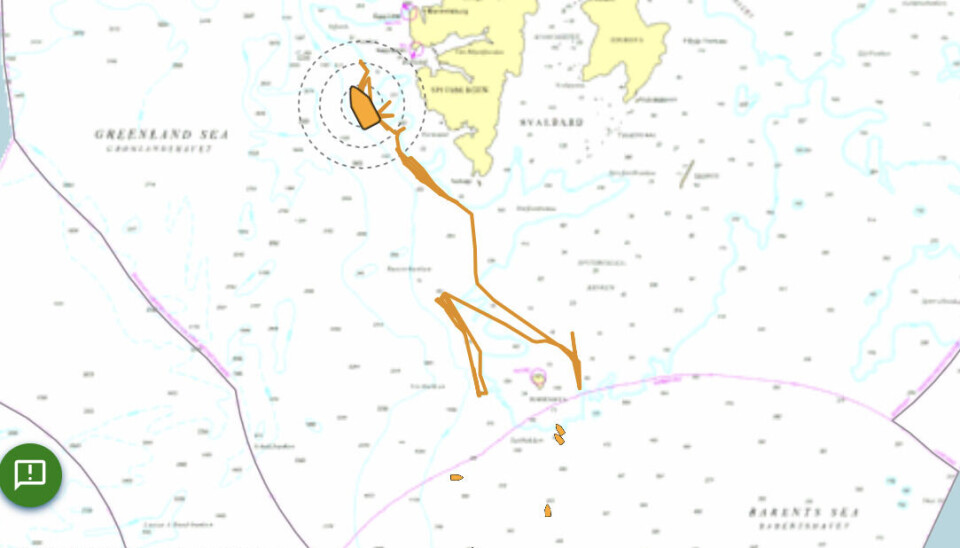
According to Norwegian Coastal Chart Series' tracking, the Melkart-3 sailed both East and West of the Bear Island and South-West of Spitsbergen over the past two weeks.
Territorial waters
According to Geir Hønneland, Senior Researcher at the Fridtjof Nansen Institute, the Norwegian sanctions does not include fishing in Svalbard's Fisheries Protection Zone.
"As Russia does not formally acknowledge Svalbard's Fisheries Protection Zone by law, it is not a standard procedure to give license to Russian vessels in this area", he points out.

The Norwegian researcher is referring to the fisheries agreement between Norway and Russia that has lasted for fifty years. Following this agreement, the two parties assign licenses to each other’s economic zones only once a year.
There are no provisions regarding Svalbard's 200-nautical-mile Fisheries Protection Zone, as it is not a part of Norway's economic zone.
Hønneland ensures that both Murman Seafood and Norebo, the second Russian company sanctioned, have legal rights to continue trawling outside of Svalbard's coast.
Although Russia does not acknowledge Svalbard's zone, Hønneland also describes that Russian vessels follow Norwegian regulations in practice, since they agree to be regularly inspected by the Norwegian Coast Guard.
Change in fishing activity
Most of the fishing activity usually takes place outside of the Norwegian coast at this time of the year, according to Hønneland:
"Russian vessels primarily fish outside of Troms and Finnmark early in the year. During the spring, they sail northward and continue fishing in the waters outside of Svalbard."
He says that this context makes the sanctions imposed on Russia appear less severe:
"The decision not to grant fishing licenses to Norebo and Murmansk Seafood is therefore less dramatic than a scenario in which Russian vessels would be restricted to fishing solely within the Russian economic zone in the eastern part of the Barents Sea."
Earlier ownership
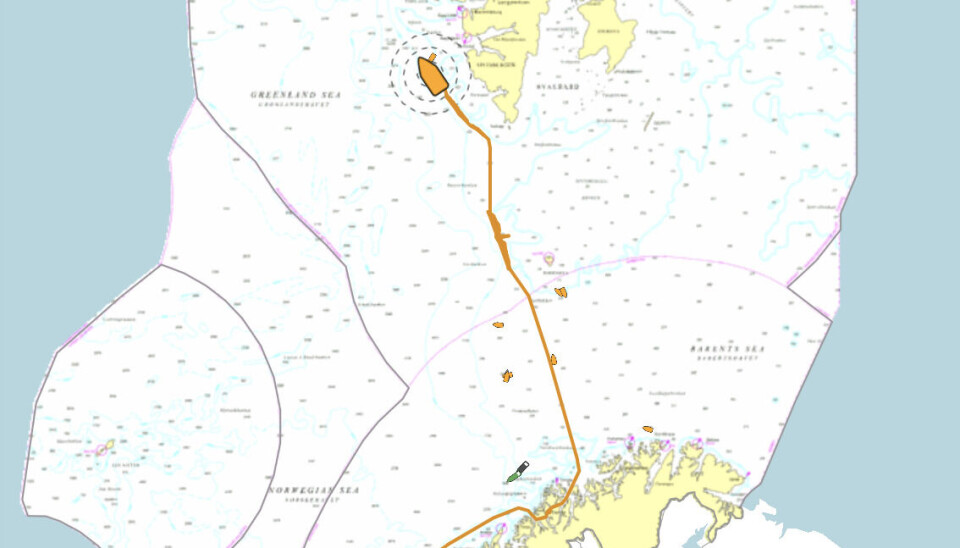
Sailing alongside the Melkart-3 is another Russian fishing vessel. For the past two weeks the Kapitan Durachenko has sailed from the west coast of Norway to the coast of Svalbard. During the past ten years the vessel has shifted ownership several times.
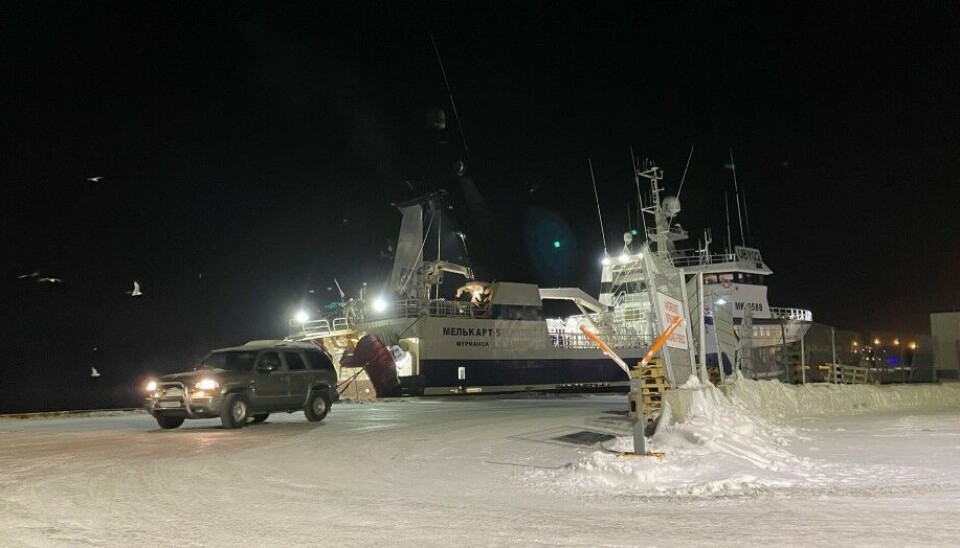
On Friday January 9 she docked at one of Tromsø's port facilities.
"The Kapitan Durachenko was here recently," the head of Tromsø port confirms before elaborating:
"She was here for approximately one and a half days to bunker up with fuel and provisions."
The vessel has earlier been owned by Norebo, a fishing company that is currently is banned from Norwegian port facilities.
When asked by the Barents Observer about its connection to the Kapitan Durachenko, Norebo's press centre makes it clear that the vessel has nothing to do with the company:
In relation to the Kapitan Durachenko we can confirm that it is not owned, operated, or controlled by Norebo. It was sold to a separate and independent fishing company years ago.
The vessel was sold to Glow Arctic in 2016, according to them. The new owners are not sanctioned by Norway.
At least since January 7, Kapitan Durachenko has sailed in the Norwegian economical zone. It left the zone approximately January 12, according to the Norwegian Coastal Chart Series.
Fear of intelligence gathering
When asked about ships sailing in the Norwegian economic zone, Senior Researcher Geir Hønneland explain how the sanctions work.
"The Law of the Sea does not impose any restrictions on the right of passage through exclusive economic zones. Norway therefore cannot deny Russian vessels such passage", he emphasizes.
The sanctions apply only when harvesting, not when merely sailing from one point to another.
Both Murman Seafood and Norebo were sanctioned because the Norwegians fear intelligence gathering in their waters.
The EU Council states that the Melkart-5 has "repeatedly shown untypical behaviour inconsistent with its regular economic practices and fishing activities", while Norebo's shipping vessels "have been equipped with technology that may be used for espionage".
In January 2022, the Melkart-5 repeatedly crossed Svalbard's subsea fiberoptic cable before it was damaged. Seven months later, a crew from the same vessel was fined by the police for lowering a small boat on the water and setting off to Langfjorden in the direction of the Strømmen bridge outside Kirkenes.
The bridge is close to a military restricted area and considered critical infrastructure in the area of Norway's border with Russia.
Is it any reason to believe that the Melkart-3 is operating in the same way?
"I assume that the EU can document their decision when sanctioning the two companies. However, I also assume that it doesn't apply to every vessel," Geir Hønneland replies.
In addition, 115 Russian vessels have recently been granted permission to fish in Norwegian economic zone in 2026, Fiskeribladet reports.
The Norwegian Fisheries Monitoring Centre received 144 applications, and denied access for 29 of them access.
The Barents Observer has asked Murman Seafood for comment but has not received an answer.


