Nuclear icebreaker escorts North Pole platform from Greenland Sea
After 21 months of drifting across the Arctic Ocean, Russia’s Severny Polus (North Pole) research station was this week escorted out of the ice.

After almost two years of drifting with the currents through deep Arctic sea ice, the Severny Polus (IMO 9884198) has been led to open waters. The drift, which began in the East Siberian Sea in September 2024, ended this week in the northern parts of the Barents Sea.
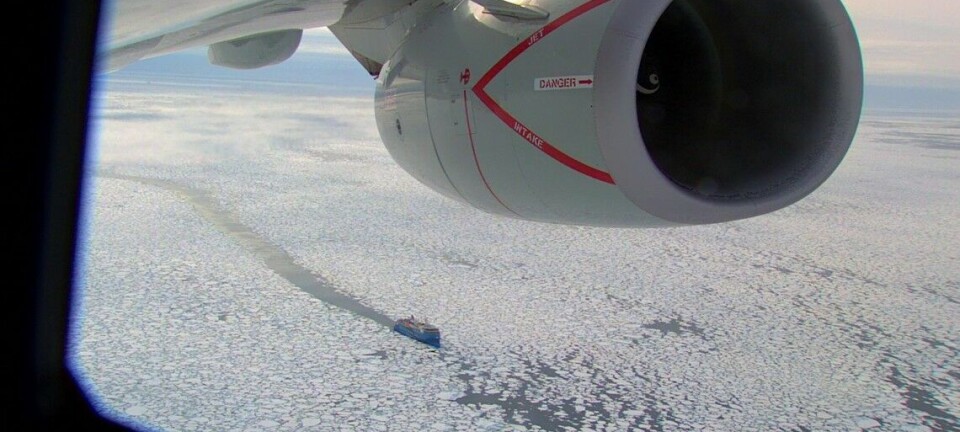
It was the nuclear-powered icebreaker Arktika that escorted the unique research platform out of the ice. Ship traffic data show how the Severny Polus, in mid-July, moved from 80.3°N in the Greenland Sea, along the north coast of Svalbard, and into the northern parts of the Barents Sea.

According to Rosatom, Russia’s nuclear power company, this is the first time a Russian nuclear icebreaker has operated in the Greenland Sea.
Yakov Antonov, director general of the icebreaker base Atomflot, praised the crew members of the Arktika.
“They have demonstrated our fleet’s readiness to operate in any part of the Arctic Ocean. Prior to this, nuclear-powered vessels had not yet provided ice-breaking escort services in the Greenland sector of the Arctic. Shipping in this area is virtually non-existent due to severe ice conditions,” he said.
According to the Russian Arctic and Antarctic Research Institute, the Severny Polus drifted more than 6,550 km during the 21 months period.
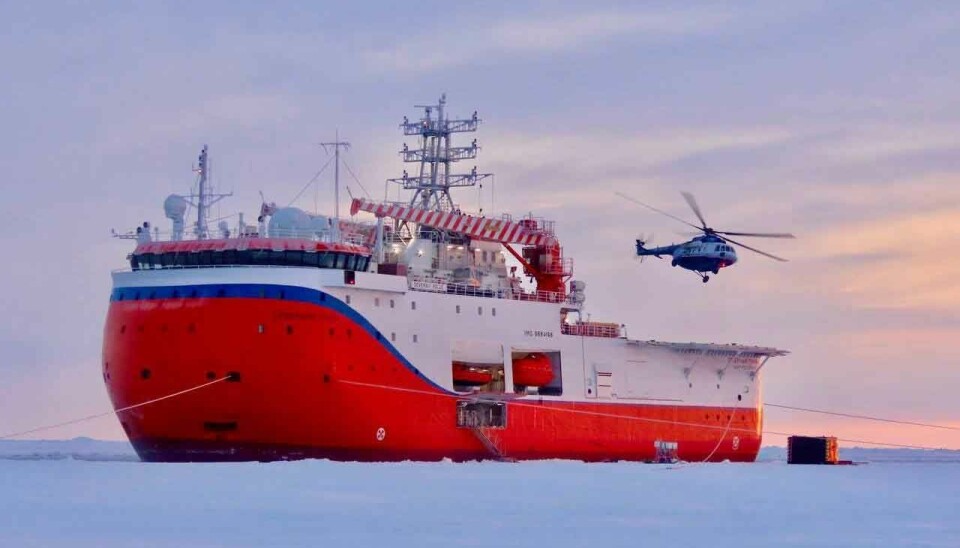
A wide range of research was conducted during the drift, said Institute Director Aleksandr Makarov.
"The information gathered by scientists is of exceptional importance for understanding natural changes in the Arctic, where the climate is warming two to three times faster than in other parts of the planet. It is only through systematic field observations that we can understand exactly what is happening in this region," he said in a comment.
Reportedly, more than 50 types of year-round observations were conducted. According to Makarov, the research indicates that "no irreversible changes have been made to the Arctic climate system."
“Today, we can see that, despite significant warming and a sharp reduction in summer sea ice cover in the Arctic Ocean, no irreversible changes have yet occurred in other components of the Arctic climate system,” he said.
The vessel, which has the shape of a bathtub, was delivered from the shipyard in 2022. It is operated by the Russian meteorological service Roshydromet and is capable of undertaking geological, acoustic, geophysical, and marine research under the harshest Arctic conditions. On board are 15 laboratories where researchers can work year-round.
The research platform has replaced Russia’s Arctic expeditions based on ice floes, which have been organised since the 1930s. The rapidly vanishing Arctic sea ice has made it increasingly difficult to organise these expeditions, and the last real ice station, North Pole-40, was held in the winter of 2012.