
British, Swedish and American reconnaissance aircraft monitor Kola Peninsula on Tuesday
NATO reconnaissance aircraft had a busy day on Tuesday, keeping watch over Russia’s Murmansk region from both the north and west.

In the morning, a Swedish Air Force Gulfstream IV Korpen made multiple circuits over north-eastern Finland, with its sensors collecting data from Russia’s Kola Peninsula.
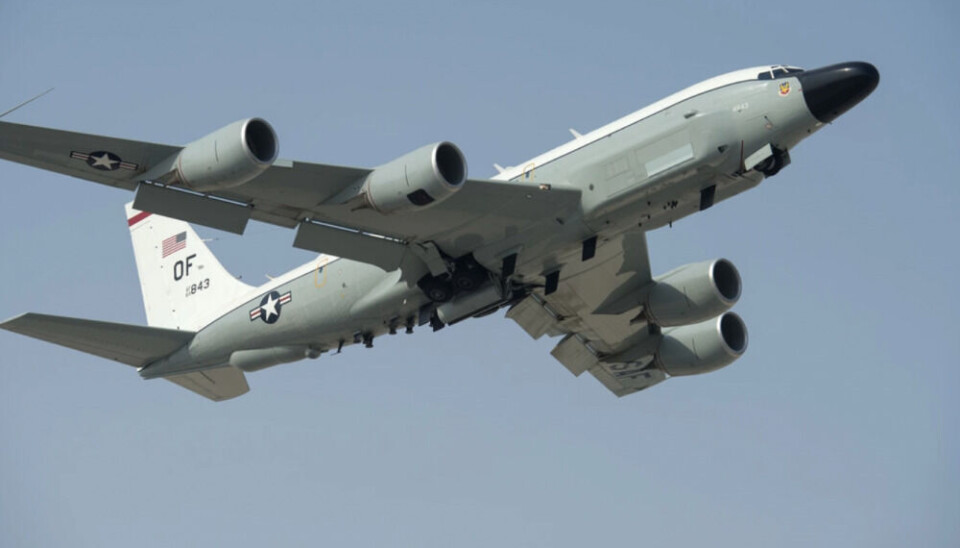
Shortly after the Swedish aircraft headed south after midday, it was replaced by a larger British Rivet Joint. The aircraft specialises in collecting and analysing communications intelligence and electronic signals intelligence.
The British reconnaissance aircraft flew circuits over the same area of northern Lapland as the Swedish aircraft before returning south at around 5pm Norwegian time. Neither the British nor Swedish aircraft entered Norwegian airspace, as Norway maintains a ban on allied intelligence-gathering aircraft operating over eastern Finnmark, close to the Russian border.
At the same time, a US Air Force Rivet Joint flew north of the Kola Peninsula. The aircraft had flown north from RAF Mildenhall, north-east of London, and switched off its publicly visible transponder for the part of its flight east of the Norwegian sector of the Barents Sea. On the return journey, its signal became visible again north of the Varanger Peninsula.
The US reconnaissance aircraft re-entered Norwegian airspace west of the Porsanger Fjord and continued south across Norway. The aircraft returned to base in the United Kingdom late in the evening, having remained airborne for more than eleven hours.


At the time of reporting, it was not known what had triggered the unusually high level of NATO surveillance of the Murmansk region.
On Monday, September 7, the Northern Fleet frigate Admiral Golovko fired an Oniks cruise missile. The missile flew 300 kilometers from launch position in the Barents Sea, and hit a target at Chizha training range on the Kanin Peninsula, according to Russia's Ministry of Defence.
The Kola Peninsula is one of Russia’s most heavily militarised regions. It is home to the Russian Northern Fleet, with major naval bases around Severomorsk and submarine facilities near Gadzhiyevo, as well as elements of Russia’s strategic nuclear forces. South of Murmansk lies Olenya Air Base, a key operating base for long-range Tu-95MS bombers. From there, Russian aircraft have repeatedly conducted long-range strike missions, launching cruise missiles against civilian targets in Ukraine.
As previously reported by the Barents Observer, Russia is currently testing several new nuclear-powered submarines and weapons systems in northern waters.
A test launch of the Burevestnik nuclear-powered cruise missile is also expected to take place from Novaya Zemlya in the near future.


