


USS Delaware makes Tromsø port call during busy period of Russian submarine testing in northern waters
In recent weeks, no fewer than four new and upgraded Russian nuclear-powered submarines have drawn NATO’s attention. Two of them are designed to carry weapons that Vladimir Putin hopes could alter the strategic balance.

It is not every day that the US Navy announces the name and location of one of its advanced fast-attack submarines. But on 1 September, the Navy’s 6th Fleet press office published a series of photographs of the Virginia-class submarine USS Delaware, along with details of its arrival in northern Norway.
The Virginia-class fast-attack submarine is designed to excel in anti-submarine warfare, anti-ship warfare, strike warfare, special operations, intelligence, surveillance and reconnaissance, irregular warfare and the use of unmanned systems, the Navy said.
Going public with such a port call sends a signal to Moscow of awareness and presence.
The timing is notable. The summer of 2026 has been a busy period in the White Sea and Barents Sea, with one Russian submarine after another leaving the shipyards in Severodvinsk for sea trials and patrols.
“Russia is investing heavily in a new generation of ‘super weapons’ designed to bypass and potentially nullify conventional defences,” maritime analyst H I Sutton writes in an article for Naval News. Sutton specialises in underwater warfare, submarines and maritime drones.
One of these weapons is Poseidon, a nuclear-powered underwater drone shaped like a giant torpedo. Development and testing of the weapon has been under way in Russia’s Arctic waters since at least 2018, when Vladimir Putin first publicly announced its existence during his address to the Federal Assembly on 1 March that year.
In mid-August, the first of three submarines of a new class designed to carry Poseidon put to sea from Severodvinsk for its first set of sea trials.
The submarine, Khabarovsk, was not at sea for long before returning to port, according to photographs from the Sevmash shipyard seen by the Barents Observer in recent days. However, the brand-new submarine is expected to return to the White Sea for further sea trials in the near future.
As with any new submarine class, NATO – particularly the US and UK – has a strong interest in learning as much as possible about the Khabarovsk's navigation and noise-reduction capabilities. Its new weapon is of particular interest, with Russia claiming that the Poseidon has an intercontinental range.
In theory, the enormous nuclear-powered, nuclear-armed torpedo could affect the balance of nuclear deterrence between the United States and Russia.
“Khabarovsk is an all-in bet on the Poseidon weapon,” Sutton said, adding:
“The longer-term impact of Poseidon has yet to be felt. It has to be taken seriously by NATO navies but has not become the focus or pivot which Russia might have been hoping for.”
Although Khabarovsk is the first submarine of a new class designed to carry the Poseidon, a test-platform submarine, Belgorod, has already been carrying out tests in Arctic waters for several years, including trials involving the Poseidon drone.
Belgorod was built on a modified Oscar-II-class hull and has been sailing in and out of Severodvinsk since 2021.
Photographs from the Sevmash yard in August showed the submarine returning to the shipyard after a voyage in the White Sea.
A third submarine currently undergoing sea trials is Perm, Russia’s newest Yasen-M-class submarine, which is capable of carrying the hypersonic Tsirkon missile.
The submarine was seen leaving Severodvinsk on 29 August, in what is believed to be one of the final rounds of testing before entering operational service. Perm first put to sea in August 2025.

While the White Sea is suitable for initial navigation trials, most weapons testing takes place in the Barents Sea. For deep-diving trials, however, the Barents Sea is too shallow. Traditionally, new Russian submarines have conducted deep-diving exercises in the waters between Svalbard and the North Cape, where the shallow Barents Sea gives way to the much deeper Norwegian Sea.
This area, known to NATO as the GIUK-North or Bear Gap, is strategically important to US, British and Norwegian submarines, which seek to maintain constant surveillance of the waters.
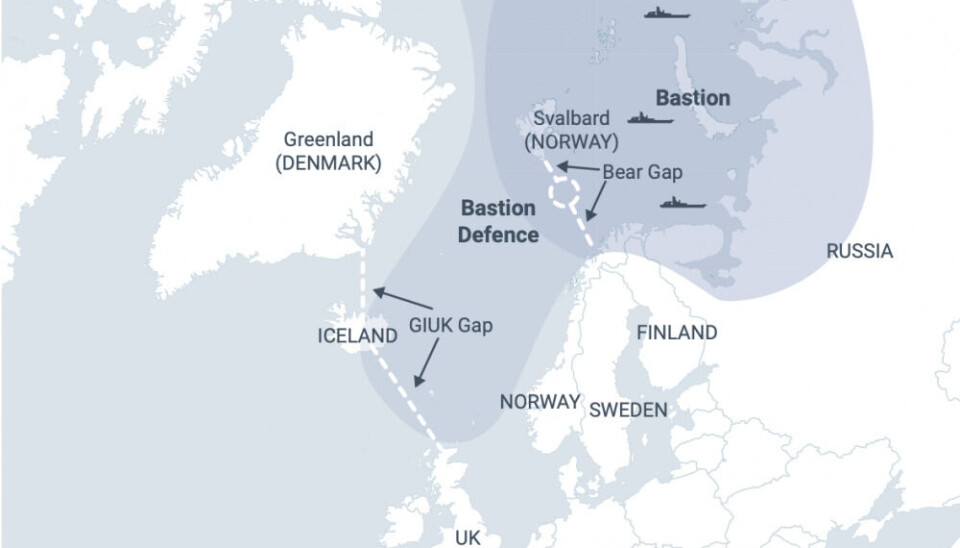
According to the newspaper Nordlys, USS Delaware was the second US Navy submarine to make a port call in Tromsø in less than a week.
Finally, a fourth Russian submarine of interest is Leopard (K-328). The modernised Akula-class submarine departed the shipyard in Severodvinsk for the White Sea on 8 June to begin sea trials ahead of its expected return to operational service later this year.
Although Leopard was first commissioned in December 1992, the upgrades carried out at the Zvezdochka shipyard over the past 15 years have been so comprehensive that they have brought the submarine’s capabilities close to those of the fourth-generation Yasen-M-class multipurpose submarines.
Sea trials with Leopard are likely to continue into the winter before the submarine, now equipped with modern Kalibr cruise missiles, returns to the Northern Fleet.


