
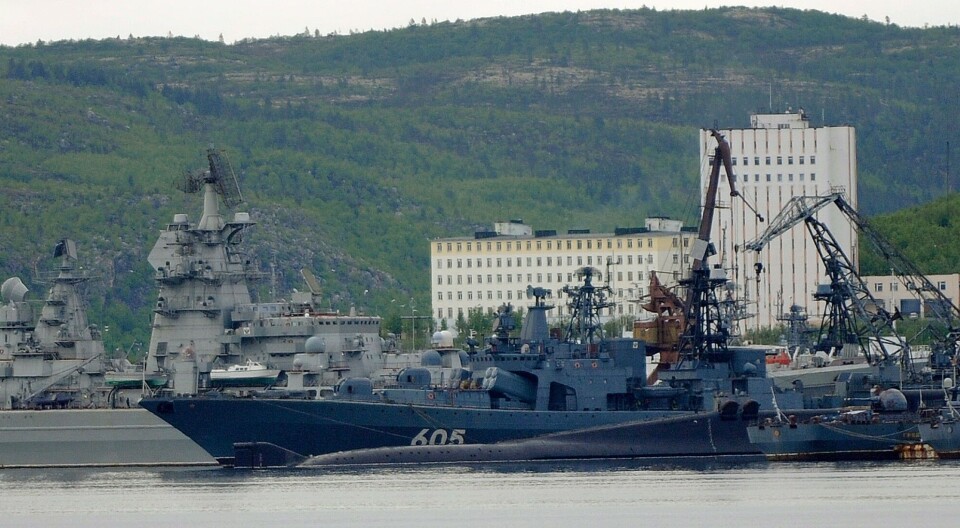
Northern Fleet takes part in major nuclear exercise
Parts of the Barents Sea have been closed to navigation for the launch of both ballistic and cruise missiles.

Russia’s nuclear forces began a large-scale three-day exercise on Tuesday morning, according to the Defence Ministry.
“From 19 to 21 May 2026, the Armed Forces of the Russian Federation are conducting exercises on the preparation and use of nuclear forces under the threat of aggression,” the ministry said in Telegram.
What had previously been described as a Russian-Belarusian exercise involving tactical nuclear weapons has now expanded into a large-scale drill involving all three components of the nuclear triad: land-based ballistic missiles, submarine-launched missiles and strategic bombers.
The exercise involves the Strategic Missile Forces, the Northern Fleet, the Pacific Fleet, the Long-Range Aviation Command, as well as elements of the Central and Leningrad military districts.
According to the Defence Ministry, more than 64,000 personnel are taking part, together with over 7,800 units of military equipment, including 200 missile launchers, more than 140 aircraft, 73 warships and 13 submarines — among them eight strategic missile submarines.
This is likely to be one of the largest nuclear weapons exercises in post-Soviet history.
Traditionally, Russia's annual strategic nuclear drill Grom (Thunder) takes place in the autumn.
The areas of the Barents Sea closed to civilian navigation and air traffic include a launch zone north of Kola Bay, a larger area north of the Kola Peninsula, and a vast area north of the Severnaya Zemlya archipelago.
A large area off the eastern coast of the Kola Peninsula, stretching as far as Cape Kanin, has also been closed. This suggests that a Northern Fleet multirole submarine may be preparing to launch a nuclear-capable cruise missile.
The nuclear drill most likely includes launching of a Yars nuclear missile from Plesetsk in the Arkhangelsk region towards the Kura test range in the Far East. A Notam (Notice to Airmen) has closed the airspace around Plesetsk this week.
So far, there have been no publicly available reports of any missile launches, whether from land, ballistic missile or multirole submarines, or aircraft equipped with cruise missiles.
On 17 May, Moscow came under one of the heaviest Ukrainian drone attacks in recent months, with air defences engaged across several districts and widespread disruptions reported overnight.
On Tuesday, Moscow’s propaganda apparatus appeared highly active, with state media outlet TASS among those claiming that Ukraine was preparing strikes against Russia from Latvian territory, allegations for which no evidence was publicly provided.
Ukraine's Foreign Ministry said in a statement that the deployment of Russian tactical nuclear weapons to Belarus and the joint nuclear drills conducted by the two dictatorships represent an unprecedented challenge to the global security architecture.
The Barents Observer made an update article about which weapons systems were used during the exercise.


