
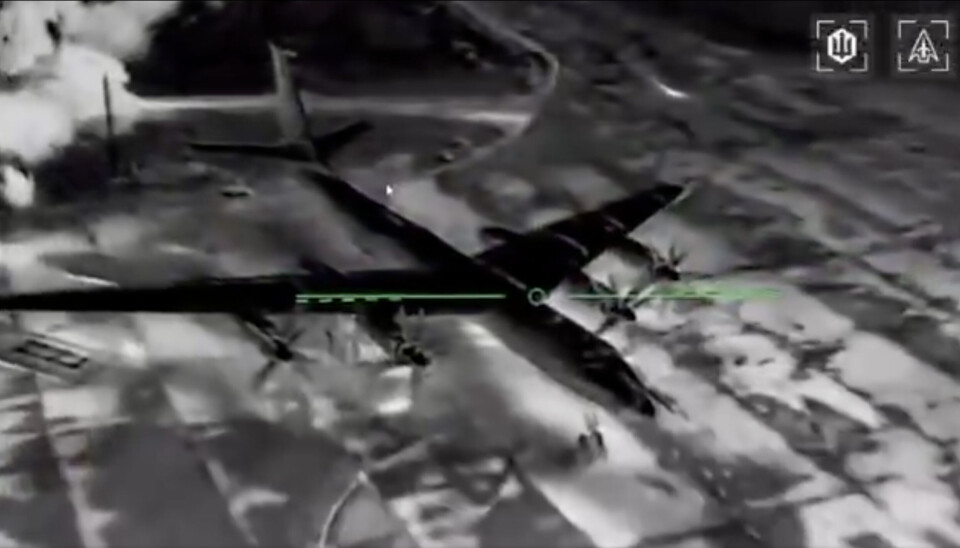
Wiped out Tu-142MR could be a significant blow to the Northern Fleet
Ukrainian drones have destroyed two Russian Navy long-range aircraft, including a specialised Tu-142MR strategic communications-relay aircraft that plays a key role in maintaining contact with Russia's nuclear-armed submarines.

The strikes took place overnight on 30 May at Taganrog Airport, a facility operated by the Beriev Aircraft Company, about 50 kilometres west of Rostov-on-Don on the coast of the Sea of Azov.
Video footage of the attack was posted on the Telegram channel of Ukraine's 414th Separate Unmanned Strike Aviation Systems Brigade, known as "Magyar's Birds".
Beriev, the company that originally built the Tu-142, is also responsible for the maintenance and modernisation of the aircraft operated by Russia's Northern and Pacific fleets. The two Tu-142s destroyed in the attack had reportedly been undergoing maintenance at the facility for more than a decade. However, according to a Bluesky post by the open-source monitoring group AviVector, both aircraft changed position on the airfield on 14 and 19 May.
The aircraft were moved from long-term parking areas to locations closer to the plant's main production facilities and adjacent taxiways, according to news-online United24.
Footage of the strike shows a drone hitting the wing of one aircraft, apparently striking the fuel tank. Seconds later, the aircraft erupts in flames.
The Tu-142 exists in two principal variants: the Tu-142MK anti-submarine warfare aircraft and the Tu-142MR strategic communications-relay aircraft.
As first pointed out by aviation analyst Piotr Butowski on X, one of the aircraft visible in the footage was a strategically important Tu-142MR. Butowski, an acknowledged expert on Russian military aviation and author of Russian Air Power, identified the aircraft by its distinctive forward-facing pod mounted on the tail fin. This feature replaces the rearward-facing magnetic anomaly detector found on the anti-submarine Tu-142MK.
The Aviationist was the first publication to report Butowski's analysis of the destroyed aircraft.
The Tu-142MR serves as an airborne communications link between Russia's military command and submerged ballistic missile submarines. It is designed to relay launch orders to nuclear-armed submarines operating at sea. The aircraft can also transmit commands to Yasen-class attack submarines, which are capable of carrying nuclear-armed cruise missiles for regional conflicts and naval operations in the North Atlantic and Arctic.
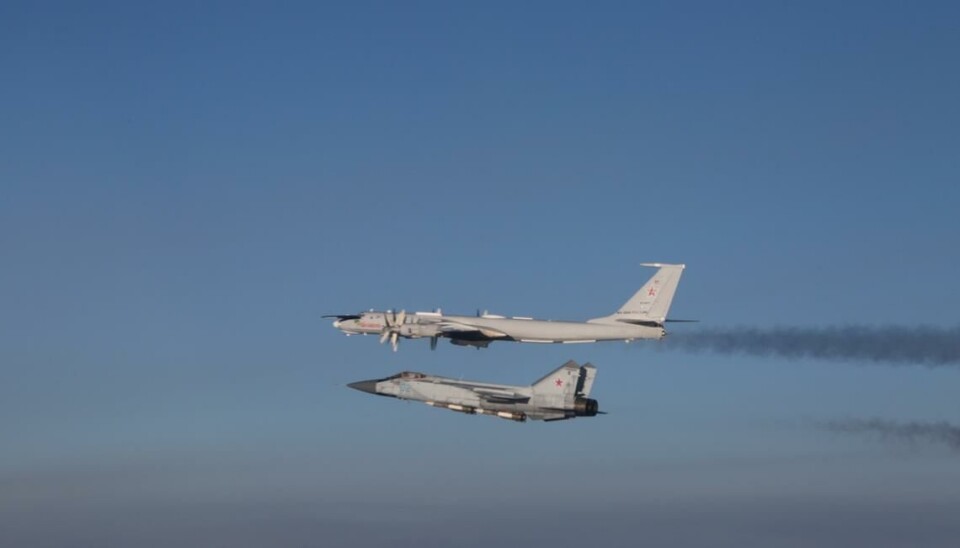
The Northern Fleet's Tu-142 aircraft are normally based at Kipelovo air base in Vologda Oblast, although in recent years they have increasingly been observed at Severomorsk-1 on the Kola Peninsula.
The latest Google Earth imagery, dated July 2025, shows three Tu-142s parked at Severomorsk-1.
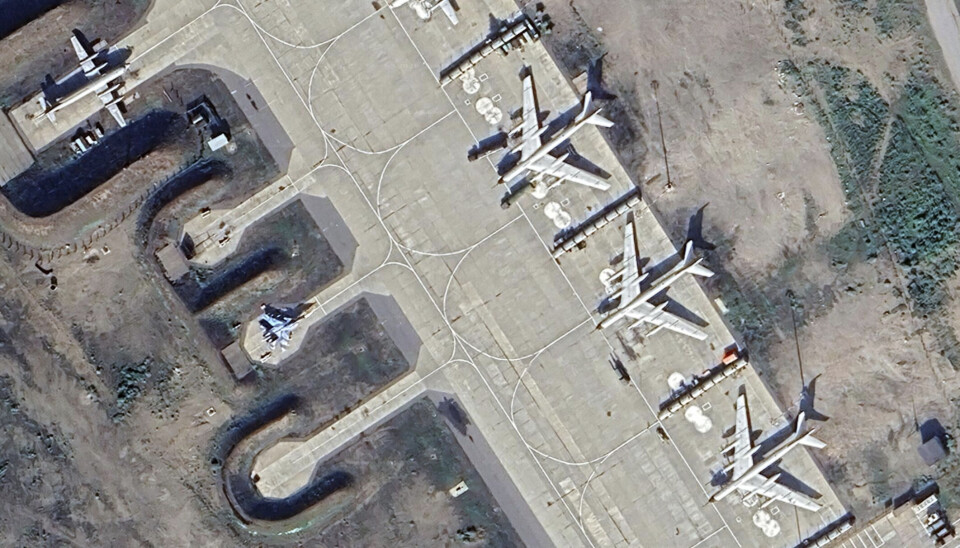
Lars Peder Haga, Associate Professor at Norway's Air Force Academy, said the aircraft targeted by Ukrainian drones on 30 May were most likely at the Taganrog facility for repairs and modernisation.
He noted that they were probably "at a stage where they had started test flights".
"If so, this is a serious economic and prestige loss, as well as a long-term weakening of Russia's capabilities in the North Atlantic, Arctic and Pacific," Haga wrote in a thread on Bluesky.
Tu-142MR aircraft are both rare and valuable assets for the Russian Navy. Butowski estimates that only 12 to 14 aircraft are divided between the Northern and Pacific fleets, the only two Russian fleets that operate ballistic missile submarines. If one aircraft that had recently completed repairs has now been destroyed, the remaining aircraft may have to remain in service for longer periods before undergoing maintenance themselves.
"For this reason, the loss or damage of even a single aircraft would be a significant blow to Russia, not because of its direct impact on battlefield operations, but because of the niche and strategic mission it performs in nuclear deterrence," The Aviationist concluded.


