Governor gives high priority to monitoring Russia’s Svalbard voyages
The first of ten voyages this year allowing Russian citizens visa-free access to the Norwegian archipelago departed Murmansk on Sunday.

The Professor Molchanov was originally scheduled to leave Murmansk on March 4, but bad weather in the Barents Sea delayed the departure until the early hours of March 8, according to the vessel’s AIS data.
The voyage from the Kola Peninsula to Svalbard typically takes two to three days.
By sailing directly from Murmansk, Russian citizens no longer have to travel by aeroplane via airports in Oslo or Tromsø, a transfer that requires a Norwegian visa.

“We are well aware of the port calls and are prepared for them,” Svalbard Governor Lars Fause told the Barents Observer.
The Governor’s office will work together with Customs to carry out routine inspections, Fause said. These include identity checks for passengers and inspections of goods being unloaded.
“This task is a high priority and will be given the necessary resources,” the Governor assured.
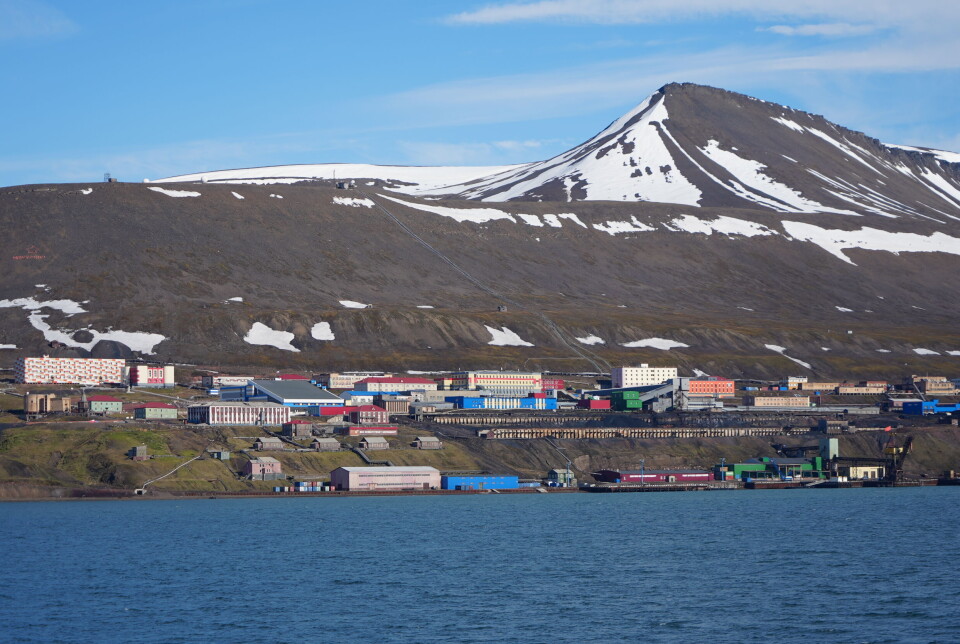
The mining settlement of Barentsburg lies about 55 kilometres from Longyearbyen and is populated almost entirely by Russian nationals. The settlement has around 300 residents.
There is no road connection between Barentsburg and Longyearbyen. Staff from the Governor’s office must travel by boat, helicopter or snowmobile. With ten scheduled arrivals by the Professor Molchanov in 2026, maintaining control will require significant resources.
Before departure, the local media in Murmansk were invited on board.
“This voyage is undoubtedly very important for us, and this connection to Spitsbergen [Svalbard] opens up new opportunities for Arctic tourism,” Marta Govor, Minister of Tourism and Entrepreneurship for the Murmansk Region, said in an interview with the regional state broadcaster.
However, no tourists boarded the Professor Molchanov for this year’s first voyage.
“This year’s first voyage to Spitsbergen will carry employees of Arktikugol working on Spitsbergen, along with their families,” the mining company said in a post on VKontakte, the Russian social media platform.
“The vessel is also transporting food and technical supplies to the archipelago, which are essential for the survival of the settlements where Russia operates,” the company added.
According to Arktikugol, a second voyage in April will bring tourists.
The voyages are co-organised by the Russian company Morskaya Praktika, whose owner is connected to military structures within the Northern Fleet.
Timofey Rogozhin, former head of Arktikugol’s tourism branch, told the Barents Observer last year that he has serious doubts about whether voyages from Murmansk to Svalbard can be commercially sustainable.

“Russia is, in reality, a fascist regime and is waging war against Ukraine. This is absolutely incompatible with the development of tourism on Svalbard,” Rogozhin said.
“In Russia, there is only a small number of tourists who enjoy Arctic cruises and can afford them,” he added.
“They also expect high-quality service. It is unlikely that the Professor Molchanov and the services provided by Arktikugol can meet those expectations.”
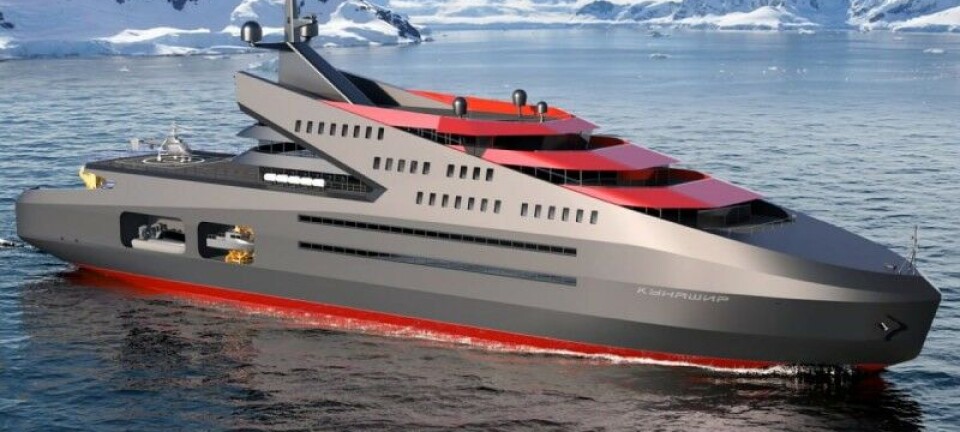
The Professor Molchanov is a 43 years old oceanographic research vessel, not designed for passenger traffic in the Arctic.
Timofey Rogozhin now lives in exile in Norway.
Running out of coal

Coal mining has long been the cornerstone of Russia’s presence on Svalbard. However, production is declining, and new industries will need to be developed if Moscow is to maintain its economic foothold on the Arctic archipelago.
Each year, around 80,000 tonnes of coal are extracted from beneath the permafrost. Roughly half of this is burned at the local power plant, supplying Barentsburg with heat and electricity.
Russia’s long-term plan is to attract 50,000 tourists to Svalbard annually by 2040, the newspaper Izvestia reported earlier this week.