
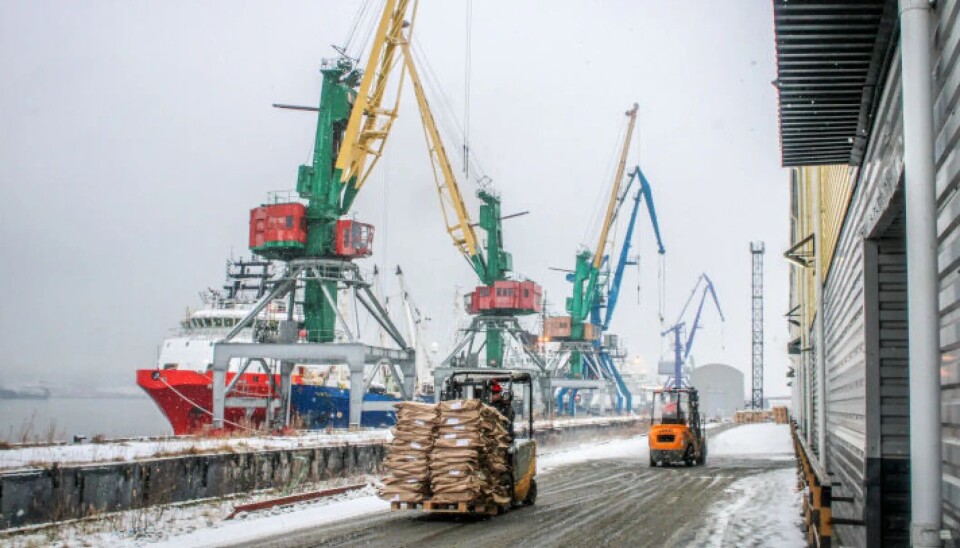
Less catch, higher prices: what is happening at the Murmansk Fish Port
The cargo turnover of the Murmansk sea fish port has almost halved since the beginning of 2025 and continues to decline — in December, the port expects to handle no more than 10,000 tonnes.

According to port General Director Andrei Borodin, the reason for the continuing trend is simple: most fishing companies have already fulfilled their quotas. The industry will only be able to make further plans after the decisions of the Joint Russian-Norwegian Fisheries Commission, which this year is being held later than ever before, on December 8-12. This makes forecasting almost impossible, he argues.
In 2024, Russian fishermen caught 210,600 tonnes of cod and 58,000 tonnes of haddock in the so-called Northern Basin. In 2025, the figures are significantly lower: 151,700 tonnes of cod and 53,300 tonnes of haddock. Overall, the volume of fish caught by Russian fishermen in the Northern Basin by early December 2025 amounted to 300,700 tonnes, which is 115,800 tonnes less than the previous year. Among the reasons for this decline are the international sanctions against Murmansk companies Norebo and MurmanSeafood.
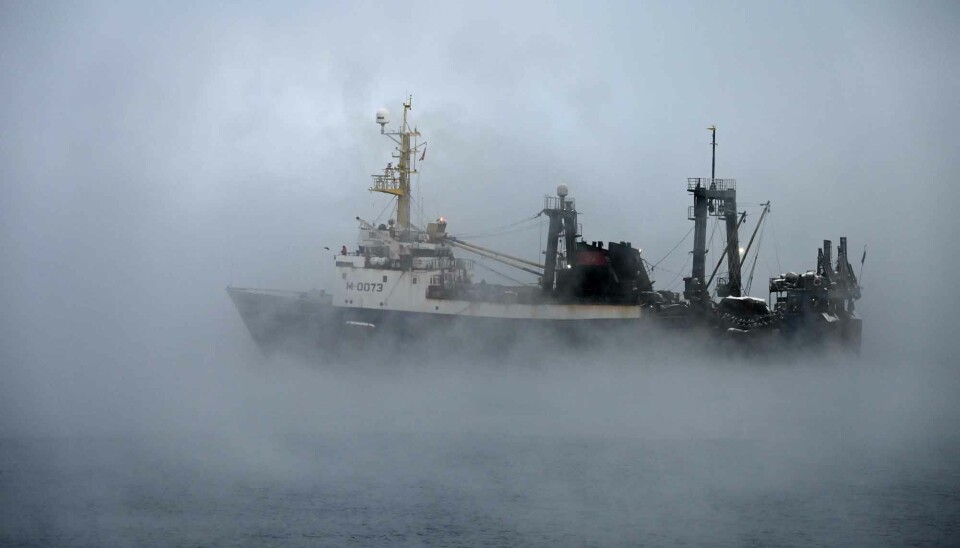
The situation is also exacerbated by the complete halt of capelin fishing by the decision of the Russian-Norwegian Commission. Last year it accounted for about 12 percent of the annual catch, said Konstantin Drevetnyak, general director of the Northern Fishermen's Union, in an interview with RBC.
As for the price for consumers, it continues to rise: according to Murmanskstat, the regional statistics office, the cost of frozen unprocessed fish has almost doubled over five years, and by December 2025, a kilogram of fish costs an average of 283 roubles (€3). In Murmansk shops, haddock is sold for up to 900 roubles (€9,54), cod for up to 1200 roubles (€12,72) per kilogram.
The general director of the Northern Fishermen's Union, Konstantin Drevetnyak, explains the situation as follows: "The overall catch this year is decreasing because quotas have been reduced. There is a direct correlation between the reduction in quotas and the reduction in catch for the main species. The absence of capelin also has an impact. A decrease in catch does not immediately affect prices, but the market operates simply: the less supply, the higher the price."
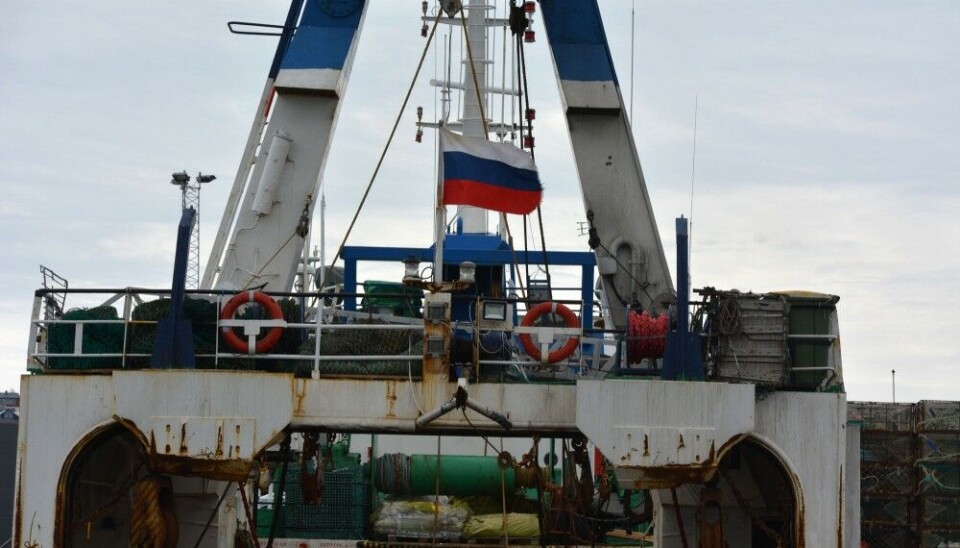
Among the key factors is the increase in fishermen's costs: spare parts, fuel, and almost all consumables have become more expensive. Sanctions from Norway mean that fishermen have to make more "empty" trips and longer journeys.
"Formally, three foreign ports are open in the Barents Sea, but there are supply restrictions there — even a light bulb can be considered a 'dual-use' item. Therefore, now we have to go not to the nearest port, but to Murmansk or St. Petersburg. Greater distance means more fuel and higher costs. This is a loss of fishing time," noted Drevetnyak.
He also fears that similar sanctions against Russian fishermen could be introduced by the parliament of the Faroe Islands. If this happens, not only cod and haddock but also the "popular" mackerel and blue whiting, whose stocks will be significantly reduced in the coming year, may become more expensive, says Drevetnyak. The price of herring may also rise, as significant volumes of its catch will not be able to compensate for the "drop" in other types of fish. On December 5, it became known that the parliament of the Faroe Islands approved a law allowing sanctions against Russian fishing vessels.
Drevetnyak emphasises that making forecasts is difficult: "What can be said unequivocally: stocks and catches will decrease. It is unlikely that the catch in the Northern Basin in 2026 will be higher than this year. I have no memory of a situation where the Joint Russian-Norwegian Fisheries Commission did not pass it decisions by December. And the worst thing the Norwegian side can do next is to stop letting us into their zone. But, by and large, I don't know what reckless head could make such a decision. After all, this would effectively be a breach of the fisheries agreement. Therefore, I cannot say that the year will be easier than the current one. That it will be more difficult — yes, there is such a possibility."
Returning to the situation at the Murmansk Marine Fish Port: in the first 11 months of 2025, the port handled 227.2 thousand tonnes — roughly 41% less than the previous year. The transshipment of fish products decreased by about 29%, and oil products by almost 80%; in November, the port did not handle any oil cargoes at all.
In addition to fish and oil, the port handles cargo for various Arctic industries, including mining, and aquaculture. In the summer of 2025, the port launched new tractor units to increase volumes, but even with new services, the management does not undertake to predict what the turnover will be in the coming months.


