Thick ice on the water as tanker makes this year’s first passage on Northern Sea Route
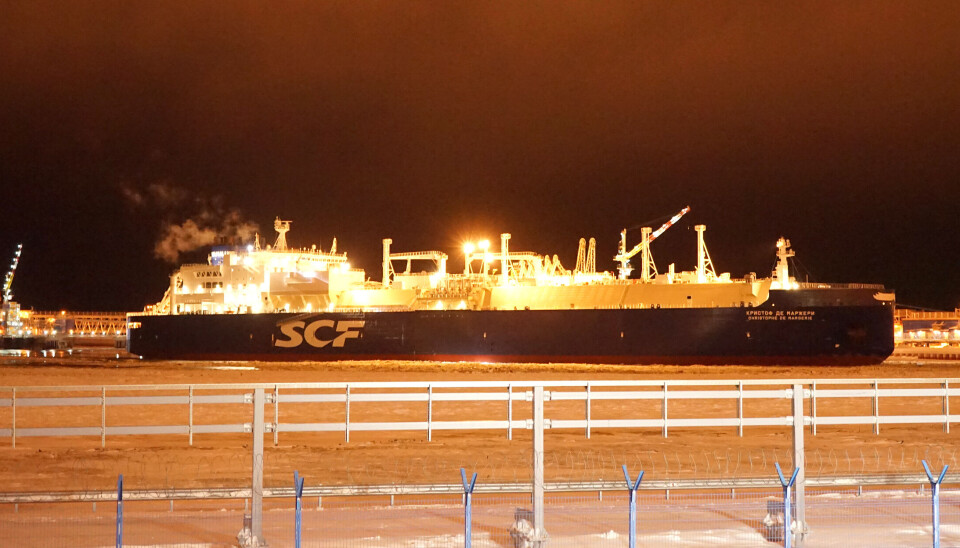
The LNG carrier Christophe de Margerie is sailing toward Asian markets with a shipload of sanctioned gas from the Arctic LNG 2 project. The voyage comes three weeks earlier than in previous years.

The 299-metre-long carrier, which is designed for shipping through thick Arctic sea ice, set out this week from the Utrenneye terminal on the Gydan Peninsula.
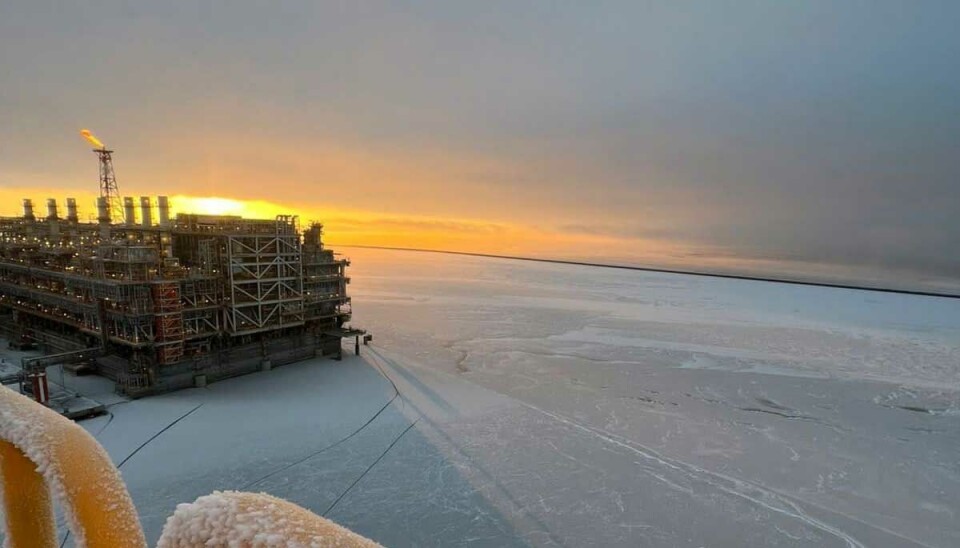
Novatek’s gas hub on Gydan is subject to international sanctions. Nevertheless, significant volumes of LNG are now being shipped from the site. Along with the Aleksei Kosygin, the Christophe de Margerie has for months been shuttling between Gydan and the Saam FSU in Ura Bay, on the Kola Peninsula.
Like Arctic LNG 2 itself, practically all carriers and infrastructure involved in the trade are subject to sanctions.
The Christophe de Margerie is now beginning this year’s first eastbound passage on the Northern Sea Route. After exiting the Gulf of Ob, the carrier set a course toward the Vilkitsky Strait. Ship traffic data show that, on Friday, 29 May, the ship was waiting for passage through the strait, which separates the archipelago of Severnaya Zemlya and the northernmost tip of the Taymyr Peninsula.
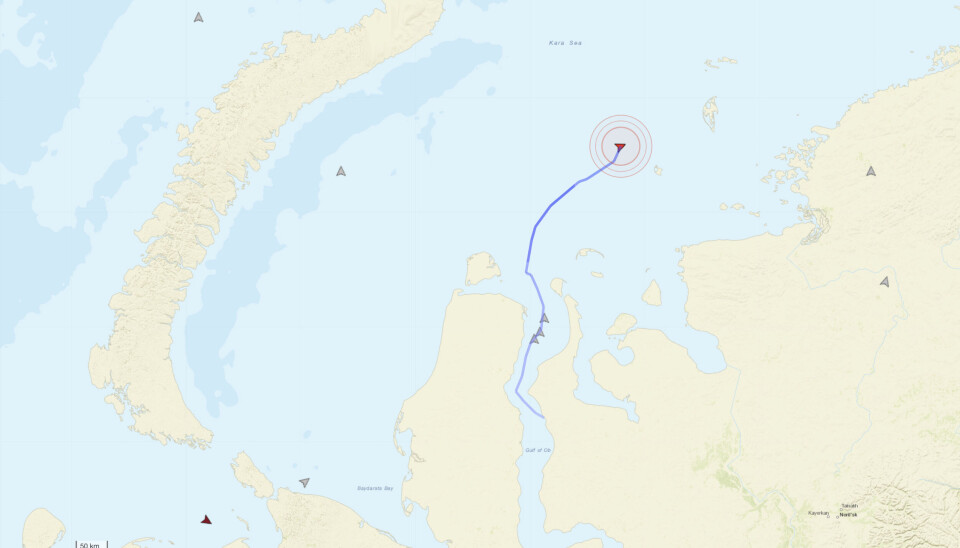
The carrier is escorted by the nuclear icebreaker Ural.
The voyage comes about three weeks earlier than in previous years. In 2025, the nuclear icebreaker Yamal escorted the LNG carrier Georgiy Ushakov through the Vilkitsky Strait on 20 June. In 2024 , the oil tanker Shturman Skuratov was the first vessel on an eastbound voyage on the route, around 20 June.
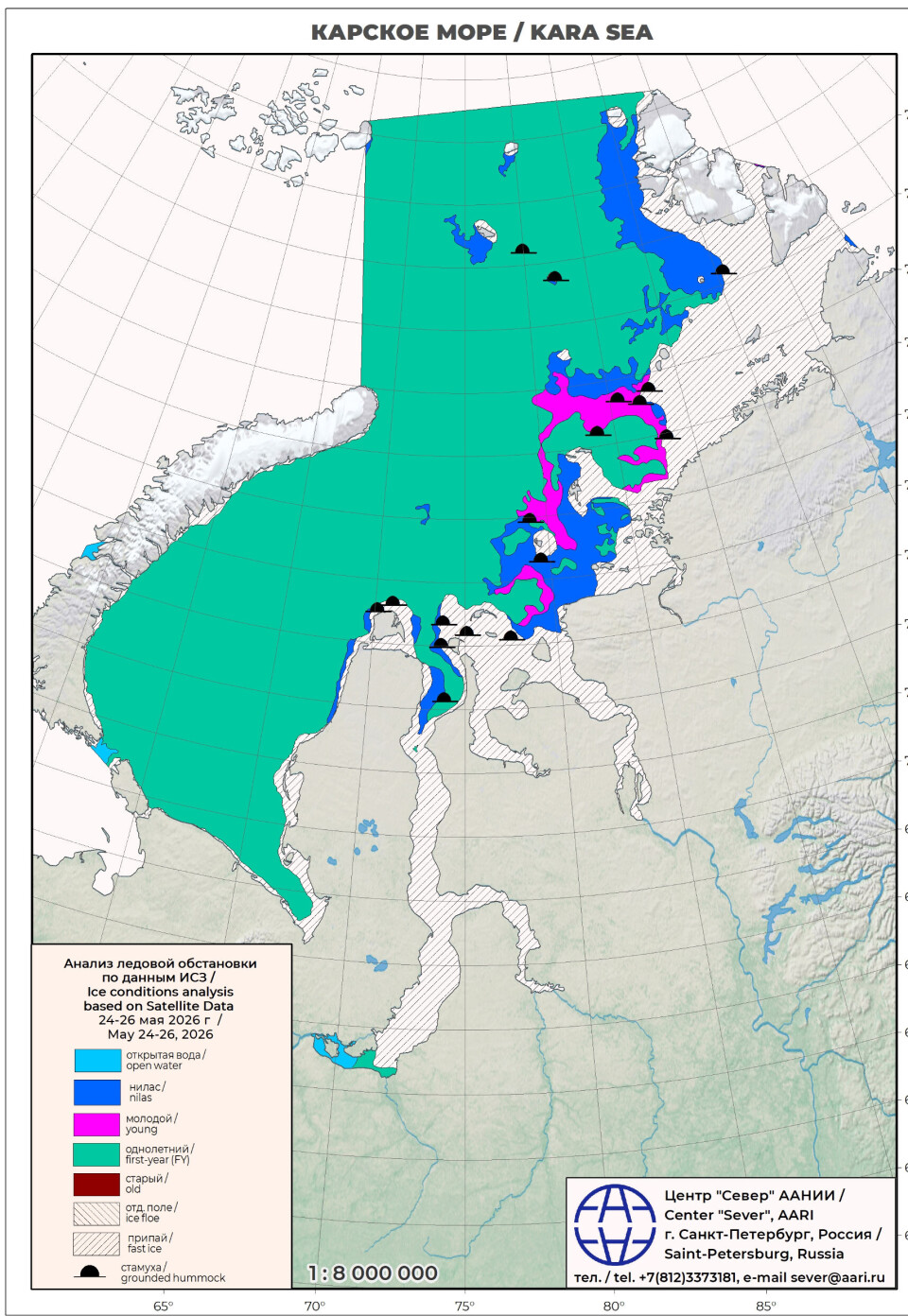
Russian Arctic waters are covered by thick layers of sea ice. Ice maps from the Arctic and Antarctic Research Institute show that the entire Northern Sea Route, from the Kara Gate in the west to the Bering Strait in the east, is covered by ice.
In the Vilkitsky Strait and south of the New Siberian Islands, there are large areas of fast ice, meaning a continuous belt of stationary ice cover. With the exception of an area in the East Siberian Sea, the region has one-year-old ice.