
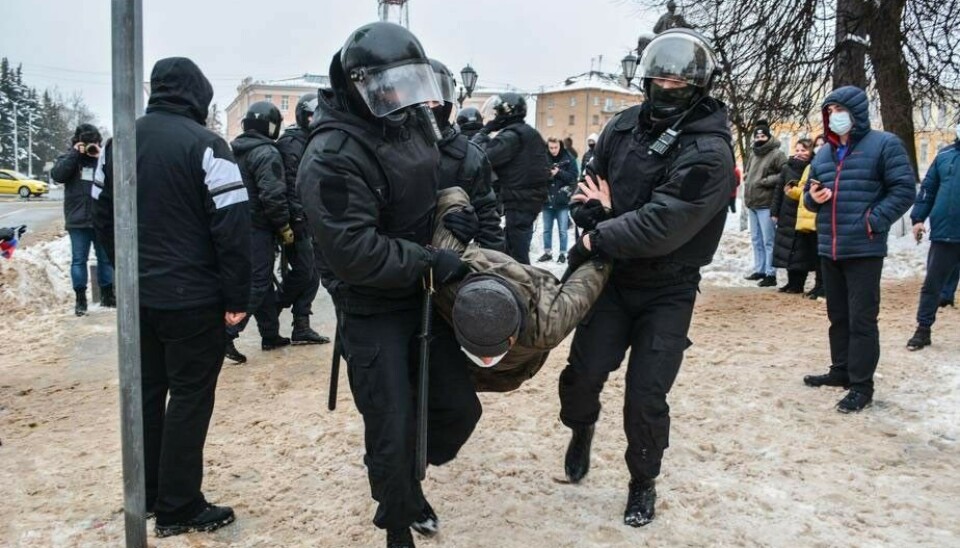
Russian lawmakers: Regime critics who 'hide abroad' will be punished
According to the State Duma, new measures will target citizens who are "evading punishment abroad." Regime critics risk losing access to public services, get their bank accounts blocked and their driving licenses suspended.

The Russian State Duma has proposed to introduce new repressive measures against citizens who are "evading punishment abroad." This was announced by MP Vasily Piskarev on December 11 .
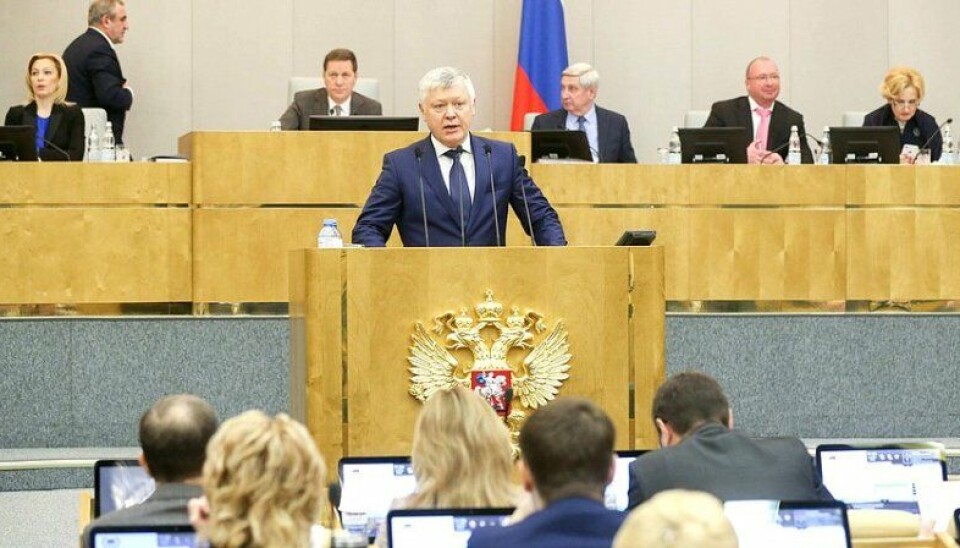
Several bills have been prepared by the so-called Commission for the Investigation of Foreign State Interference. According to Piskarev, the bills have already been submitted to the State Duma for consideration.
The proposed restrictions will affect so-called 'foreign agents', as well as individuals fined under articles on cooperation with so-called "undesirable organisations," and people involved in so-called politically motivated criminal cases.
The new repressive bills include the following measures:
Freezing (blocking) of funds and other assets.
Suspension of real estate registration rights.
Prohibition on transactions and actions under power of attorney, including property operations.
Suspension of driving licence.
Ban on vehicle registration.
Ban on remote banking services in Russia.
Denial of state and municipal services online.
Denial of certain consular actions.
Denial of credit agreements.
Ban on the use of electronic signatures.
Ban on registration as an individual entrepreneur or self-employed
According to the Russian MPs, 'NATO countries' are increasingly 'politically motivated' in refusing to extradite Russian citizens.
"In the last 5 years, there has been a clear increase in the number of politically motivated refusals to extradite criminals, especially from NATO countries. It is difficult to explain the harbouring of persons accused of serious crimes by other reasons," reports a Telegram channel associated with the State Duma Commission.
In addition, Russian authorities will start a more comprehensive monitoring of the lists of 'foreign agents' and the register of 'extremists and terrorists'. The Prosecutor General's Office will start maintaining a new public register, officially will be called 'List of persons subject to temporary restrictive measures'. It will include everyone whom the authorities consider 'evading punishment' after leaving Russia. The register will be public, which means that various information about private individuals will be posted on the internet.
"We did not invent it (the law on foreign agents - ed. note). This was done in the USA back in the 1940s... There, violation of this law threatens imprisonment, but we do not have such a thing," stated Vladimir Putin on December 9.
On the same day, the Tushinsky District Court of Moscow sentenced politician Ilya Yashin in absentia to 1 year and 10 months in prison for 'evading the duties of a foreign agent'.

The dictator made these remarks in response to comments by Russian film director Aleksandr Sokurov. Speaking to Putin at a Human Rights Council meeting on December 9, Sokurov described the repressions taking place in Russia.
“Every week we anxiously watch to see who has again been declared a foreign agent. These designations are horrifying, horrifying — my compatriots who suddenly become foreign agents… In my view, this is a wrong decision, one that humiliates a person, a citizen, and prevents them from developing and continuing to exist. This is absolutely obvious to me,” he said during the videoconference with Vladimir Putin.
The “foreign agent” law was first adopted in 2012 and has since been expanded many times, turning into a large-scale repressive mechanism for controlling citizens, organisations, and the media. The status of “foreign agent” imposes financial, professional, political, and social restrictions that make normal activity practically impossible.
Foreign agents are prohibited from holding state and municipal positions, participating in elections and election monitoring, accessing state secrets, conducting expert evaluations for government bodies, organising public events, engaging in teaching and educational activities, producing content for minors, participating in government procurement, receiving state funding, insuring deposited funds (for organisations), or using simplified tax and accounting regimes. They are also barred from participating in strategic investments and working with critical infrastructure. All funds received from “educational activity” must be transferred to a “special account,” which can only be used after being removed from the registry.
In addition, they are required to pay 30% personal income tax on any income, including property sales, inheritance, and gifts. They are deprived of all tax benefits and deductions, and foreign-agent organisations must pay taxes on any gratuitous contributions. All income from property, dividends, and intellectual rights must be deposited only into a special account.
---------------------------------------
Note to reader:
The author of this article has been designated a “foreign agent” by the Ministry of Justice, as have other Russian journalists working for the Barents Observer — Georgii Chentemirov and Denis Zagore. Moreover, the Prosecutor General’s Office has labeled our publication an “undesirable organisation,” which led to fines for Zagore and Chentemirov. Therefore, unfortunately, the Barents Observer no longer has the ability to report impartially on new repressions within Russia that target our own journalists that write stories like the one you now read — the Kremlin has done everything possible to ensure this.


