

Norway’s wealth fund stuck with stocks in 46 Russian companies
On paper the stocks are worth nearly 1,4 billion Norwegian kroner (€124 million), but in practice it is very difficult to get rid of the investments.
The Norwegian Government ordered a stop in trading with Russian assets shortly after the full-scale invasion of Ukraine in February 2022. The goal was to divest, but today - four years later - the Pension Fund still owns shares in 46 companies listed on the Moscow stock exchange.
As of December 31, the holdings in Russia were worth 1,37 billion kroner (€124 million), according to the annual update recently released. Although that is microscopic compared with the Fund’s total value of 21,268 billion kroner (€1,891 billion), the Norwegian Ministry of Finance maintains an ultimate hope of divesting all holdings in Russia.
Communication Advisor Une Solheim confirms to the Barents Observer that it is very difficult to sell off the Russian stocks.
“The liquidation of these investments is ongoing, but is severely constrained by market conditions and the sanctions regime,” Solheim explains.
“The remaining holdings therefore reflect the practical challenges of liquidating investments in a sanctioned market, not active investment decisions on our part,” she elaborates.
"We will sell out as soon as market conditions allow."
Any foreigners that want to sell assets inside Russia need the Russian Government’s permission. Moscow has said the decisions by Europe and the United States to freeze and divest Russian stocks are hostile acts.
Sanctioned companies
Like Sberbank, many of the other companies on the fund's list are sanctioned by Norway, the European Union, United Kingdom or the United States.
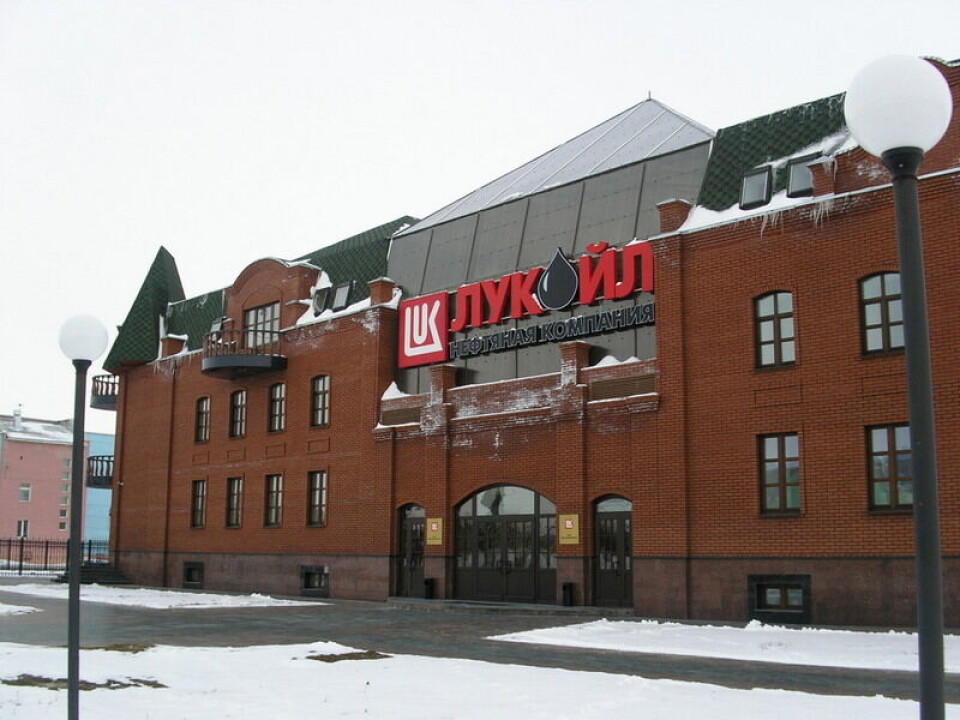
LUKOIL, the second largest investment among the 46 companies, was sanctioned when the EU adopted the 19th package with the aim of targeting energy revenues funding Russia’s war of aggression. The Norwegian fund holds 0,87% of LUKOIL, worth 342 million kroner (€30 million).
Other petroleum companies in the portfolio are Gazprom, Gazpromneft, Novatek, Bashneft and Surgutneftegas.
Another sanctioned company is the diamond producer Alrosa, with large open-pit mines in the Arkhangelsk region.
Censorship and repression
The fund has ownership in a social media company that actively contributes to the Kremlin’s censorship and repression.
The company is VK Holding, of which 0,47% of the shares are in Norway's possession.
The technology company operates vKontakte (VK). The social media platform now has more than 650 million accounts and is one of the most popular websites in Russia. In late 2021, the Russian state-owned bank Gazprombank and insurance company Sogar acquired 57,3 percent of VK shares and consequently secured full control over the company.
A few years earlier, the founder and CEO Pavel Durov had been forced out of the company, reportedly following his refusal to hand over personal details of users to the FSB and his refusal to shut down a VK group dedicated to the anti-corruption activist Aleksei Navalny.
Over the past few years, VK has blocked hundreds of accounts operated by independent journalists, civil society activists and other Kremlin critics. In 2022, the company blocked the pages of Aleksei Navalny, Ilya Yashin, as well Mikhail Khodorkovsky and media companies Meduza, MediaZona, Dozhd, Echo Moscow, Current Time and others.


